Why do olives drop from the tree before harvest?
Fewer than 2 percent of olive flowers become fruit, so drop in the 6-8 weeks after bloom is normal. June peppercorn drop, fruit fly from summer, anthracnose and moth exit holes at ripening: a diagnosis table based on marks on the fallen olive.

Short answer: some olive drop is normal. Only a tiny share of olive flowers ever becomes fruit, so the flowers and tiny fruitlets that carpet the ground in the weeks after bloom are usually no cause for concern. The drop to worry about starts once the fruit has grown, and it leaves a mark on the fallen olive: a hole at the stalk end, an egg-laying sting on the skin, a sunken brown spot, a rusty surface or a misshapen fruit.
This page sorts fruit drop by season and by what you can see on the fallen olive, and points each cause to a detailed article. Leaf drop is a separate topic, covered in why is my olive tree dropping leaves.

Flower and young fruit drop: mostly natural
In the olive chapter of the FAO publication on crop yield response to water, Riccardo Gucci and Elias Fereres note that fruit set is generally below 2 percent of flowers, and that poor temperature, rain or wind conditions can push it lower still. Notes compiled from the International Olive Council's book Production Techniques in Olive Growing add that, without a specific cause of drop, a set of 1 percent of flowers is enough for a good crop.
A 2020 olive monograph by Ahmet Nuri Özdağ and Fatma Koyuncu even defines the "end of flowering" stage as the point when roughly 70 percent of flowers have fallen. According to a 2013 book chapter by Catherine Breton and André Bervillé, the erratic fruit drop that begins right after fertilization lasts for 6 to 8 weeks. In Türkiye, according to the 2024 book Zeytin Yetiştiriciliği edited by Bekir Erol Ak, Ebru Sakar and Mine Pakyürek, flowering runs from about 20 April to 20 May, and into mid-June in cool, rainy years.
If a tree flowers heavily but sets poorly year after year, the problem is not drop but pollination, chilling or nutrition. Those causes are covered in why is my olive tree not bearing fruit.
June drop, drought and heat
According to 2017 training notes by Mehmet Ulaş of Türkiye's Olive Research Institute, winter and spring rain stored in the soil improves fruit set and reduces the June drop. The same notes state that temperatures above 40 °C cause fruit drop during pit hardening, fruit enlargement and ripening, leaving the remaining fruit small and shrivelled. Gucci and Fereres also stress that water stress should be avoided from flower development through fruit set.
The sign described in the sources is small, sometimes shrivelled fruit dropping after a dry spell or a heat wave. If the fallen fruit has a hole, a sting mark or a sunken spot, look at the causes below. When and how much to water is explained in olive irrigation and drip systems.
What do you see on the fallen olive?
| What you see | Likely cause | When | Read next |
|---|---|---|---|
| Flowers and tiny fruitlets, no marks | Natural drop | Bloom and the following 6-8 weeks | Not bearing fruit |
| Peppercorn-sized fruit, shrivelled and dark | Olive moth, fruit generation | Late May-June | Olive moth |
| Hole at the stalk end, seed eaten out | Olive moth larvae leaving | September-October | Olive moth |
| Dark brown sting on the skin, tunnels, rot | Olive fruit fly | July-October | Olive fruit fly |
| Sunken brown spot at the tip, rotting fruit | Anthracnose | Ripening, autumn rains | Anthracnose |
| Misshapen young fruit with a rusty surface | Olive rust mite | From early June | Rust mites |
| "Monkey face" deformed fruit | Boron deficiency | Flowering and young fruit | Nutrient deficiencies |
| Sound but small or shrivelled fruit | Drought, heat, dry wind | June and summer | Irrigation |
| Ripe, sound fruit falling on its own | Ripening | Harvest season | When harvest begins |
Pests
Olive moth. According to the Olive Integrated Pest Management Technical Instruction of Türkiye's Ministry of Agriculture and Forestry, the fruit generation of the olive moth lays its eggs on the calyx when the fruit reaches the size of a large peppercorn. The larva enters through the base of the stalk and breaks the connection between stalk and fruit, so the olive shrivels, darkens and falls. This is known in Turkish as the "peppercorn drop". A second wave follows when the larva leaves: it bores a visible hole near the stalk, and because the hole usually separates the stalk, the fruit drops within a few days. The instruction's summary table places this as ripe fruit drop in September and October. Generations and spray thresholds are in olive moth: three generations.
Olive fruit fly. The same instruction describes the fly's mark as a V-shaped slit in the fruit that turns dark brown a day later, called a sting. The larva tunnels around the pit and the fruit rots and falls. A 2005 University of California Cooperative Extension leaflet by Paul Vossen, Lucia Varela and Alexandra Devarenne also shows the exit holes left where adult flies have emerged from damaged fruit. The instruction asks growers to collect infested fruit every 3 to 4 days during the damage period and remove it from the orchard. Sting counts and thresholds are in olive fruit fly control.
Rust mites. According to the instruction, this mite, whose females measure only 125 micrometres, forms colonies on the fruit stalk from early June, when the first fruit sets, and feeds in the stalk cavity and on the fruit surface during fruit formation, causing deformation, a rust-like appearance and early fruit drop. Damage peaks between the last stages of bud development and the early fruit stage. How to recognise it is covered in what are olive rust mites.
Diseases
Anthracnose. The instruction notes that symptoms begin as the fruit ripens: usually a sunken brown lesion at the tip, followed by rot. A 2018 review by Pedro Talhinhas and colleagues in Molecular Plant Pathology states that rotten fruits either fall or mummify, and that disease severity is linked more closely to autumn weather than to spring weather. According to the instruction, mummified fruit left on the tree keeps the fungus alive for a year. Details are in olive anthracnose.
Peacock spot. This is a leaf disease, but it affects the crop too: the instruction states that in epidemic years the loss of leaves leads to poor fruit set and early fruit drop. Do not look for marks on the fallen olive; a thinned canopy and spotted leaves are the clue.
Nutrient deficiency
The nutrient section of the instruction lists flower and fruit drop and smaller fruit among the signs of nitrogen deficiency. For boron deficiency, drop during flowering and the young fruit stage is described as a typical symptom, and the "monkey face" fruit, formed when the skin stops growing while the pit keeps enlarging, is its most characteristic sign. Confirm the diagnosis with leaf analysis before applying fertiliser; sampling and reference values are in olive nutrient deficiencies.
Heavy crop and alternate bearing
According to the notes based on the International Olive Council book, unpruned trees bear more fruit, but the fruit is small, low in oil and drops early; an excessive crop also weakens the growth of the shoots that should bear next year, which drives periodicity. Heavy drop in an "on" year belongs to this cycle: see alternate bearing in olives.
Ripening: the fruit lets go on its own
The same notes say ripening is complete when the force needed to detach the fruit, measured with a dynamometer, falls to 3-4 newtons, and that natural drop reaching about 10 percent of fruit is one of the indicators of harvest time. To measure it, a fruit-laden branch is enclosed in a net and the olives that fall into the net are counted.
Varieties differ widely here. In a 2011 study by Maria C. Parra-Lobato and Maria C. Gómez-Jiménez of the University of Extremadura in Spain, the data they cite show that after ripening under natural conditions about 17 percent of Arbequina fruit fell on its own, against 92 percent for Picual. In Picual, detachment force dropped markedly at ripening; in Arbequina it did not. The authors point out that massive natural drop at maturity is a desirable trait for mechanically harvested fruit. Harvest timing is covered in when does the olive harvest begin.
Wind, heat and hail
The book edited by Ak, Sakar and Pakyürek states that high temperatures and dry winds reduce fruit set, make young fruit fall and leave the remaining fruit dried and shrunken. Hail causes flower, fruit and leaf drop, and its wounds can let in pathogens such as olive knot (Pseudomonas savastanoi). Fruit that falls after hail may carry wound marks.
What to do
1. Note the timing. Drop without marks within 6 to 8 weeks of bloom is mostly natural.
2. Cut open fallen olives. Check the stalk end, the skin and the pit; the table shows where to start.
3. Do not leave infested or diseased fruit on the ground. The instruction recommends collecting and removing fallen fruit for both the fruit fly and anthracnose.
4. Base spray decisions on counts, not on looks. For approved products and timing, consult your provincial or district agriculture directorate or an agricultural engineer.
Summary
Because fewer than 2 percent of olive flowers become fruit, unmarked drop after bloom is normal. Shrivelled peppercorn-sized fruit in June points to the olive moth, stung and rotting fruit to the fruit fly, sunken spots to anthracnose, and ripe fruit with a hole at the stalk to the moth's second wave.
One rating per visitor; you can change yours at any time. Ratings are real reader votes — no seeded or default scores.
Related
 Article
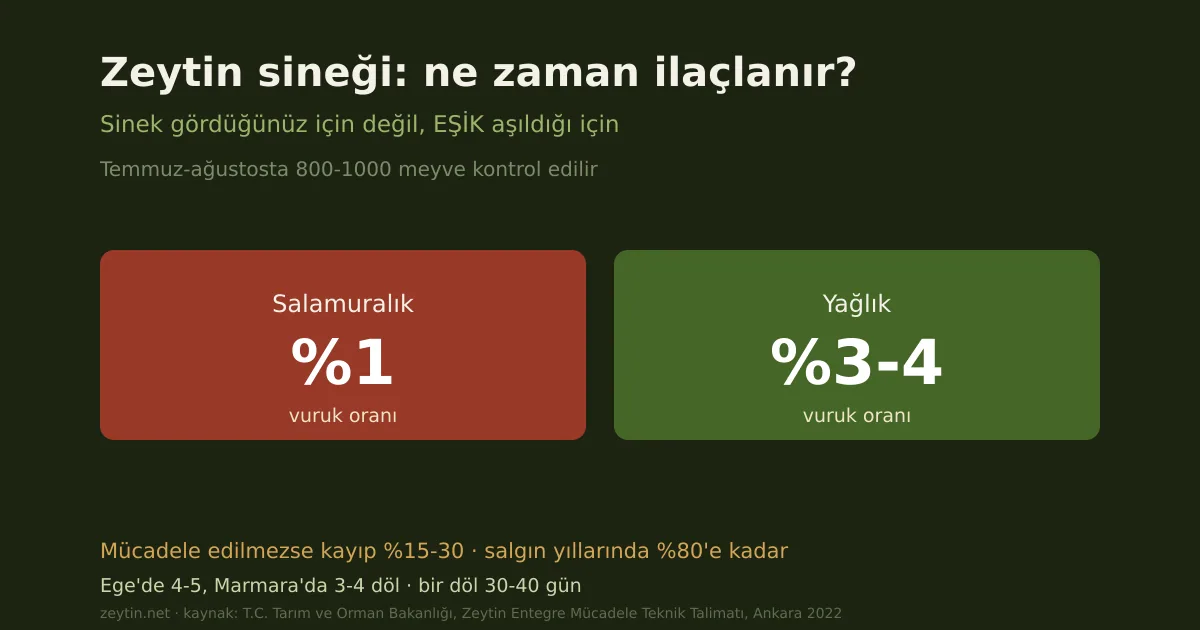
The olive fruit fly: sting thresholds, traps and a control calendar
The olive pest that costs most: losses of 15-30% if left alone. Sting threshold 1% for table varieties, 3-4% for oil.
 Article
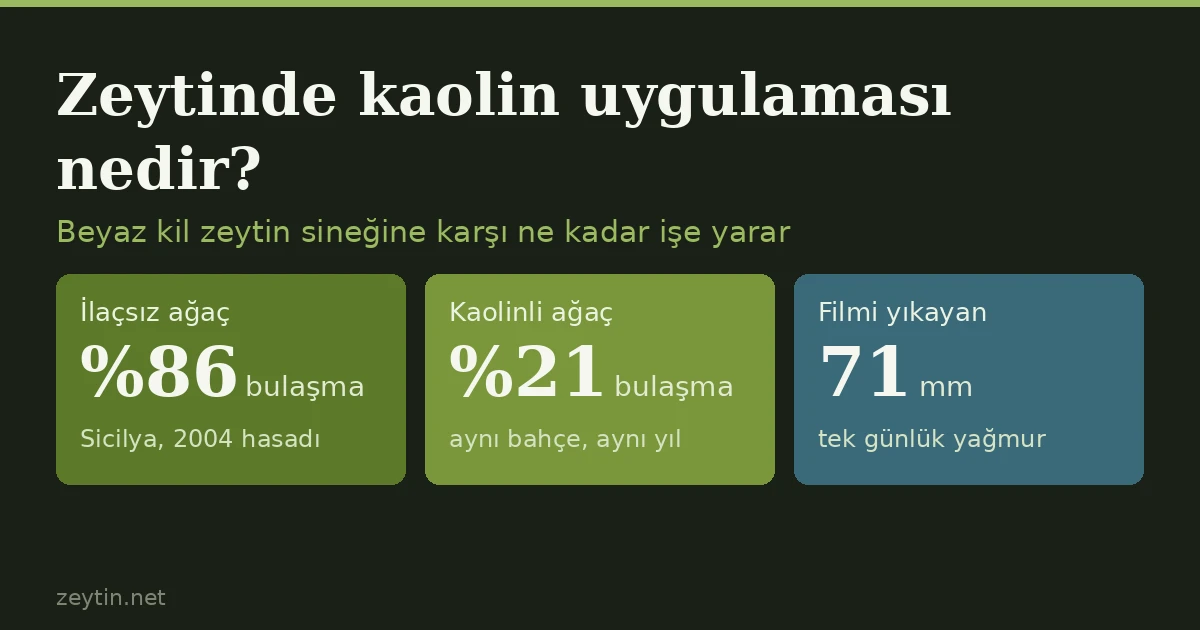
What is kaolin clay spraying in olives? How well it works against the olive fruit fly
Kaolin is a clay that keeps the olive fruit fly away without killing it, by disguising the fruit under a white film. In Sicily in 2004, a year of heavy fly pressure, harvest infestation was 86 per cent on untreated trees and 21 per cent with kaolin. But rain washes it off and in cool climates it can lower photosynthesis. It is on Türkiye's organic list; registration status must be checked separately.
 Article
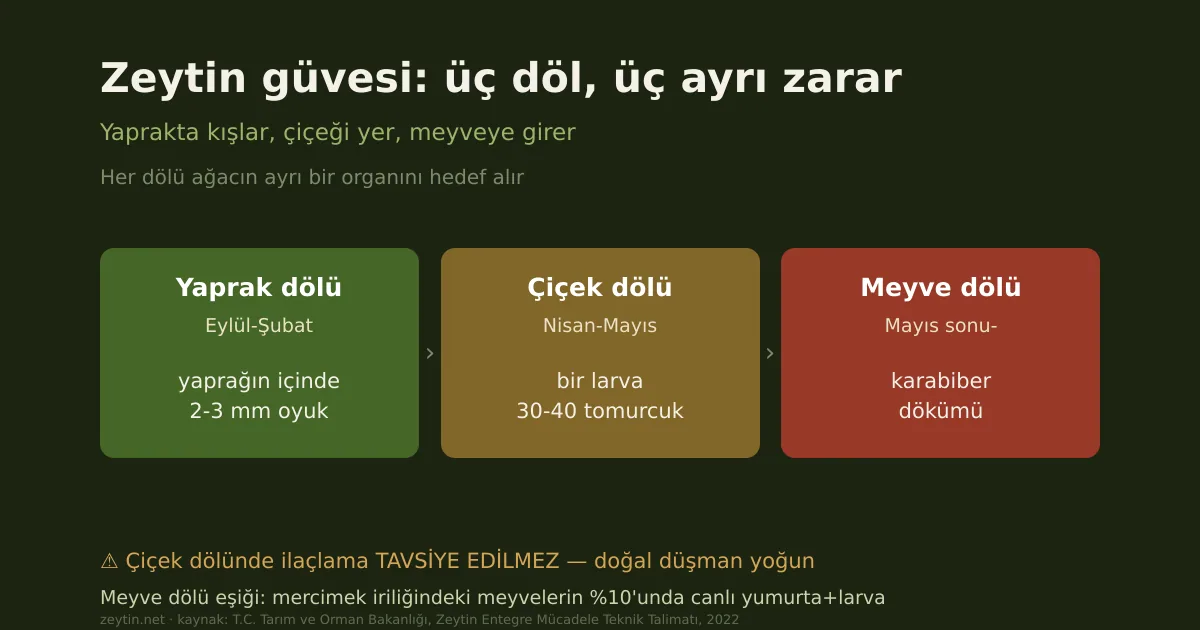
The olive moth: three generations, three kinds of damage
The olive pest with three generations: it winters in the leaf, eats the flowers, enters the fruit. One larva can take 30-40 buds.
 Article
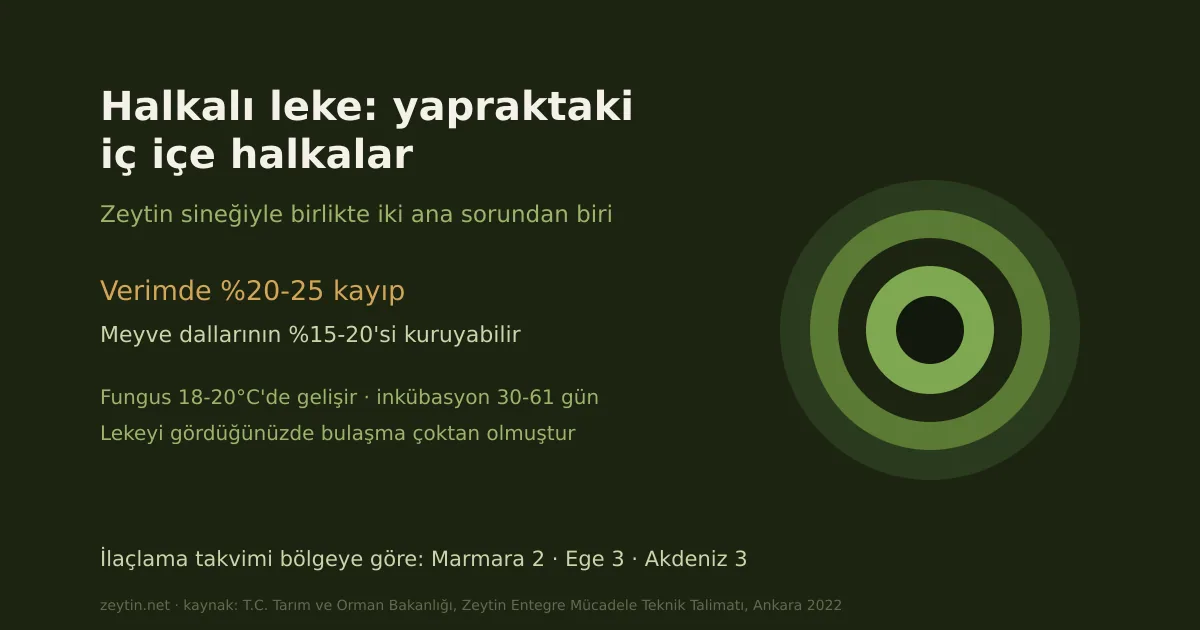
Olive peacock spot: symptoms and a region-by-region spray calendar
The commonest of olive tree diseases: concentric rings on the leaf, shedding, a shrubby tree. Yield falls 20-25%; spray timing varies by region.