Olive Pruning: Why, When and How
Why olives are pruned, when to do it, formative and production pruning, rejuvenation and high-density systems.
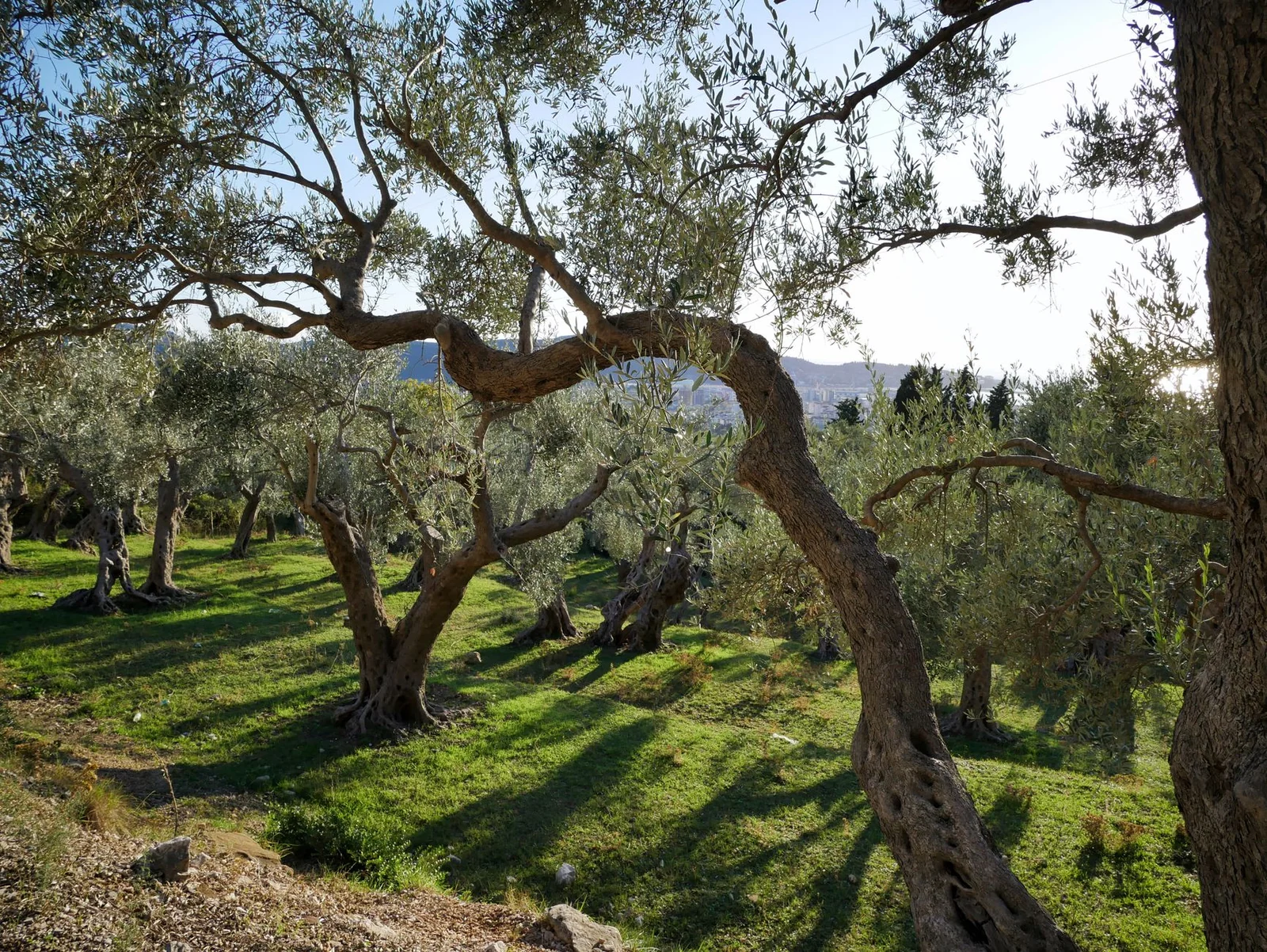
An olive tree survives without pruning. It does not crop well without it. Left alone, an olive closes its own canopy over the years, pushes fruiting to a thin shell on the outside, and keeps most of its wood in shade. Shaded wood does not set fruit; the following year that wood becomes timber too. Pruning is the decision about where the tree spends its energy.
Why olives are pruned
There are four reasons, and they are connected:
- Light. Olives set fruit on last season's sunlit shoots. If light does not reach inside the canopy, fruit forms only on the outer surface: the tree grows, the crop does not.
- Air movement. A dense canopy keeps leaf surfaces wet for longer. Prolonged leaf wetness is a direct invitation to peacock spot (Spilocaea oleagina) and to olive knot.
- Renewal. A fruiting shoot loses productivity after a few seasons. Pruning forces the tree to keep producing new shoots.
- Access. Most harvest cost is labour. Keeping the canopy within reach is what stops fruit from being left on the tree.
When to prune
The general rule: after harvest, once hard frosts have passed, before bud break. In most Turkish olive regions this falls between late February and early April.
Pruning too early — immediately after harvest, in midwinter — leaves cut surfaces exposed to frost. Pruning too late means cutting after the tree has already spent energy pushing new growth.
⚠ Never prune in wet weather. Olive knot (Pseudomonas savastanoi) and verticillium both enter through cut surfaces and wet tissue. Waiting for a few dry, sunny days is the most effective protection available, and it costs nothing.
Formative pruning: the first four years
On a young tree the aim is not a crop but a framework. Decisions made here determine the next thirty years.
Trunk height. Leave 80–120 cm between the soil and the first branch. Lower, and cultivation equipment and harvesting machinery wound the limbs; higher, and the tree sways in wind and struggles to carry canopy weight.
Number of main limbs. The classic vase (goblet) form uses three or four scaffold limbs. They should not all arise from the same point on the trunk: space them 15–20 cm apart, facing different directions. Limbs emerging from a single point split under load in later years.
Angle. A limb at roughly 45 degrees comes into bearing earlier than an upright one. Very upright wood produces timber; very flat wood breaks.
Keeping pruning light in this period to protect a small early crop is a common mistake. Fruit rushed in a young tree is paid for with a distorted framework that lasts a decade.
Production pruning: the mature tree
Once the tree has its shape, pruning becomes annual maintenance. Three things come out, in order:
1. Dead, broken and diseased wood. No debate — this goes first.
2. Water sprouts. Thick, upright, leafy but fruitless shoots rising from the trunk and scaffolds. They take water and nutrients and return no crop.
3. Inward-facing and crossing branches. Wood that closes the centre of the canopy or rubs against other wood. Rub wounds are another entry point for knot.
After this the canopy should be open enough that "a bird could fly through it." The old measure sounds crude but works in practice: if you cannot move your hand freely inside the canopy, you have not opened it enough.
How much to cut? On a healthy mature tree, annual pruning should not remove much more than 15–20% of canopy volume. Beyond that the tree responds with water sprouts; the following year needs even heavier pruning, and the tree locks into that cycle.
Managing alternate bearing through pruning
Olive is an alternate-bearing species: a heavy year ("on" year) followed by a light one ("off" year). The reasons behind that swing were covered in the article on alternate bearing; pruning does not remove it, but it damps it.
The method: prune harder after a heavy year, more lightly after a light one. A tree that carried a big crop has not built next season's shoots; harder pruning forces it to. A tree that carried little already has plenty of shoot growth, and hard pruning wastes it.
Rejuvenation pruning
On old trees with raised canopies and declining yields, the scaffolds are cut back hard. This is a heavy intervention that costs two to three seasons of crop, and in return rebuilds the tree.
A few practical rules:
- Taking the scaffolds back over two or three years rather than all at once shocks the tree far less.
- Large cut surfaces are exposed to sunburn; leave remaining wood positioned to shade them.
- From the hundreds of water sprouts that follow, new scaffolds are selected; the rest are rubbed off by hand in late summer.
Pruning in high-density orchards
In super-high-density (SHD) and high-density systems — whose five requirements we set out separately — the purpose changes: the unit being shaped is not the tree but the wall. The target is a continuous fruiting hedge along the row, roughly 2–2.5 m tall and 1–1.5 m thick. Most of the work is mechanical — topping and side trimming — with hand work reduced to removing dead wood and keeping the base of the wall open.
Delay is expensive here. Once the wall thickens, the machine begins cutting into the fruiting shell itself and yield falls quickly.
Tools and hygiene
- Sharp tools. A crushed cut closes slowly and stays open to pathogens.
- Disinfect between trees. Moving from diseased to healthy wood without wiping the blade is the main way olive knot and verticillium travel. As that article explains, the bacterium enters through wounds — which makes secateurs the primary vector.
- Cut position. Cut just outside the branch collar and bark ridge. Cutting inside the collar wounds the trunk; leaving a long stub creates a drying, rotting focus.
- Three cuts on heavy limbs. Undercut first, then the top cut, then clean the stub. A heavy limb cut in one pass tears bark down the trunk under its own weight.
What to do with prunings
Material left in the orchard becomes overwintering habitat for olive knot and wood-boring insects. There are three options: chip and return it to the soil as organic matter; remove and burn it (preferred where disease is present); or collect it as an energy feedstock. The energy potential of olive prunings is not trivial and is a meaningful resource at regional scale — the figures were worked out in the article on pruning biomass.
Five most common mistakes
1. Pruning to the same severity every year. Pruning without regard to the tree's current load increases alternate bearing rather than reducing it.
2. Leaving water sprouts. Heavy leaf cover reads as vigour; those shoots feed wood, not fruit.
3. Pruning in the rain. The bill arrives two years later, as olive knot.
4. Letting the canopy climb. Fruit out of reach is fruit that does not exist.
5. Cutting an old tree back in a single season. The tree is shocked, sprouts explode, and three years of crop are lost.
Summary
Pruning is the cheapest intervention in an olive grove and the one with the longest reach: fertiliser affects a season, irrigation a summer, pruning affects the whole life of the tree. A well-pruned grove carries less disease pressure, harvests more cheaply, and swings less between years.
One rating per visitor; you can change yours at any time. Ratings are real reader votes — no seeded or default scores.
Related
 Article
Building a high-density olive grove: five requirements
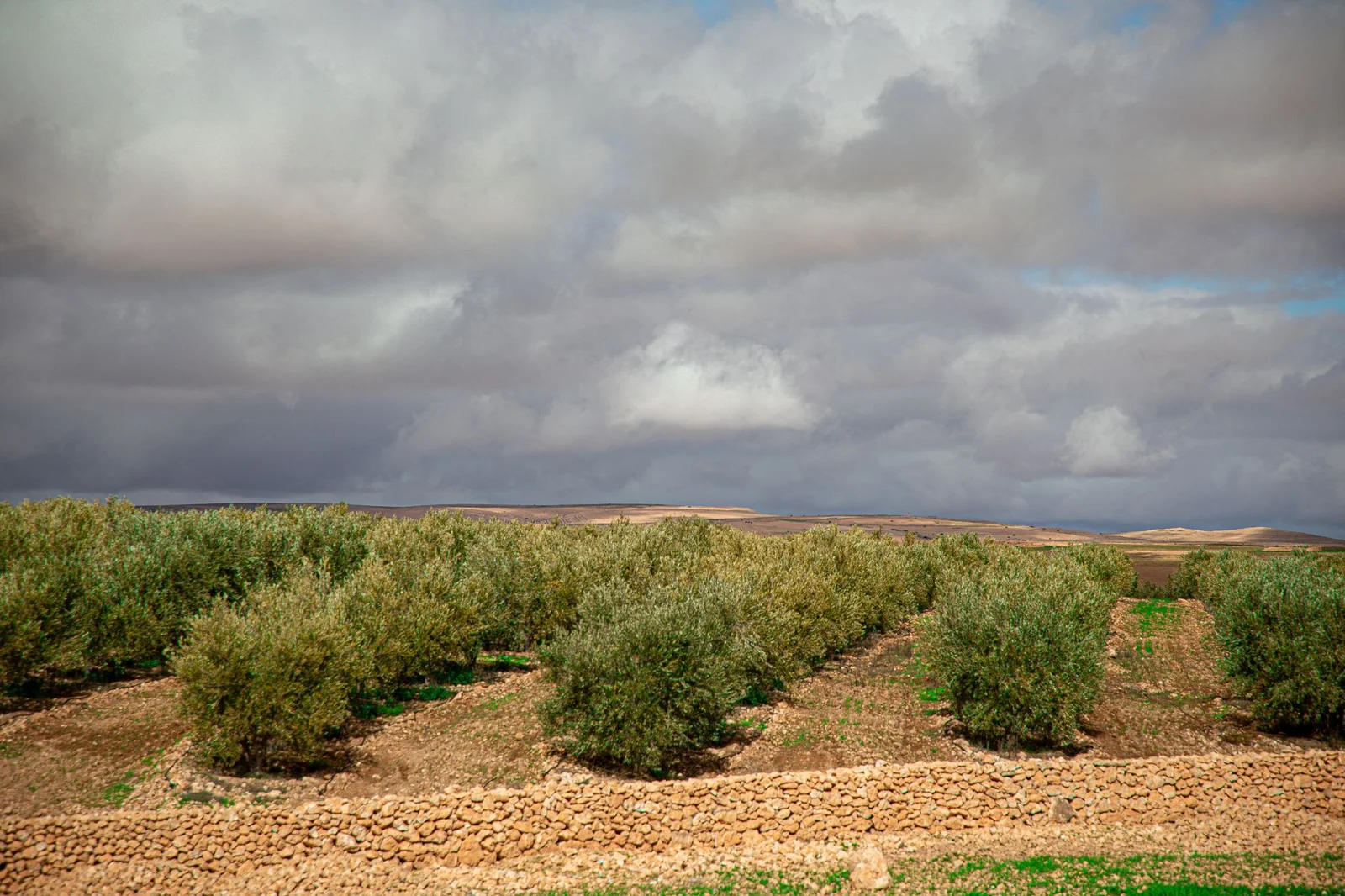
High-density planting is not a choice of variety but a five-component system — miss one and it performs worse than a traditional grove. Spacing, yields, the overlooked oil-content trade-off, and who it does not suit.
Article
Building a high-density olive grove: five requirements
High-density planting is not a choice of variety but a five-component system — miss one and it performs worse than a traditional grove. Spacing, yields, the overlooked oil-content trade-off, and who it does not suit.
 Article
What happens if it rains during the olive harvest? Wait, or pick?
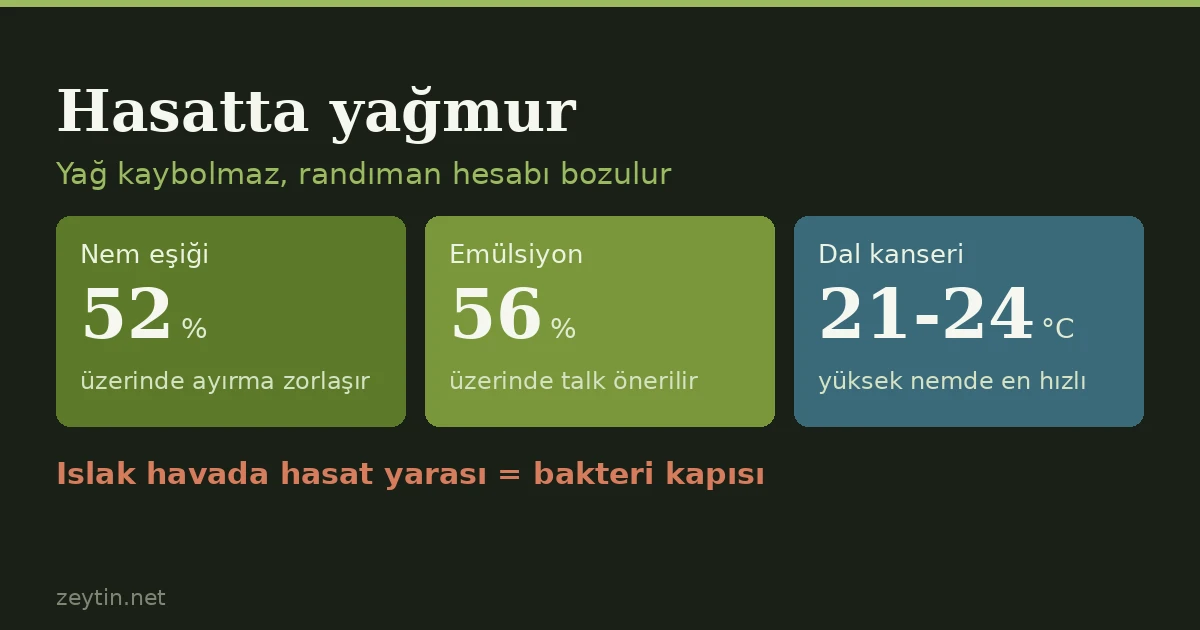
Rain does not destroy the oil; it distorts the yield figure, because fruit oil content is measured on a fresh-weight basis. The real damage shows up as emulsion at the mill, as the "musty-humid-earthy" sensory defect, and as olive knot bacteria entering harvest wounds in wet weather.
Article
What happens if it rains during the olive harvest? Wait, or pick?
Rain does not destroy the oil; it distorts the yield figure, because fruit oil content is measured on a fresh-weight basis. The real damage shows up as emulsion at the mill, as the "musty-humid-earthy" sensory defect, and as olive knot bacteria entering harvest wounds in wet weather.
 Article
Which olive variety is the most productive? Regular crops, early bearing and alternate bearing
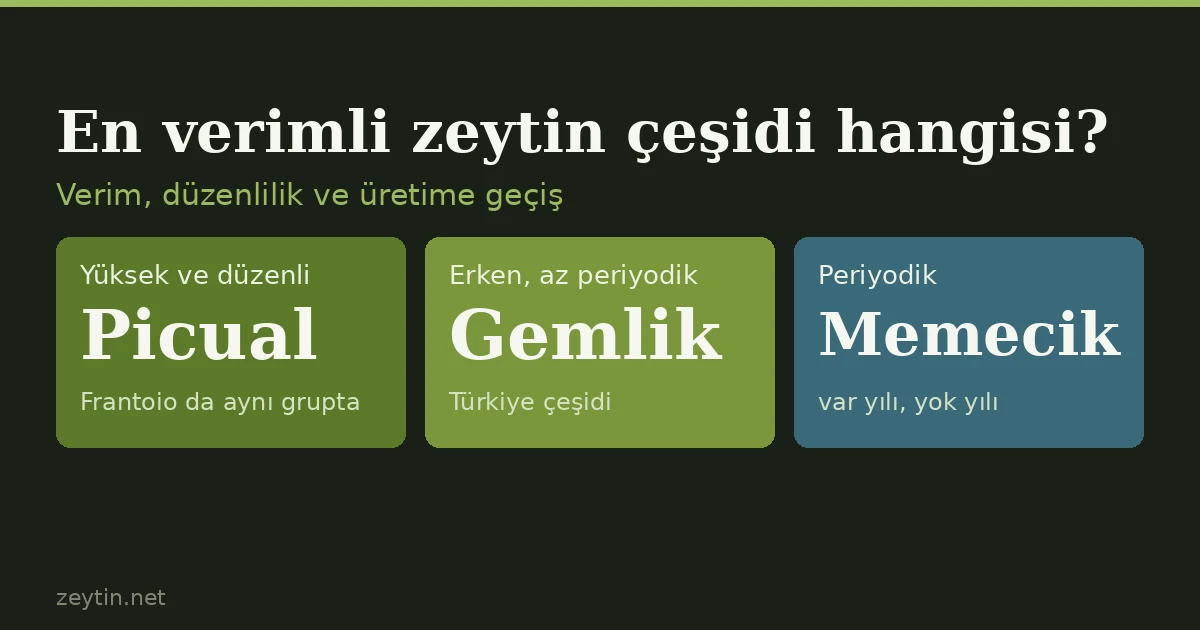
There is no single "most productive olive". Productivity depends on whether a tree bears regularly every year, how early it starts cropping and pollination. In our variety data, Picual and Frantoio are high and regular, Gemlik is early with low alternate bearing, while Kalamata, Hojiblanca and Memecik swing between on and off years.
Article
Which olive variety is the most productive? Regular crops, early bearing and alternate bearing
There is no single "most productive olive". Productivity depends on whether a tree bears regularly every year, how early it starts cropping and pollination. In our variety data, Picual and Frantoio are high and regular, Gemlik is early with low alternate bearing, while Kalamata, Hojiblanca and Memecik swing between on and off years.
 Article
Caring for an olive tree in a pot: container, soil, watering, light and winter
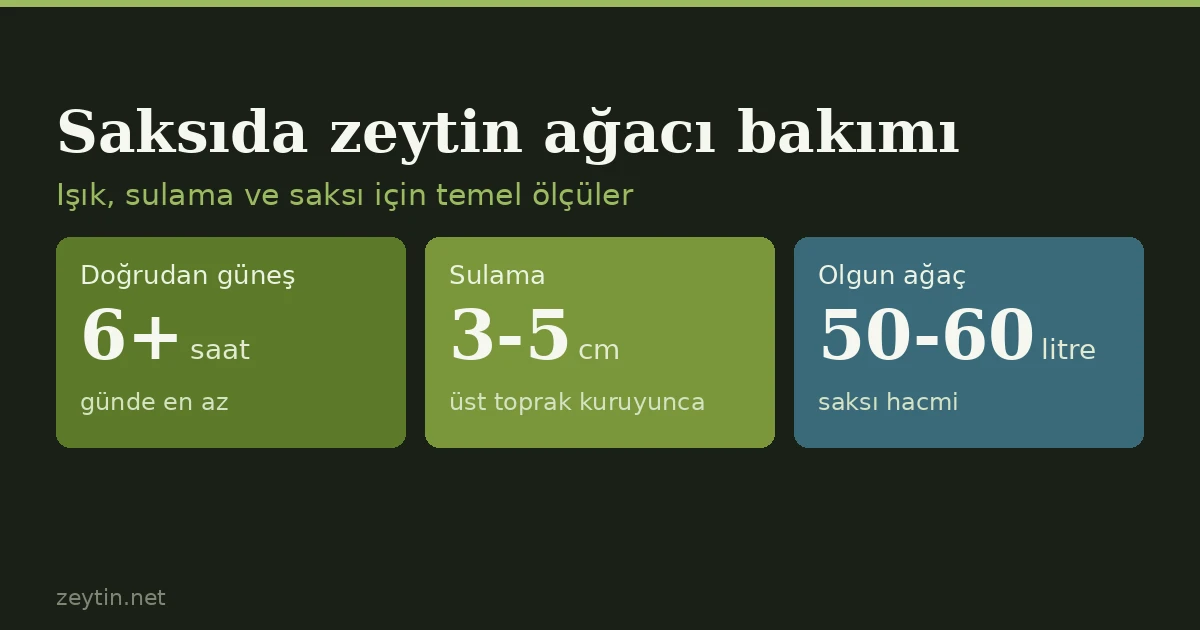
Olive trees can live in pots, but they do not forgive two things: too much water and too little light. A wide pot with drainage holes, a free-draining mix, watering once the top layer dries and at least six hours of direct sun are the basic rules. Expecting fruit indoors is usually pointless without a cool winter.
Article
Caring for an olive tree in a pot: container, soil, watering, light and winter
Olive trees can live in pots, but they do not forgive two things: too much water and too little light. A wide pot with drainage holes, a free-draining mix, watering once the top layer dries and at least six hours of direct sun are the basic rules. Expecting fruit indoors is usually pointless without a cool winter.