Marmarabirlik plans to buy 60,000 tonnes of olives: 15 per cent of the 400,000 tonnes expected in its region
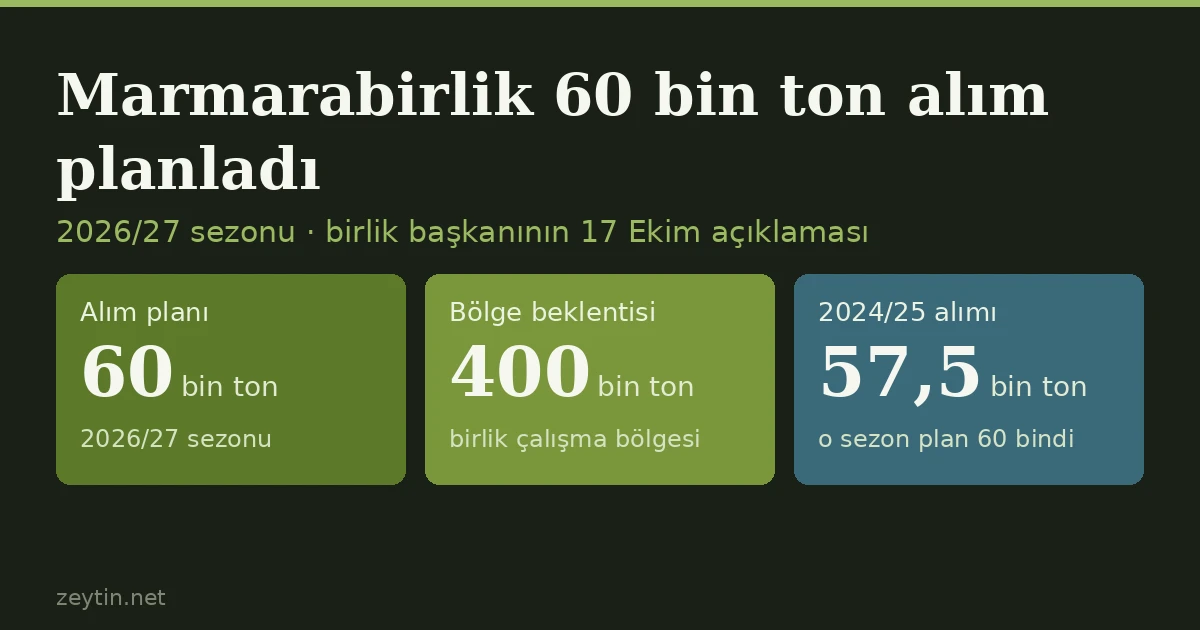
According to a statement by chairman Ali Yıldız on 17 October, Marmarabirlik plans to buy about 60,000 tonnes of olives from growers this season, while its region expects 400,000 tonnes. The union set the same target in 2024/25 and closed that campaign at 57,500 tonnes. Crop declarations close on 23 October; the purchase price has not been announced.
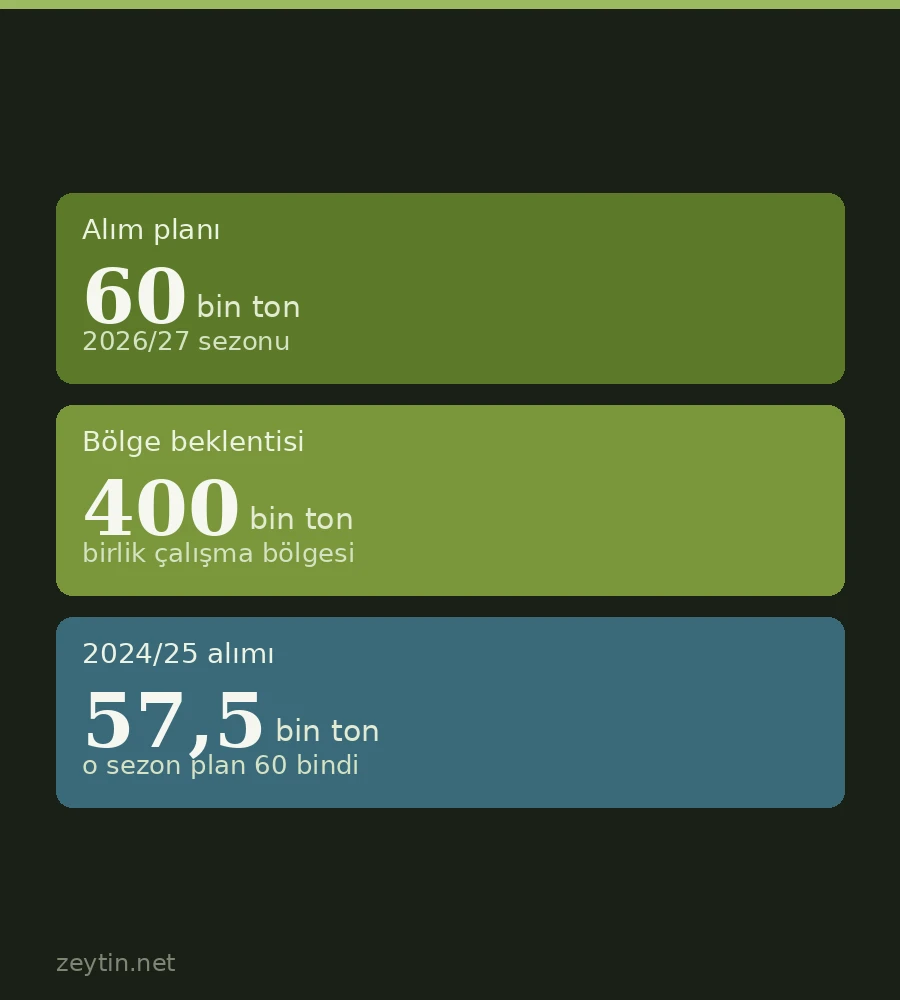
Marmarabirlik, the union of olive sales cooperatives around the Sea of Marmara, plans to buy about 60,000 tonnes of olives from growers this season. According to a statement by its chairman, Ali Yıldız, on 17 October 2026, that would be one of the highest purchase volumes in the union's history. In the same statement he said the union's working region expects a crop of about 400,000 tonnes.
Put the two figures side by side and the picture is clear: the union will be able to take roughly 15 per cent of the olives expected in its own region. The price of the remaining 85 per cent will be set by traders, brokers and mills. But because Türkiye has no state floor price for table olives, the purchase price Marmarabirlik announces works as the reference for the whole region, and often beyond it.
Who Marmarabirlik is
Marmarabirlik is a federation of eight cooperatives — Gemlik, Mudanya, Erdek, Orhangazi, İznik, Edincik, Mürefte and Marmara Island — that buys olives from its members, processes them and sells them under its own brand. The region it covers is the heartland of Turkish black table olives, mostly of the Gemlik variety. Members are bound by the cooperative's rules: they declare their expected crop in advance and the cooperative buys against that declaration. Because the union buys small fruit that private buyers often refuse, its prices matter most to growers at the lower end of the size scale.
How big the plan is
The union's figures over the last three seasons show where 60,000 tonnes sits:
| Season | Crop declarations | Purchases |
|---|---|---|
| 2023/24 | — | 35,000 t |
| 2024/25 | 99,300 t | 57,500 t (plan 60,000) |
| 2025/26 | 67,000* | not published |
| 2026/27 | declaration window open | plan: about 60,000 t |
2023/24 purchases and the 2024/25 declarations and plan come from the union's price announcement of October 2024; 2024/25 purchases from the chairman's campaign review of 16 January 2025; 2025/26 declarations from that season's price announcement. *The union gave this figure as "67 thousand crop declarations" without stating a unit.
The striking point in this table is that 60,000 tonnes is not a new ceiling. In the previous record season, 2024/25, the union set exactly the same target and closed the campaign at 57,500 tonnes. The bill for that season's olives came to 3.185 billion lira. Most of the volume was concentrated in a few cooperatives: İznik 14,900 tonnes, Mudanya 13,550, Edincik 8,010 and Erdek 6,950.
In other words, the union is meeting this season's record forecast not by expanding its buying capacity but by repeating the volume of the record season two years ago. As the regional crop grows, the union's share shrinks. Against 400,000 tonnes, 60,000 tonnes is not a volume that clears the market; it is a volume that sends a price signal.
The declaration window closes on 23 October
Which growers the union buys from is decided by the crop declaration that opened in the cooperatives on 21 September. The window closes on 23 October; a member who does not declare cannot deliver. In 2024/25, the union ended up buying about 58 per cent of the 99,300 tonnes declared. This year's declaration total has not been published yet, so how much of it the 60,000-tonne plan will cover will only be known once the window closes.
In past seasons the union set the maximum it would take from each member according to the volumes the cooperative had historically bought and the member's average deliveries. That rule is the reason declarations and purchases diverge.
No price yet
This season's purchase price has not been announced. In 2024 the prices came out on 26 October, and in the face of a record crop the previous year's prices were set as advance prices; growers were paid 50 per cent up front and the balance after purchases ended. The final 2025/26 prices, per kilogram, were 160 lira for table olives at 18 count, 55 lira at 41 count and 53 lira for oil olives. "Count" here is the number of fruits per kilogram; the smaller the number, the larger the olive and the higher the price.
The delay is adding to tension in the field. In Akhisar, in Manisa province, growers halted the harvest for a week after table-olive buying that opened at 80 lira per kilogram reportedly slid to 50 lira, and oil olives to 10 lira. Akhisar lies outside Marmarabirlik's region, but the union's figure will still be the benchmark in those negotiations.
A national record and a call to eat more oil
Yıldız said Türkiye's olive crop is expected to reach 3.8 million tonnes, which he called the largest in the history of the Republic. The figure matches the Ministry of Agriculture and Forestry's first 2026 estimate of 3,814,500 tonnes, against 2,450,000 tonnes in 2025.
The chairman called for cooperation between growers, cooperatives and unions so that the surplus does not turn into a crisis, and stressed that domestic consumption needs to rise. In his words, Turkish per-capita olive oil consumption is around 2 kilograms a year and would need to reach 4 to 6 kilograms to balance production. Our own consumption comparison puts the figure at 1.8 kilograms, against 11.4 in Spain and 10.3 in Greece.
Yıldız also named counterfeiting and adulteration among the sector's main problems and asked for tighter inspections and penalties. On 12 October the Ministry added five more olive oil entries to its public adulteration list. The union also used the occasion to promote a cocoa-hazelnut spread made with olive oil — a small sign that it is looking for new outlets for oil as well as for olives.
What to watch
The two dates that matter are 23 October, when the declaration window closes, and the price announcement that is likely to follow. If the declared volume comes in well above 60,000 tonnes, as it did two years ago, the gap between what members expect to deliver and what the union will take becomes the story of the season. Growers who cannot deliver to the union will be selling into the private market at the same moment as everyone else.
Read with care
⚠ 60,000 tonnes is a plan; the actual volume is only known at the end of the campaign. In 2024/25 the plan was 60,000 and the outcome 57,500 tonnes.
⚠ The 400,000-tonne regional expectation and the per-capita consumption figure are the chairman's assessments, not an official regional estimate.
⚠ The 15 per cent and 58 per cent shares are our own calculation: the planned and actual purchases divided by the regional expectation and declaration total given in the same statements.
One rating per visitor; you can change yours at any time. Ratings are real reader votes — no seeded or default scores.
Related
 Article
The 2026/27 season opens: first harvests in Ayvalık, Gemlik and Bozcaada
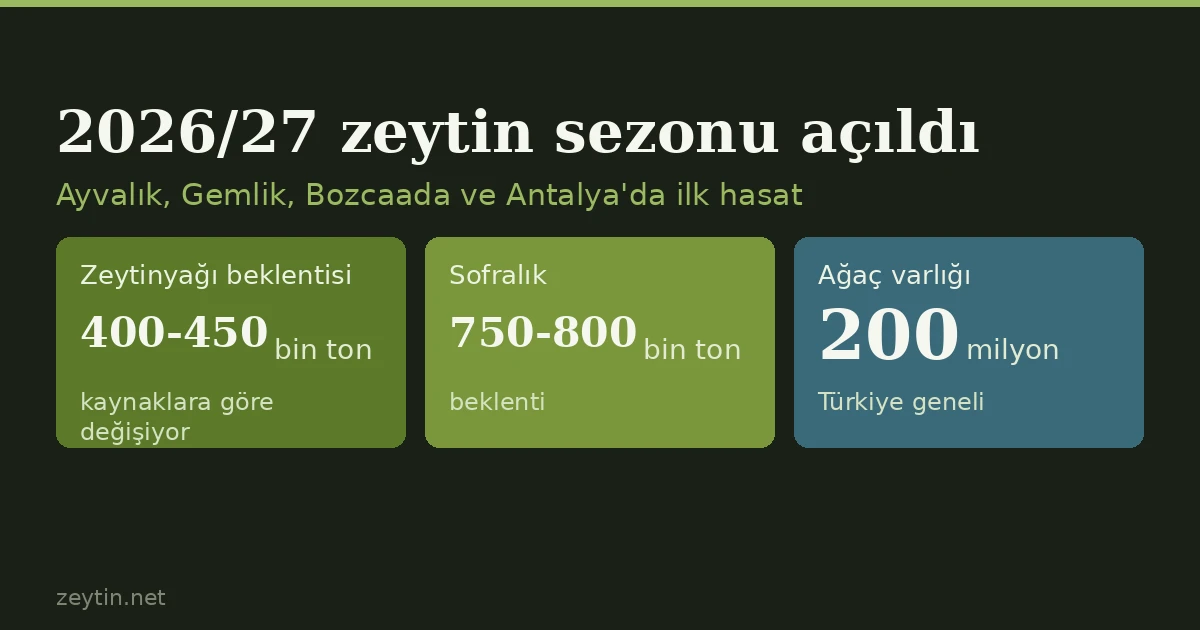
The new olive season opened with three events on 11-13 September. In Ayvalık, an on-year forecast of 400,000-450,000 tonnes of olive oil was voiced; in Gemlik the first olives were picked during the festival; and on Bozcaada the island's first olive oil was pressed with a portable system.
 Article
Greece finally puts a number on its cost: €3-3.5 a kilo, up to €5 with labour
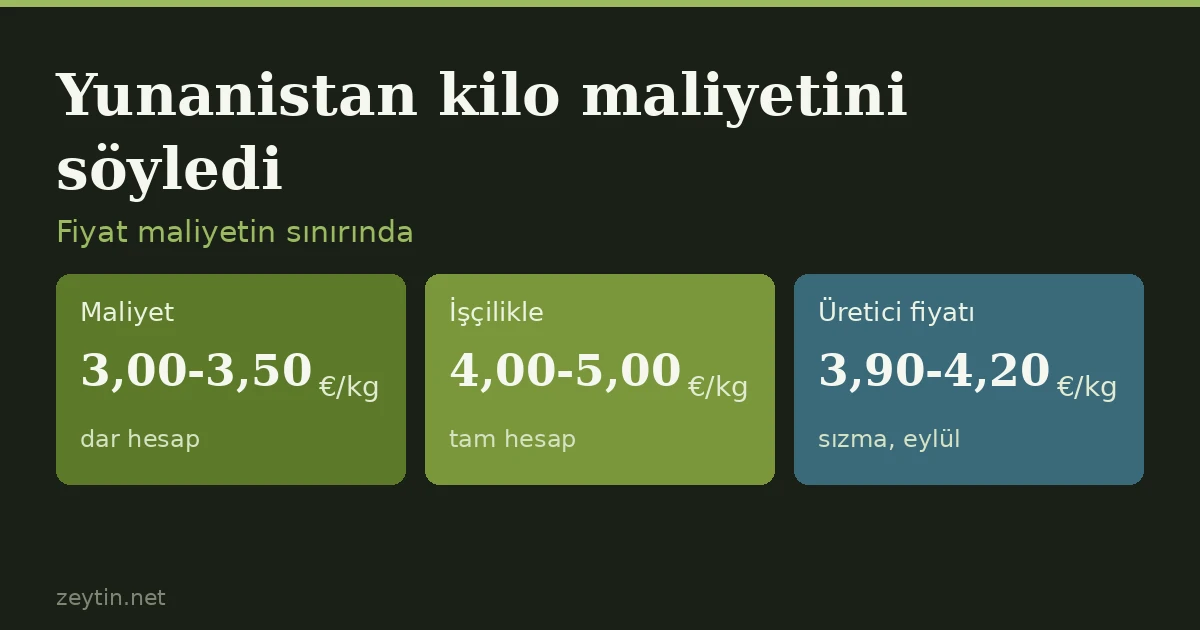
For the first time Greece has put a per-kilo figure on its olive oil production cost: €3.00-3.50, rising to €4.00-5.00 once labour is fully counted. The producer price stands at €3.90-4.20, at or below that cost. Spain's €1.70-2.00 for the same item shows where the competitive gap actually sits. Greek output for 2026/27 is estimated at 280,000-330,000 tonnes.
 Article
Greece opens the season at €4: no scarcity in the Mediterranean, but pressure on price
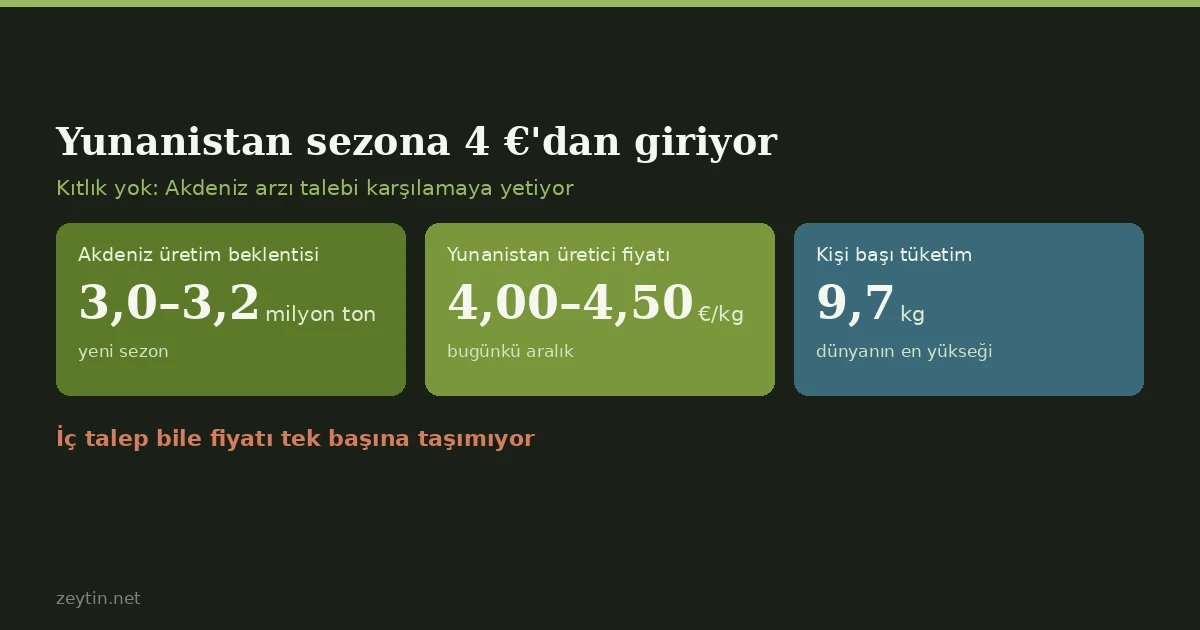
Manolis Giannoulis, president of the National Interprofessional Olive Oil Organization, expects the season to open at around €4 per kilogram. Mediterranean output is forecast at 3–3.2 million tonnes: no record, but enough to meet demand. The market is quiet, buyers are few, and costs plus North African imports keep the pressure on.
 Article
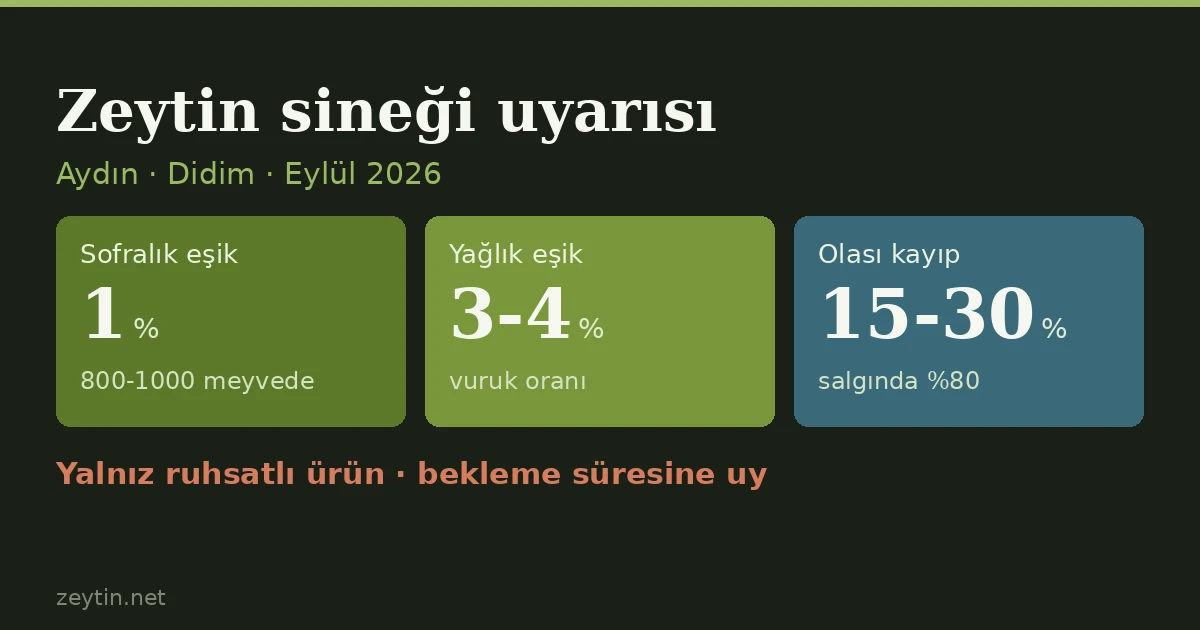
Olive fruit fly warning before harvest in Aydın: check groves, spray only above the threshold
The Didim District Directorate of Agriculture and Forestry, together with the Aydın Provincial Directorate, has warned growers about the olive fruit fly ahead of the harvest. Growers were asked to check groves regularly, monitor pest density and, if needed, act only with products licensed for olives and at the right time. Fly pressure rising in autumn cuts both yield and oil quality.