Rain in Andalusia, prices in Aydın: how Spain's drought set the price in Türkiye
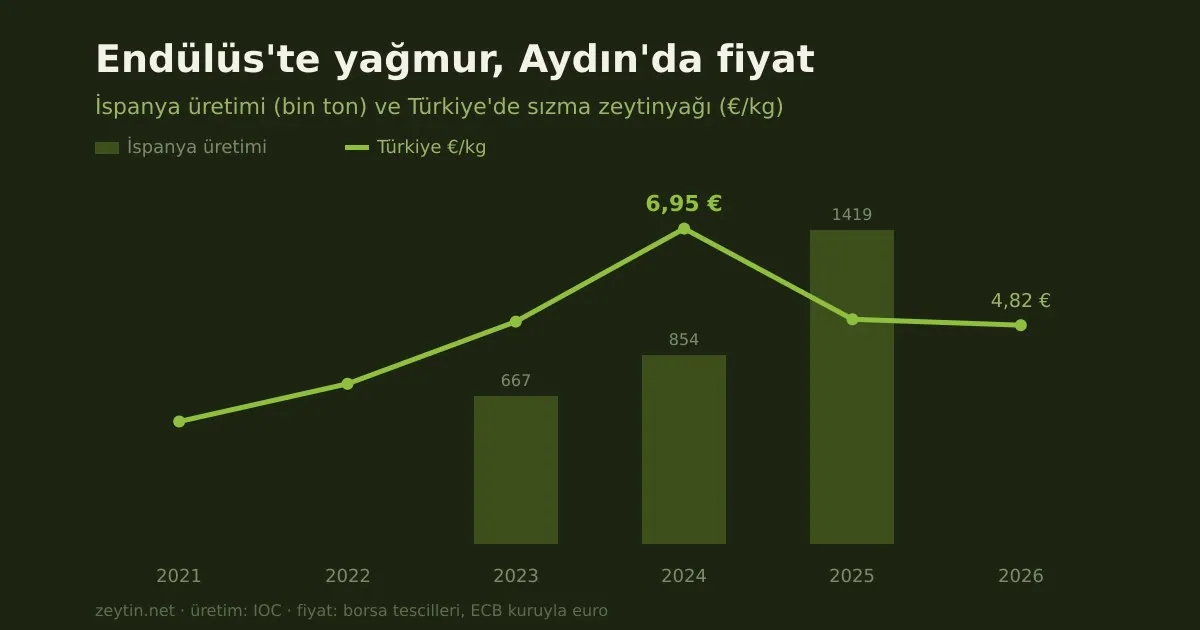
Spain makes 40% of the world's olive oil. Its output halved in 2022/23 and Türkiye's euro price went from €2.70 to €6.95.
When olive oil prices come up in Türkiye, we usually look at our own harvest. The figures of the last three years say something else: what sets the price in Türkiye is, to a large extent, whether it rained in Andalusia.
That is not an exaggeration. Below we put our own exchange data next to world production figures, and the fit is too close to be coincidence.
Why Spain?
Few agricultural products are as concentrated in a single country as olive oil.
According to the International Olive Council, world production in 2024/25 was 3,572,000 tonnes, of which 1,419,000 tonnes came from Spain — roughly 40% of the world's output from one country. In the same season Türkiye produced 505,000 tonnes, Tunisia 340,000, Greece 250,000 and Italy 248,000.
The consequence is that Spain's harvest more or less is world supply. A dry year in Andalusia sets the price in Aydın too, because Spain is the reference in bulk olive oil trade and when supply tightens buyers take what they can find.
How the crisis developed
| Season | Spain | World | Situation |
|---|---|---|---|
| 2019/20 | 1,125 | — | near normal |
| 2020/21 | 1,389 | — | abundant |
| 2022/23 | ~667* | — | drought, trough |
| 2023/24 | 854 | 2,589 | still low |
| 2024/25 | 1,419 | 3,572 | recovery |
| 2025/26 (est.) | — | 3,440 | normalising |
Source: International Olive Council sector statistics. * The 2022/23 figure is not a directly published value; it is derived from the IOC's "854,000 tonnes, +28%" for 2023/24 and is approximate.
The table says this: in 2022/23 Spain fell to half its normal output. Recovery in 2023/24 was limited. And world production in 2023/24 came in at 2.59 million tonnes — far below the 3.57 million it would reach the following year.
For two consecutive years there was not enough olive oil in the world.
How it showed up in Turkish prices
Now to our own data. The euro prices below come from converting each of 1,257 exchange registrations at the European Central Bank rate for its own day.
| Year | Türkiye €/kg | Change | World supply |
|---|---|---|---|
| 2021 | 2.70 | — | abundant |
| 2022 | 3.53 | +31% | drought begins in Spain |
| 2023 | 4.90 | +39% | effect of the trough season |
| 2024 | 6.95 | +42% | stocks exhausted |
| 2025 | 4.95 | −29% | Spain recovers |
| 2026 | 4.82 | −3% | supply normal |
The curves track each other almost exactly. As Spain's output fell, Türkiye's price rose; in the year Spain recovered, Türkiye's price fell 29%.
What stands out is that the fall happened independently of Türkiye's own harvest. Türkiye produced 505,000 tonnes in 2024/25 — up 135% on the previous season. Both the world and Türkiye had plenty, and the price came down accordingly.
A lag of about a year
There is a detail between the two tables worth noticing.
Spain's worst season was 2022/23. The year prices peaked in Türkiye was 2024. The lag of roughly a year is explained by stocks.
A season's crop is not consumed within that season. Oil in storage keeps feeding the market for a while after a bad harvest. Prices peak not when production falls but when stocks run out. 2024 was the year the warehouse emptied after two poor seasons.
The same lag worked on the way down: Spain recovered in 2024/25, but prices in Türkiye came down gradually through 2025 rather than in a single step.
For a producer this is practical knowledge: the world harvest tells you about prices roughly a year ahead. Whether it rains in Andalusia this spring shows up in your pocket not next season but the one after.
Why is Türkiye so exposed?
The question worth asking: if Türkiye largely consumes what it produces, why does Spain set the price?
The answer is that openness runs both ways. In a market where the export door is open, domestic prices cannot stay independent of world prices. When the world price rises, sellers turn to export, domestic supply thins, and the domestic price rises with it. When the world price falls, the reverse happens.
So even though Türkiye's export volume is modest, the mere possibility of exporting ties the domestic price to the world price. The only thing that would sever that link is an export ban — which creates problems of its own.
There is an upside to this: when world prices spiked in 2024, Turkish growers benefited from that spike too. The link runs in both directions.
2026 and beyond
The IOC expects world production of 3,440,000 tonnes in 2025/26 — 4% below the previous season but far above crisis levels.
That means supply has normalised. Our own data agrees: the euro price is down from €6.95 in 2024 to €4.82 and has been flat through 2026.
Industry representatives expect one of the largest harvests on record in Türkiye in 2026-2027. If that materialises, downward pressure on domestic prices continues — difficult for growers, favourable for exports.
Limits
Production figures come from the International Olive Council's published sector statistics; they are not data we collect, and the IOC notes they are subject to revision. The 2022/23 Spanish figure is derived from a published percentage change.
The price side is our own: exchange registrations and ECB daily rates.
Finally: two curves tracking each other shows co-movement, not causation on its own. Exchange rates, energy costs and domestic demand all moved over the same period. But when the direction, size and timing of a supply contraction fit this well, looking for another explanation would be forcing it.
Summary
- Spain alone produces roughly 40% of the world's olive oil.
- In 2022/23 Spanish output fell to half its normal level; world supply was short for two years.
- Türkiye's euro price rose from €2.70 in 2021 to €6.95 in 2024.
- In the season Spain recovered, the Turkish price fell 29% — Türkiye's own output also rose 135%.
- The peak came not when production fell but when stocks ran out: a lag of about a year.
- As long as the export door is open, domestic prices cannot stay independent of world prices.
Related reading: Did olive oil go up 13.5 times, or 1.6? · Is Turkish olive oil cheap? · Exchange volume is not the harvest · Market page
One rating per visitor; you can change yours at any time. Ratings are real reader votes — no seeded or default scores.
Related
 Article
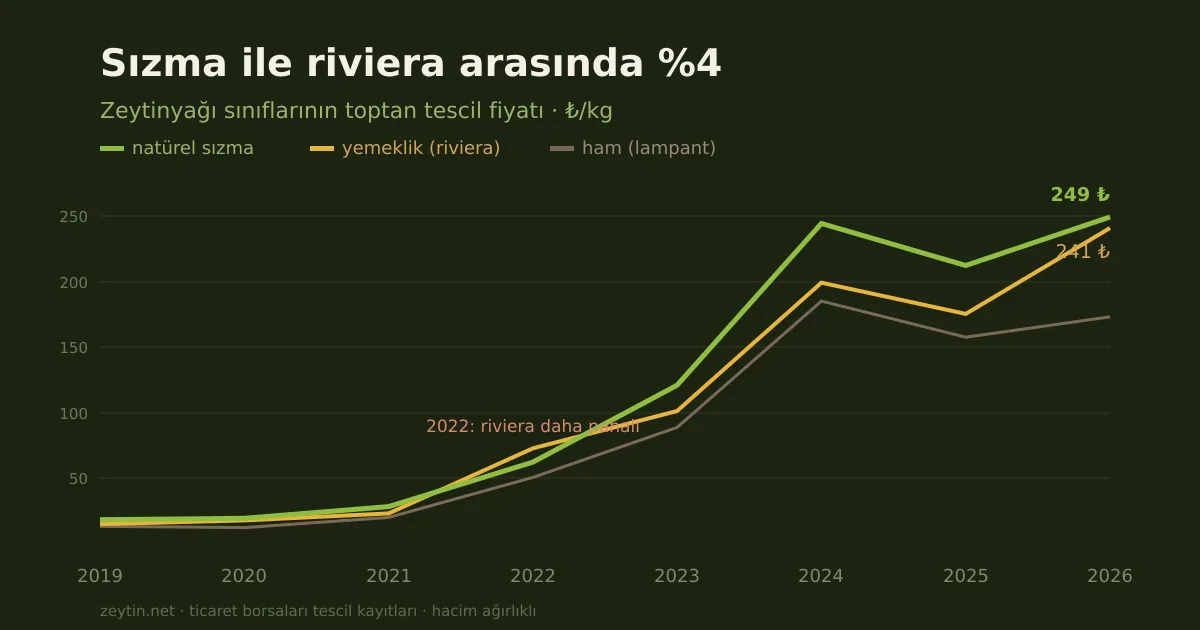
The gap between extra virgin and riviera is only 4% at wholesale
At wholesale, extra virgin is only 4-23% dearer than cooking oil; the seven-year average is 13%. The shelf gap comes from packaging.
Article
The gap between extra virgin and riviera is only 4% at wholesale
At wholesale, extra virgin is only 4-23% dearer than cooking oil; the seven-year average is 13%. The shelf gap comes from packaging.
 Article
Who protects the olive tree? Three layers, from the IOC to Law 3573
We have cited the International Olive Council in 23 articles without ever saying what it is. The three orders that protect the olive: trade standards, landscape conventions, and Türkiye's 1939 Law No. 3573.
Article
Who protects the olive tree? Three layers, from the IOC to Law 3573
We have cited the International Olive Council in 23 articles without ever saying what it is. The three orders that protect the olive: trade standards, landscape conventions, and Türkiye's 1939 Law No. 3573.
 Article
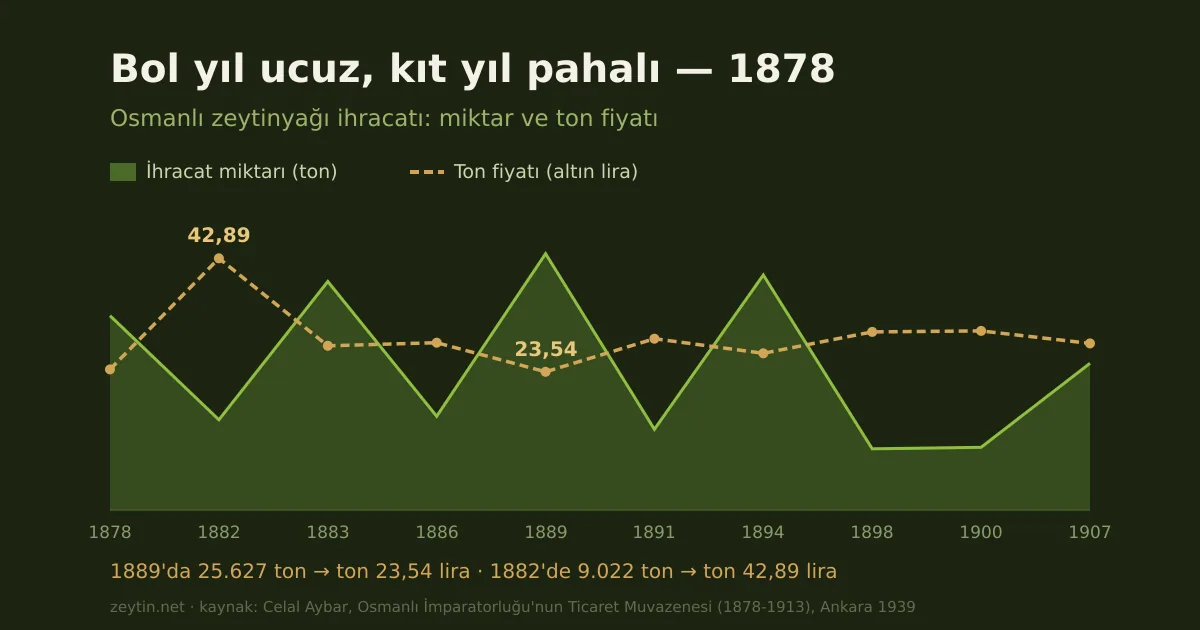
Olive oil trade in the Ottoman Empire: Britain the buyer, the crop the price
25,627 tonnes exported in 1889 at 23.54 lira a tonne; 9,022 tonnes in 1882 at 42.89. The crop-price inverse held a century ago too.
Article
Olive oil trade in the Ottoman Empire: Britain the buyer, the crop the price
25,627 tonnes exported in 1889 at 23.54 lira a tonne; 9,022 tonnes in 1882 at 42.89. The crop-price inverse held a century ago too.
 Article
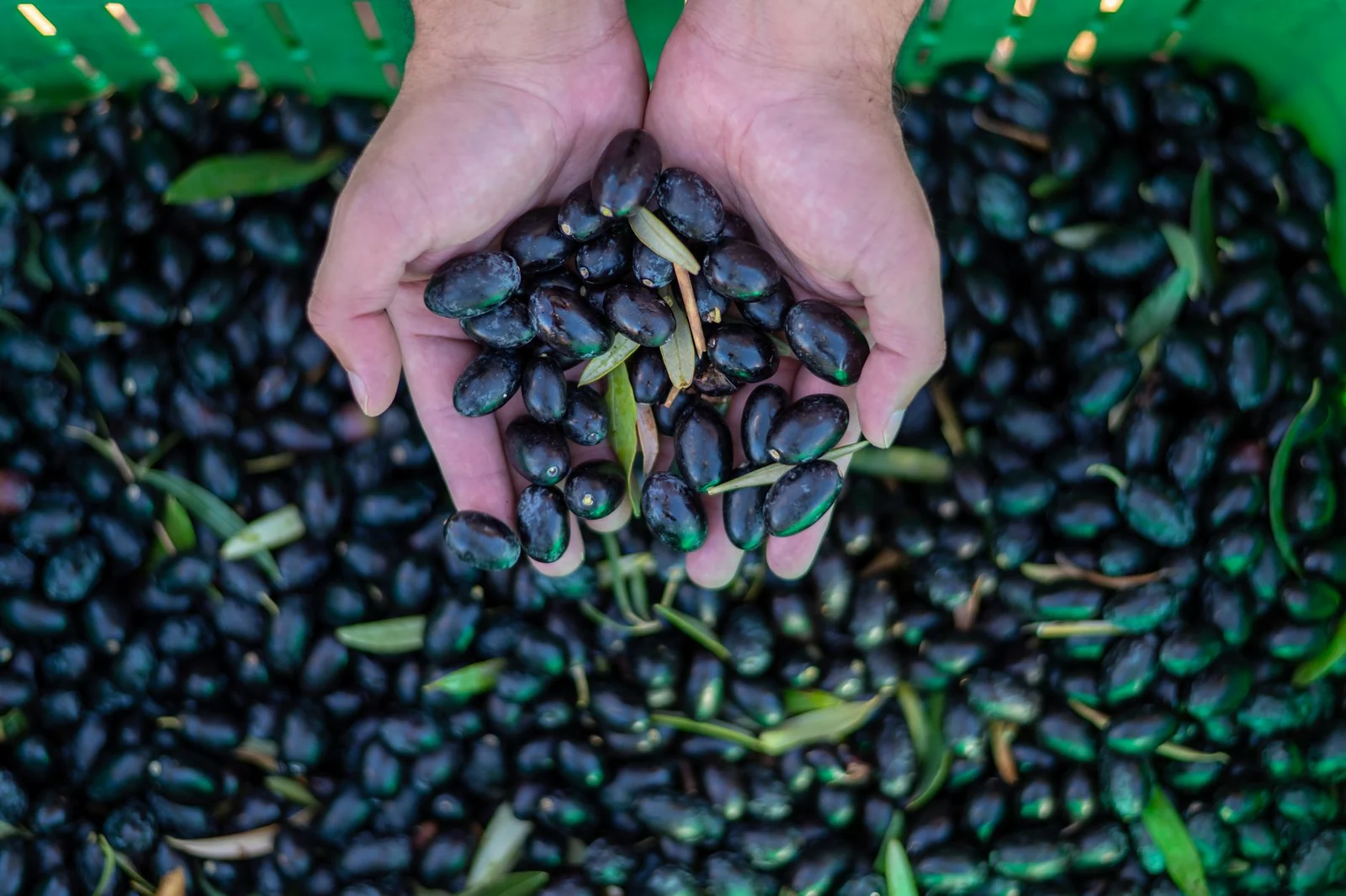
The profitability problem in olive oil exports
Turkey sold to the US at $3,492 a tonne while the world average was $4,235 - the furthest supplier and the cheapest. The EU tariff wall, the Tunisia comparison, and the method none of 17 exporters knew.
Article
The profitability problem in olive oil exports
Turkey sold to the US at $3,492 a tonne while the world average was $4,235 - the furthest supplier and the cheapest. The EU tariff wall, the Tunisia comparison, and the method none of 17 exporters knew.