Butko olive
Butko is a recorded variety of the Black Sea. No measured pomological data published.
Butko is one of the recorded olive varieties of the Black Sea.
Characteristics
Oil content is high. The stone is small and separates easily from the flesh. It cures early in brine but does not keep long.

Where it grows
Butko is recorded in the Black Sea. The provinces growing olives in this region: Artvin, Trabzon, Sinop, Samsun, Ordu, Kastamonu, Tokat, Bartın, Rize and Zonguldak — output is concentrated in Artvin (740 t); elsewhere the scale is very small.
Regional conditions, varietal spread and output: olive growing in the Black Sea
Measured values
Butko's pomological measurements were published in a study of eastern Black Sea cultivars: the fruit was collected in the Yusufeli district of Artvin over the 2004-05 and 2005-06 seasons.
| Property | Value |
|---|---|
| Fruit weight | 1.83 g |
| Fruit length × width | 17.14 × 11.51 mm |
| Stone weight | 0.46 g |
| Flesh ratio | 74.9% |
| Fruits per kilogram | 546 |
These figures place Butko among the small-fruited cultivars: 546 fruits to the kilogram. In the same study Otur comes in at 3.93 g, more than double, and Satı at 2.08 g.
At 74.9% its flesh ratio is the lowest of the three — the stone accounts for a quarter of the fruit's weight. That follows from the small fruit: the smaller the fruit, the greater the stone's share.
Locally
Butko grows in the Yusufeli district of Artvin, within the microclimate of the Çoruh Valley, and is the region's best-known variety.
Its oil won the Superior Taste Award at the International Olive Oil Fair in Beijing in 2006, on the strength of a very low acidity level. Butko is currently in the geographical indication registration process.
The groves look nothing like those on the coast: roughly 25,000 trees on 880 decares, with tree heights reaching 8-12 metres — the harvest is done from ladders. The centuries-old trees protected across generations are counted as local heritage.
More: olive growing in Artvin
Source
- Şeker, M., Gündoğdu, M. A., Gül, M. K. & Kaleci, N. (2012) — Pomological Characteristics of Local Olive Varieties at Eastern Blacksea Region, Zeytin Bilimi 3(2)
- Efe, R., Soykan, A., Cürebal, İ. & Sönmez, S. (2016) — Characteristics and Geographical Distribution of Olive Varieties Grown in Turkey, Zeytin Kitabı, pp. 37-80
- Olive map of Turkey
Where it stands among measured varieties
çeşit sayfası
çeşit sayfası
çeşit sayfası
çeşit sayfası
Values are those published on each variety's own page; the comparison covers only varieties with a measured figure, so it is a comparison of what is known — not of every Turkish variety. See the full ranking and how it is built →
One rating per visitor; you can change yours at any time. Ratings are real reader votes — no seeded or default scores.
Related
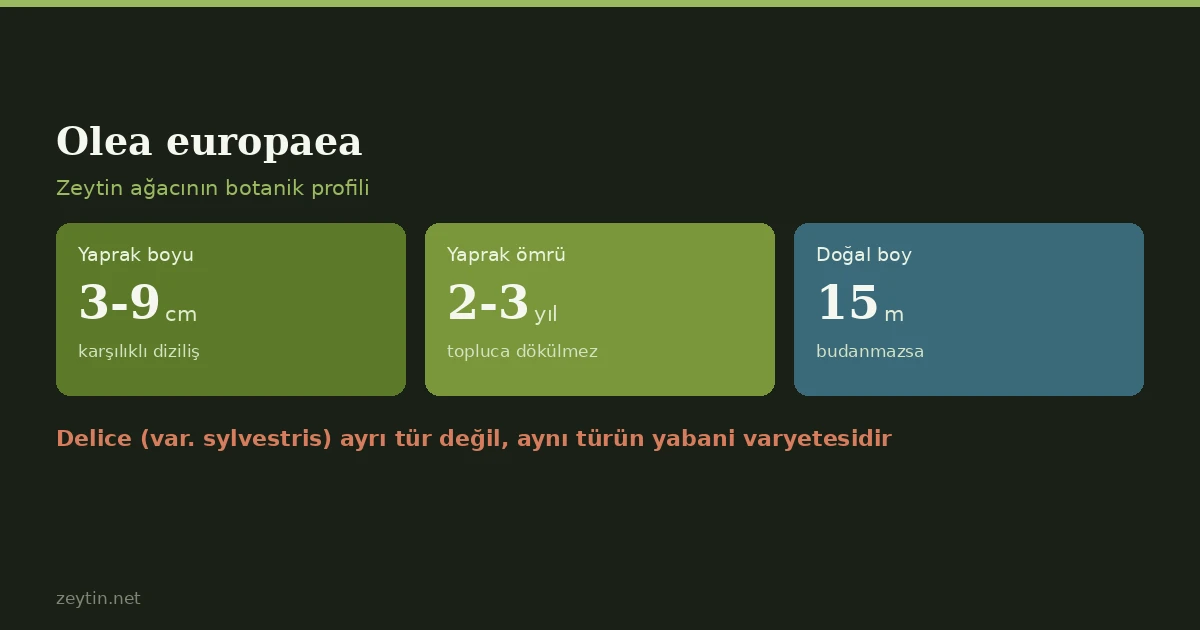 Article
Olea europaea: the botany of the olive tree
The olive's scientific name and classification, why its leaves are silver, its floral structure, the layers of its fruit, its root system and lifespan — and how the wild oleaster relates to the orchard olive.
Article
Olea europaea: the botany of the olive tree
The olive's scientific name and classification, why its leaves are silver, its floral structure, the layers of its fruit, its root system and lifespan — and how the wild oleaster relates to the orchard olive.
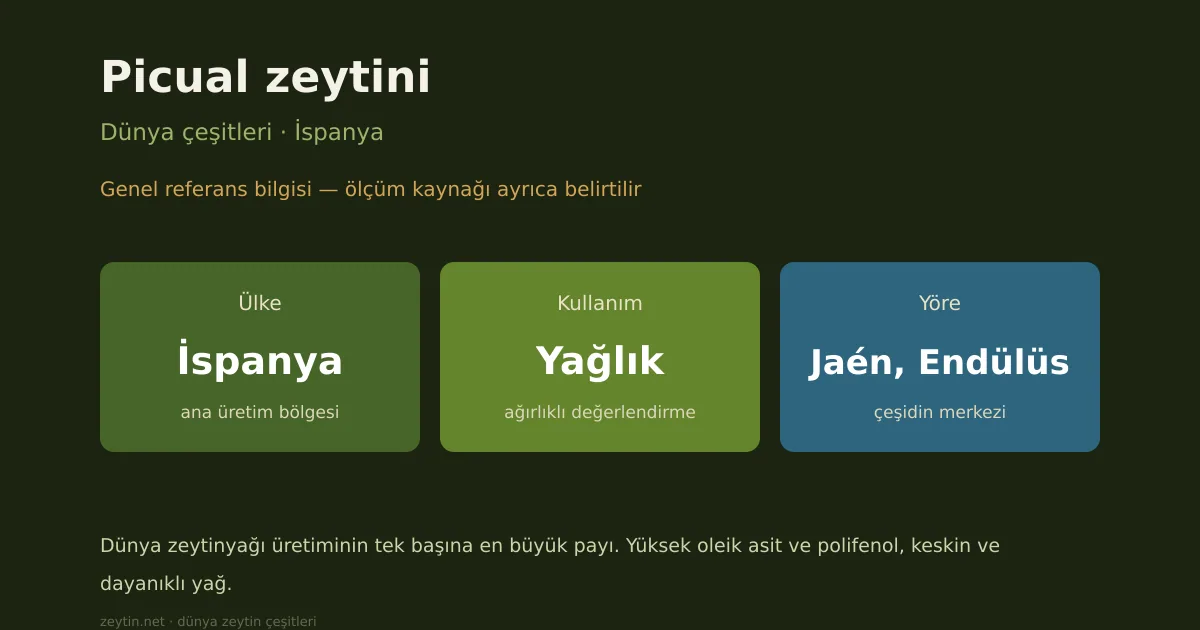 Article
Picual olive: Spain's oil variety
The single largest share of world olive oil production. High oleic acid and polyphenols, a pungent and stable oil.
Article
Picual olive: Spain's oil variety
The single largest share of world olive oil production. High oleic acid and polyphenols, a pungent and stable oil.
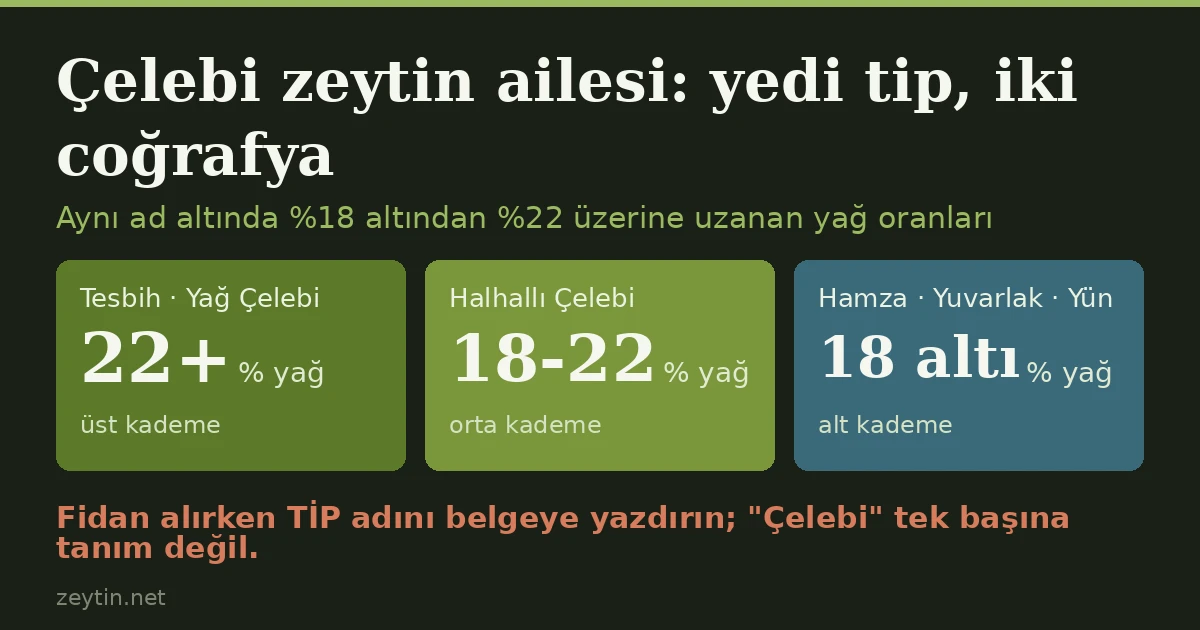 Article
The Çelebi olive family: seven types, two separate geographies
Çelebi is not one variety but a family name. Tesbih Çelebi yields above 22 percent oil while Hamza, Yuvarlak and Yün Çelebi stay under 18. Measured values for seven types.
Article
The Çelebi olive family: seven types, two separate geographies
Çelebi is not one variety but a family name. Tesbih Çelebi yields above 22 percent oil while Hamza, Yuvarlak and Yün Çelebi stay under 18. Measured values for seven types.
 Article
Olive Oil Soap: How It Is Made, Its Types and How to Choose
How saponification works, why curing takes months, and how to recognise genuine olive oil soap.
Article
Olive Oil Soap: How It Is Made, Its Types and How to Choose
How saponification works, why curing takes months, and how to recognise genuine olive oil soap.