Tarsus Sarıulak Olive Oil: milling required immediately after harvest
Registered in 2020. The certificate ties product quality to one condition: the olives must be milled as soon as they are picked. Peroxide averages 8.23.
Nothing degrades olive oil quality more than fruit left waiting. Tarsus Sarıulak Olive Oil's certificate reduces this to a one-sentence requirement.
The record
| Registration no | 767 |
| Protection from | 21.04.2020 |
| Type | Designation of origin |
| Registered by | Tarsus Commodity Exchange |
| Area | The Tarsus district of Mersin |
| Raw material | Tarsus Sarıulak Olive (registration no 345) |
Its raw material is itself registered — a geographical indication whose input is another geographical indication means both links of the chain are protected.

The requirement
t; To secure the product's properties, the olives must be processed into oil as soon as they are harvested.
Picked olives begin to ferment; if they wait, acidity rises, peroxide increases and sensory defects appear. With this single condition the certificate safeguards the product's profile.
Why the phenols are high
The certificate states the distinguishing feature plainly: because of the climate and soil where it grows, the oil is obtained at early harvest, which raises total phenol content.
The peroxide value averages 8.23 meq/kg — far below the maximum the Turkish Food Codex allows for virgin olive oils.
Composition of the oil
| Criterion | Range |
|---|---|
| Oleic acid | 65.57 – 70.13% |
| Oil content of fruit | 18.72 – 19.56% |
| Free acidity | 0.45 – 0.702% |
| Stearic acid | 1.62 – 2.61% |
| Arachidic acid | 0.22 – 0.29% |
| Behenic acid | 0.82 – 1.36% |
The colour is bright yellow.
Both ends of the chain
The Tarsus Commodity Exchange registered both the olive and its oil: the table Tarsus Sarıulak Olive (345) and this oil (767). Two products from the same tree, two separate certificates.
The criteria the document binds
The registration does not only protect a name; it defines the product numerically:
| Criterion | Value in the document |
|---|---|
| Peroxide value | 8.23 meq O₂/kg (max) |
| Harvest-to-pressing window | max 48 saat |
Limiting the time from harvest to pressing binds the operation rather than the outcome: free fatty acidity rises while the fruit waits.
Inspection. Members: Tarsus Ticaret Borsası, Tarsus İlçe Tarım ve Orman Müdürlüğü, Tarsus Ticaret ve Sanayi Odası, Tarsus Ziraat Odası. Results are reported under Industrial Property Law no. 6769 and submitted to the Turkish Patent and Trademark Office.
The production steps in the document
The registration describes production step by step. The document's own sequence:
1. Zeytinlerin Hasadı — Tarsus Sarıulak Zeytinyağı üretimi için kullanılacak Tarsus Sarıulak Zeytinlerinin hasadı Tarsus Sarıulak Zeytininin hasat dönemi ile başlar ve iklime bağlı olarak ocak ayı sonuna kadar devam edebilir Tarsus Sarıulak Zeytini ağaçtan…
2. Zeytinlerin depolanması — Zeytinler hasat edilir edilmez yağa işlenmeleri esastır.
3. Zeytinlerin temizlenmesi ve yıkanması — Temizlik, vibrasyonlu hava akımı veya elek ile başlar.
4. Zeytinlerin kırılması ve ezilmesi — Ezme işlemini kolaylaştırmak için, meyve, 6-7 mm olan deliklerden geçebilecek büyüklükte en az 3-4 parçaya kırılır.
5. Zeytin ezmesinden yağın ekstraksiyonu — a) Hidrolik presleme: Elle veya mekanik olarak daha önceden tasiriye torbaları içine yayılmış zeytin hamuru üzerine, hidrolik basınç uygulanarak yağ ve kara suyun katı fazdan ayrılma işlemidir.
6. Karasuyun zeytinyağından ayrılması — Değişik sistemlerden elde edilen yağ-karasu karışımındaki karasuyun, zeytinyağı üretiminde son işlem basamağı olan ayırma işlemi ile yağdan uzaklaştırılması gerekir.
7. Zeytinyağının Depolanması — Klasik ya da modern yöntemler kullanılarak üretilen natürel zeytinyağı ambalajlama işleminden önce tanklarda depolanır.
That this sequence is binding is what separates a geographical indication from a trade mark: a mark says who produced something, a geographical indication also sets down how it must be produced.
The cultivar behind it, measured
The registration is granted to a place, but the cultivar the definition rests on has measurable values:
| Property | Value |
|---|---|
| 1 kg’daki tane sayısı | 263 |
| Et oranı | %72 |
| Yağ oranı | %19 |
| Kullanım | Sofralık |
| Başlıca yöreler | Erdemli, Mersin |
| Meyve boyu | 24 mm |
| Meyve eni | 15 mm |
| Çekirdek ağırlığı | 1,05 g |
At 19% the oil content sits mid-range; yield alone is not the argument here, aroma is.
Its place in Mersin's olive production
| Item | Value |
|---|---|
| Fruit production | 305,159 t |
| — for oil | 227,098 t |
| — for the table | 78,061 t |
| Olive oil production | 34,938 t |
| Trees | 11,201 thousand |
| Yield per tree | 27.2 kg |
74% of the province's fruit goes to oil. An oil-based registration matches how the province actually produces.
One rating per visitor; you can change yours at any time. Ratings are real reader votes — no seeded or default scores.
Related
 Article
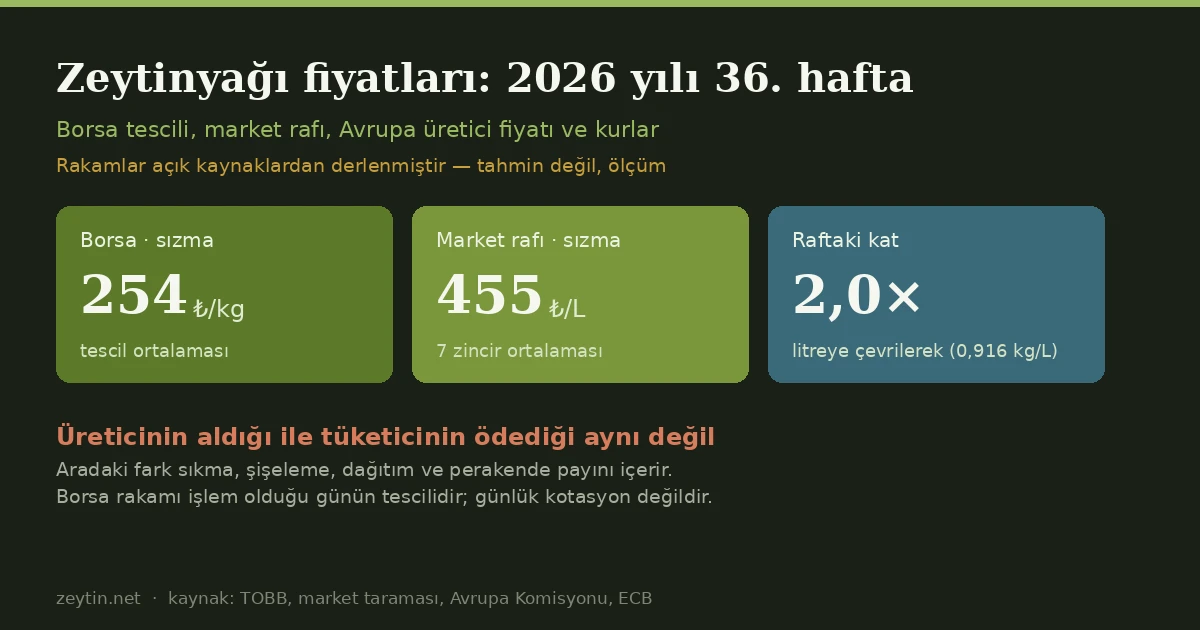
Olive Oil Prices: Week 36 of 2026
Week 36 of 2026: Turkish exchange prices, European producer prices and exchange rates side by side.
Article
Olive Oil Prices: Week 36 of 2026
Week 36 of 2026: Turkish exchange prices, European producer prices and exchange rates side by side.
 Article
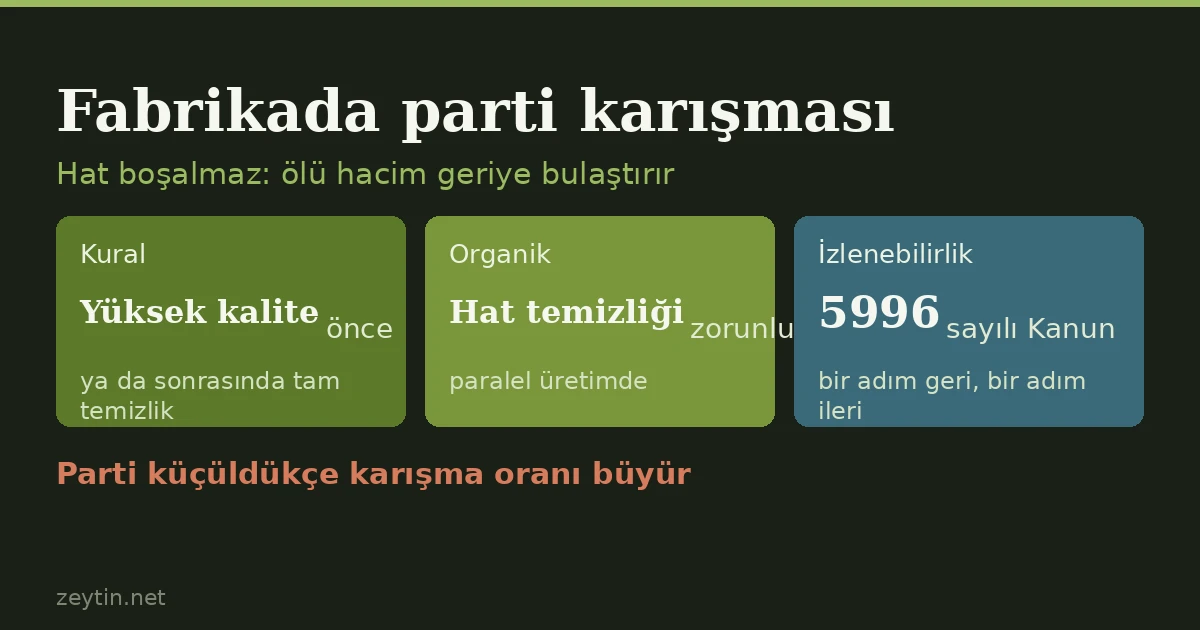
Do batches get mixed at the olive mill? Dead volume in the line and milling order
A mill line does not empty completely between batches: oil remains in the crusher, malaxer, decanter, separator and pipework. Part of the first oil out therefore comes from the previous batch. Why milling order is a rule, why organic certification requires line cleaning, and what a grower should ask at the mill.
Article
Do batches get mixed at the olive mill? Dead volume in the line and milling order
A mill line does not empty completely between batches: oil remains in the crusher, malaxer, decanter, separator and pipework. Part of the first oil out therefore comes from the previous batch. Why milling order is a rule, why organic certification requires line cleaning, and what a grower should ask at the mill.
 Article
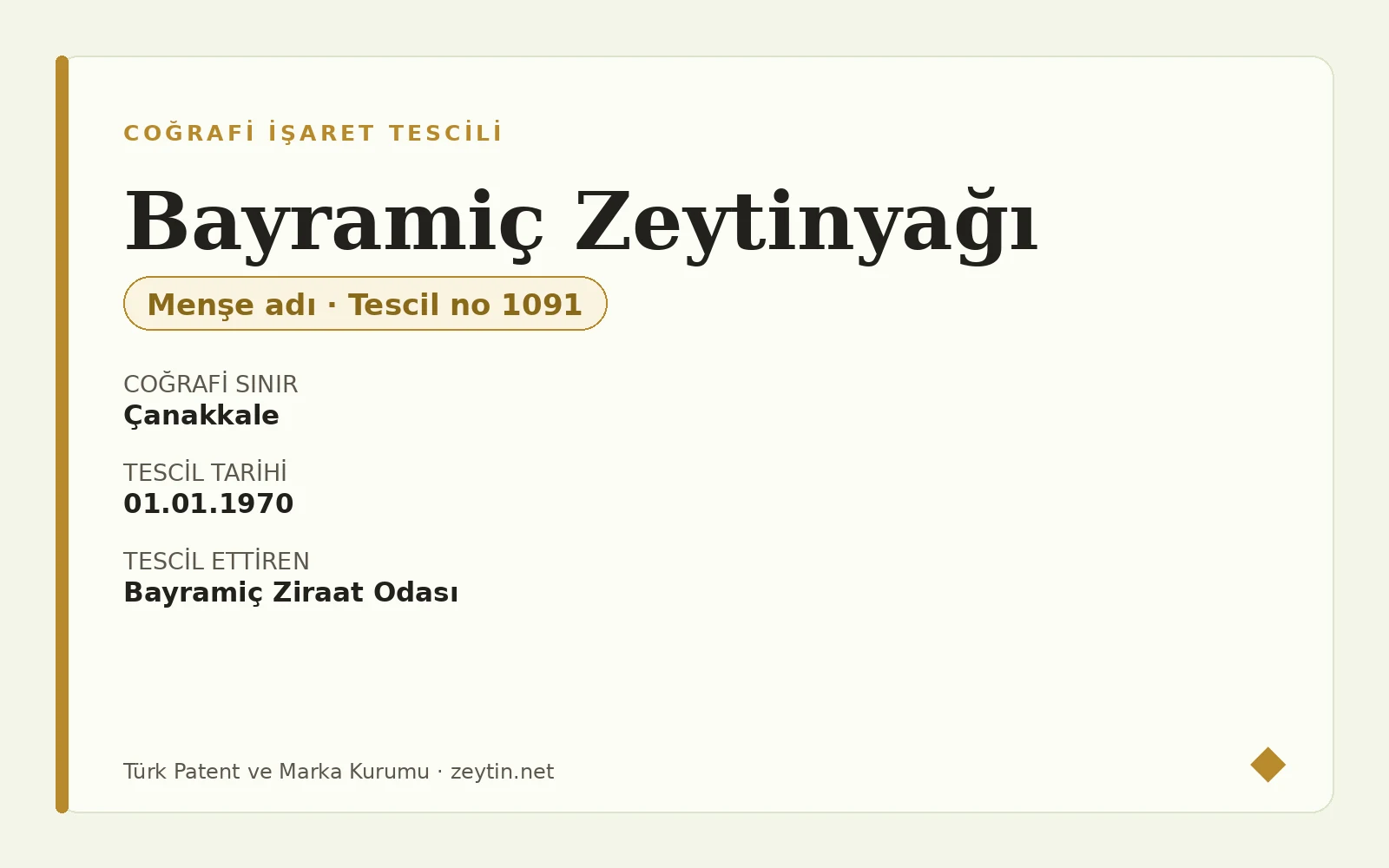
Bayramiç Olive Oil: aroma compounds defined as percentages
Registered in 2022. The certificate defines aroma by compound rather than adjective: hexanal 36.15%, E-2-hexenal 26.14%. Iodine value 80-93.
Article
Bayramiç Olive Oil: aroma compounds defined as percentages
Registered in 2022. The certificate defines aroma by compound rather than adjective: hexanal 36.15%, E-2-hexenal 26.14%. Iodine value 80-93.
 Article
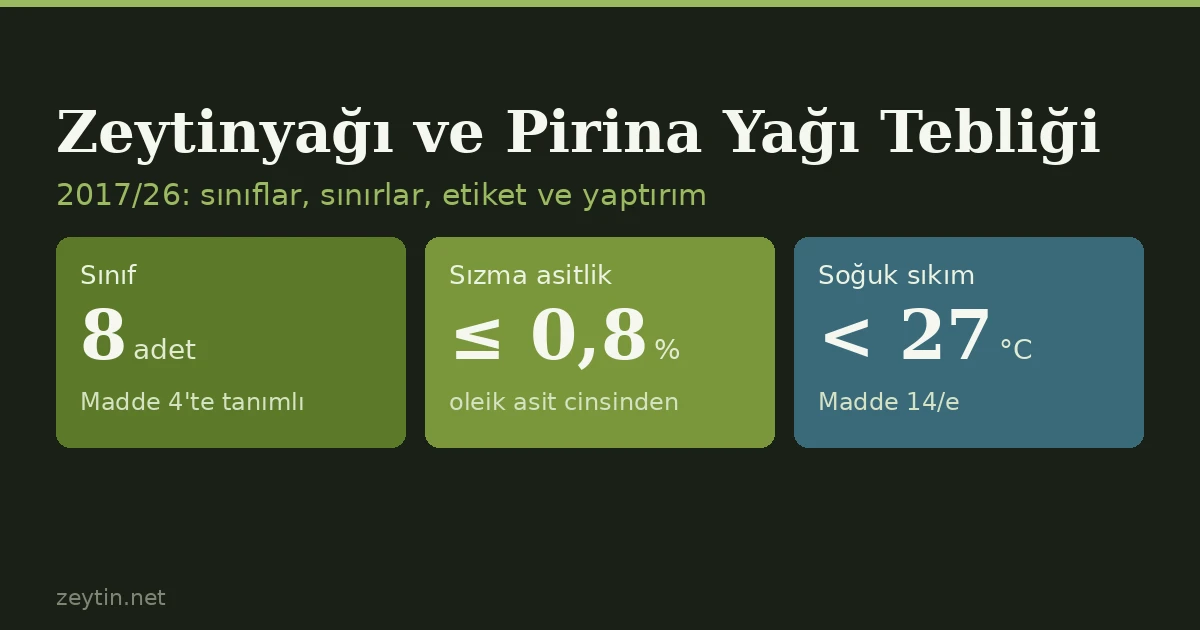
What is Türkiye's Olive Oil and Olive-Pomace Oil Communiqué, and what does it say?
Communiqué 2017/26 sets the grades, lab limits and label rules for olive and pomace oil sold in Türkiye; it was amended twice in 2023.
Article
What is Türkiye's Olive Oil and Olive-Pomace Oil Communiqué, and what does it say?
Communiqué 2017/26 sets the grades, lab limits and label rules for olive and pomace oil sold in Türkiye; it was amended twice in 2023.