Pre-harvest pesticide inspection in Şarköy olive groves: growers picked at random, samples go to ministry-authorised labs
Samples are being taken from olive groves in Şarköy, Tekirdağ, to test for pre-harvest pesticide residue. Growers are picked at random from the Agricultural Information System; if residue is found, a fine, delayed harvest or confiscation of the crop may follow. The sample count and the residue limit are not in the report.

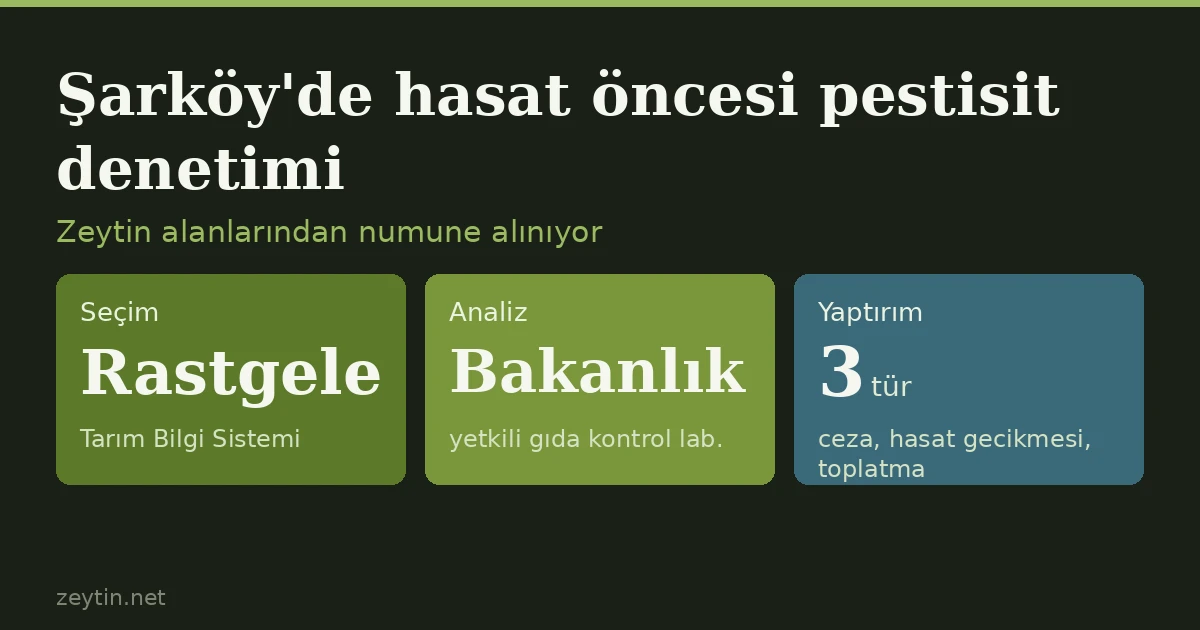
In Şarköy, a district of Tekirdağ province, samples are being taken from olive groves to test for pesticide residue before harvest. According to the report, the samples are collected as part of the Ministry of Agriculture and Forestry's Pre-Harvest Pesticide Inspections under its Plant Health Programme; the statement came from the relevant directorate and the report was published on 11 November 2026. If a pesticide is found in the analysis, sanctions such as an administrative fine, delayed harvest and confiscation of the crop will apply, depending on the status of the active substance.
How does the inspection work?
The steps described in the report:
| Step | As described in the report |
|---|---|
| Selection | Growers are picked at random through a module in the Agricultural Information System |
| Sampling | Staff of the provincial and district directorates take samples from the fields of the selected growers using the proper procedure |
| Analysis | Samples go to food-control laboratories authorised by the Ministry |
| Outcome | If a pesticide is found: an administrative fine, delayed harvest or confiscation of the crop, depending on the active substance |
The random selection is an important detail: no complaint or suspicion is needed to be inspected, and any grower can be picked. The delayed-harvest sanction also carries special weight for olives, since in November the fruit is waiting in the grove in the middle of the oil and table harvest.
The message to growers
As far as the directorate's account goes, the teams also inform growers during the inspection. Based on data from the early-warning system and field observations, they explain that chemical control should be used as a last resort. Plant protection products are to be applied at the right time and at the right dose. The statement notes that faulty applications close to harvest, or the use of unrecommended or banned active substances, can lead to residue in the crop.
The same district, from May to November
In Şarköy, this inspection looks like the other end of a warning issued earlier in the year. On 13 May 2026 the Şarköy district agriculture directorate teams reported that the olive cottony scale (pamuklubit) and the olive moth were starting to be active, and recommended that growers spray in suitable weather with licensed plant protection products. So in the same district the message in May was "if needed, spray on time with licensed products", and in November it is "we are checking whether residue is left". That is our reading; the two reports do not refer to each other.
We explained where residue comes from in our article on how many days to wait between the last spraying and harvest: the waiting periods of the active substances listed in the Ministry's Olive Integrated Pest Management Technical Instruction range from 3 to 42 days. Spray timing by pest and disease is in the pest calendar and intervention thresholds article, and the moth's generations are covered on the page olive moth: three generations.
Only Şarköy?
The report covers Şarköy only. Similar reports for citrus orchards in Söke and cherry orchards in Afyonkarahisar suggest that the programme is not limited to olives; this time it is olives' turn in Şarköy. The report does not say whether samples are also being taken in other olive districts. Şarköy is also the district that received its designation of origin on 23 October 2026; the report draws no link between the inspection and the registration.
Not in the report
- How many growers were selected and how many samples were taken.
- Which active substances are tested for, and the residue limit.
- The amount of the fine.
- When and how results will be published.
- Which varieties or villages were inspected.
What to watch
If the district or provincial directorate publishes results at the end of the season, meaning how many samples contained residue and which sanction was applied, the real weight of the inspection will show. For now we have only the method, not the outcome.
One rating per visitor; you can change yours at any time. Ratings are real reader votes — no seeded or default scores.
Related
 Article
Spain's competition authority opposes the withdrawal rule: "very negative for competition and consumers"
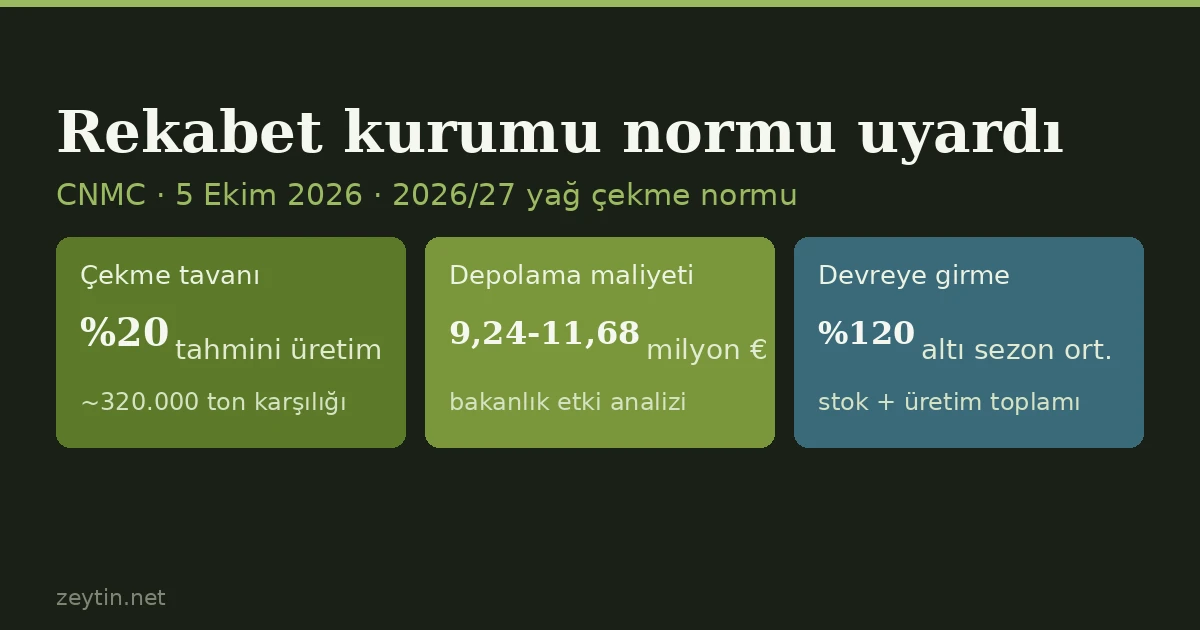
On 5 October the CNMC published its report on the draft rule that would withdraw part of Spain's olive oil from the market in the event of oversupply in 2026/27. The authority says the measure would raise prices and narrow quality and variety. The ministry's own impact assessment puts storage costs at €9.24-11.68 million. The withdrawal cap is 20 percent of estimated production — up to 320,000 tons.
 Article
Spain's olive oil producer price falls to €3.06 while shelf prices drop at half the pace
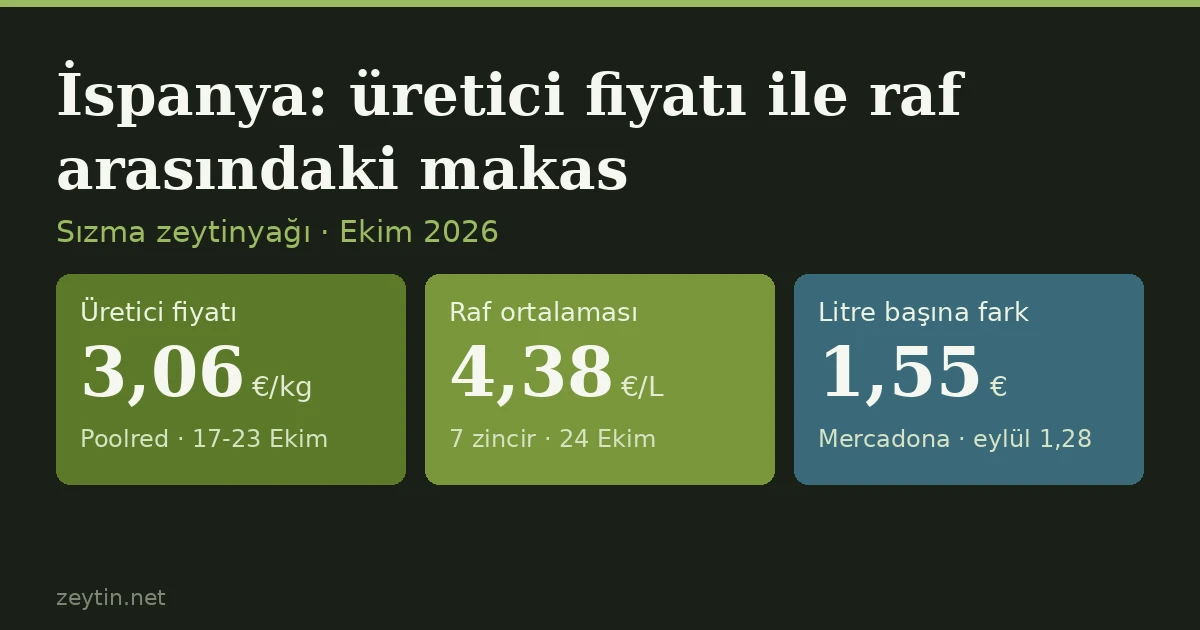
Poolred data show the Spanish producer price of extra virgin olive oil at €3.06/kg in 17-23 October, about 12% below early September. Seven chains' own-label bottles fell 6.7% on average to €4.38 per litre. At Mercadona the per-litre gap widened from €1.28 to €1.55.
 Article
Pakistan to plant 2 million olive trees in three years to cut edible oil imports
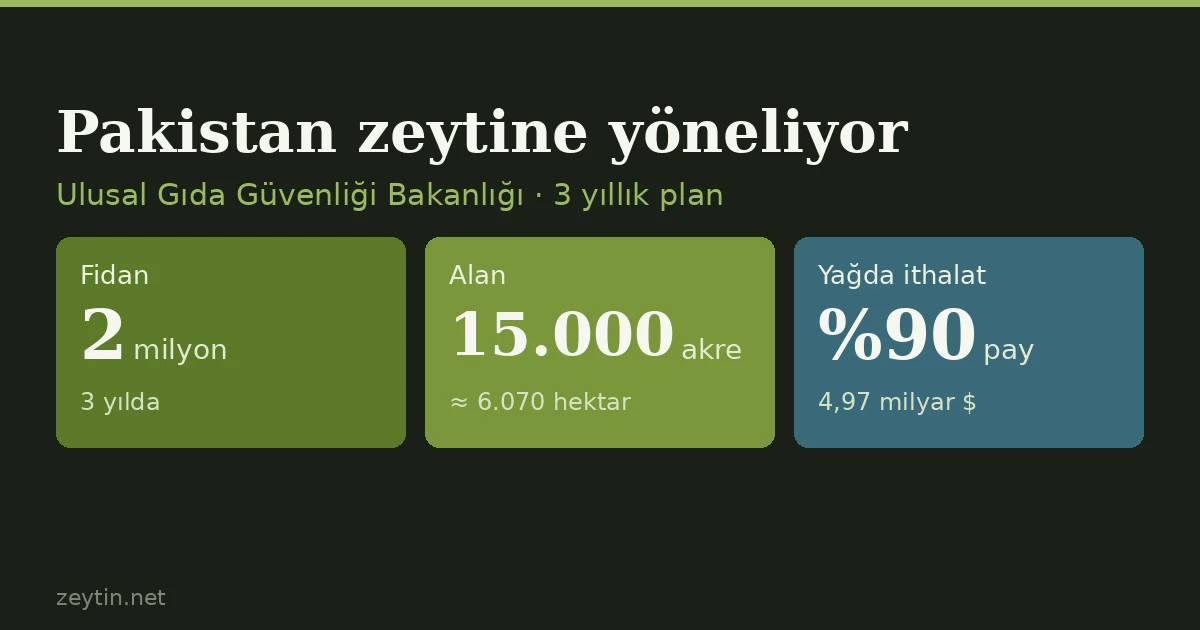
Pakistan's Ministry of National Food Security and Research plans to establish olive groves on 15,000 acres (about 6,070 hectares) over three years and supply 2 million plants in that period. The country imports roughly 90 per cent of its edible oil; the import bill reached 4.97 billion dollars in 2024-25.
 Article
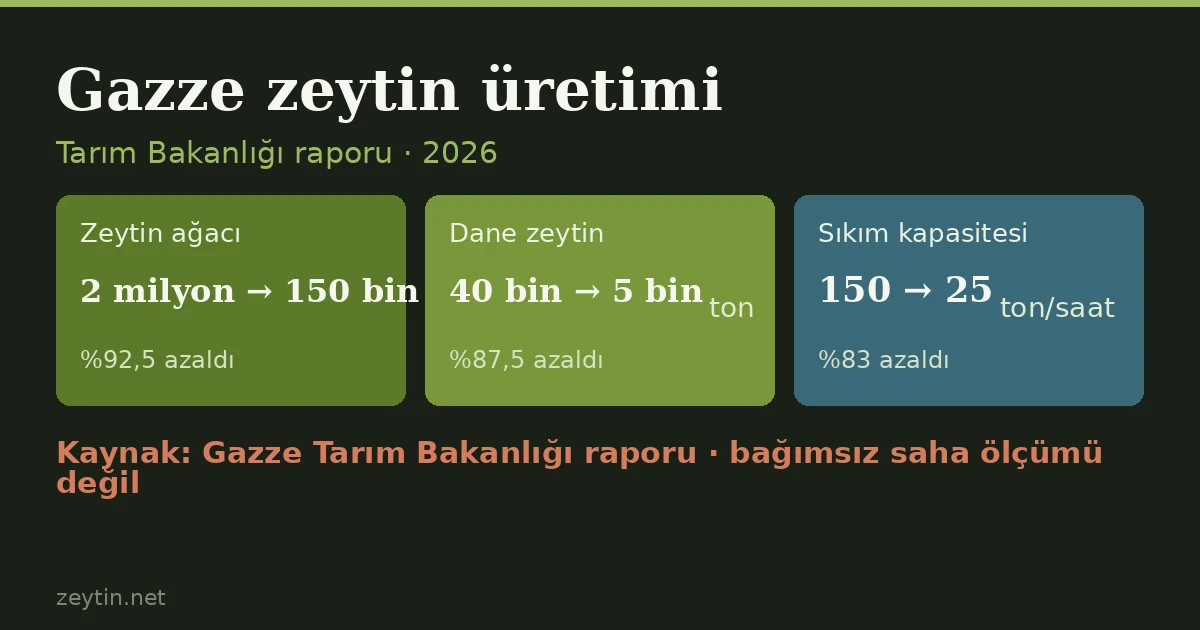
Gaza's olive report: 150,000 trees left of two million, production down 87.5%
According to a report from Gaza's Ministry of Agriculture, olive groves have shrunk from 50,000 dunums to 5,000 and the olive crop from 40,000 tonnes to 5,000. The loss is not confined to the grove: milling capacity has fallen from 150 tonnes an hour to 25, and the number of growers from 20,000 to 1,000.