How are black table olives made? Natural ripening versus blackening
Two different black olives sit on the shelf: ripened on the tree and brined, or picked green and blackened by oxidation. Both lawful, but not the same product.
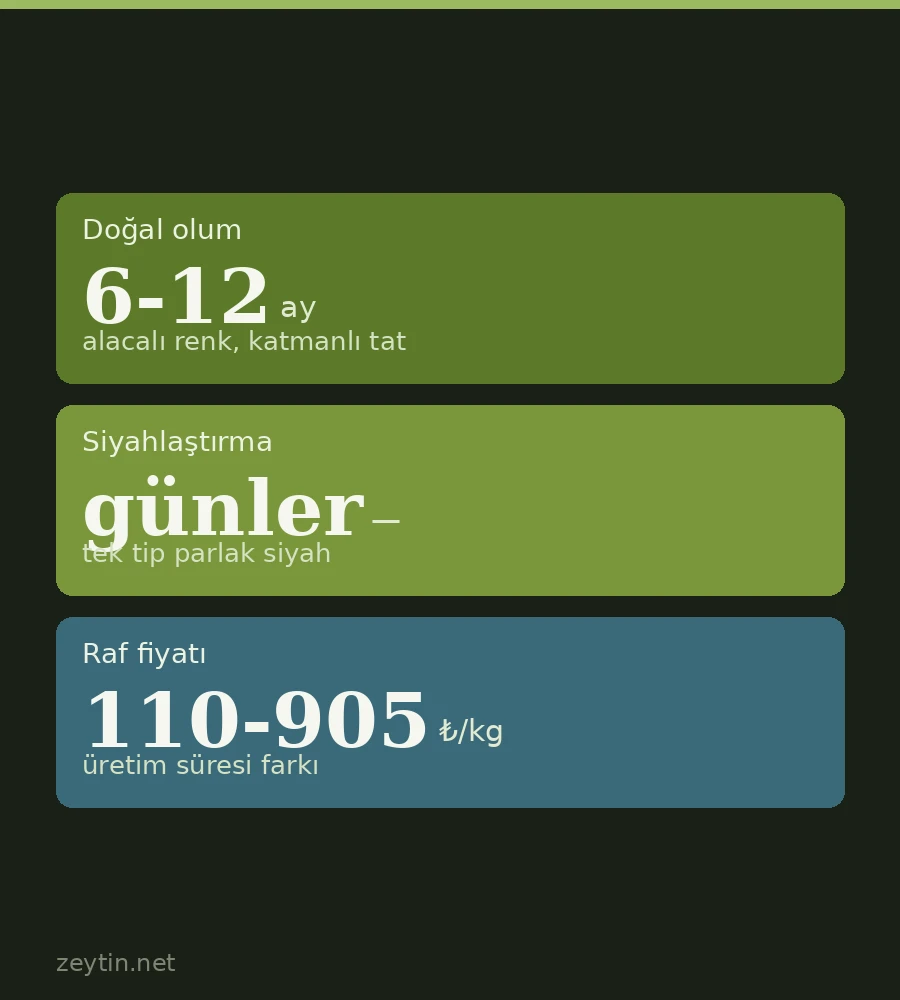
Two different products carry the words "black olives" on the shelf, and the difference is how they were made. One ripens and blackens on the tree; the other is picked green and blackened by oxidation. Both are lawful — but they must be distinguished on the label.
1. Natural ripening
The fruit is left on the tree and the colour turns by itself. Anthocyanin accumulates from the skin inward; the pit stays pale. After picking it goes into salt brine and the bitterness leaches out over six months to a year.
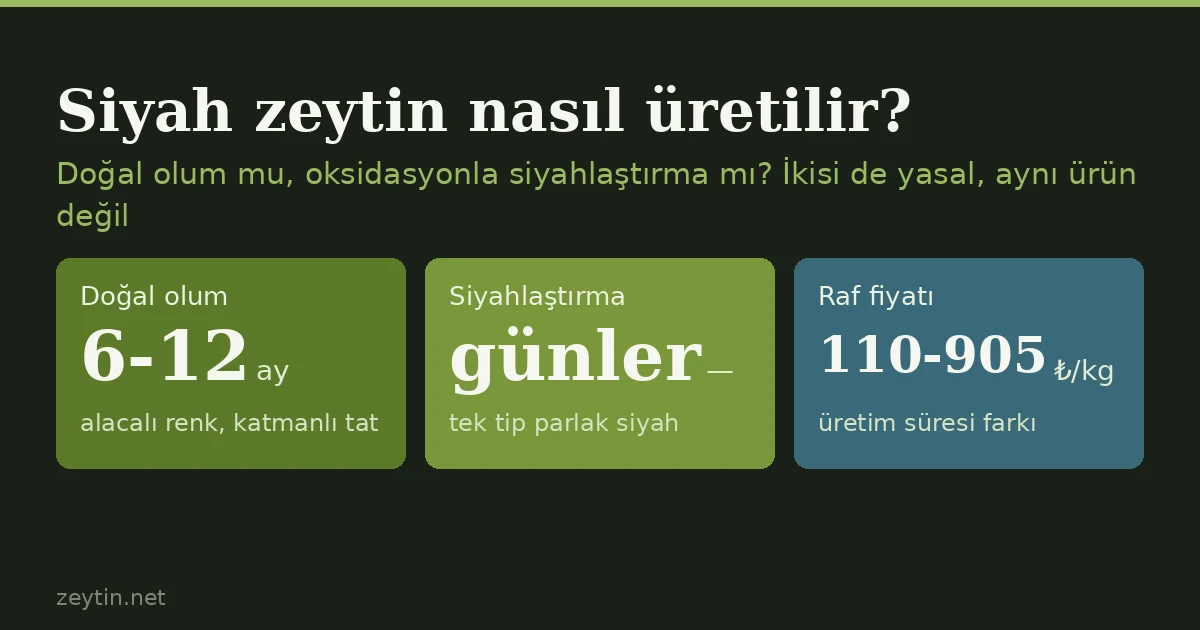
The result: a mottled colour, softer texture, and a rounded, layered taste from lactic fermentation.
2. Dry salt curing
Ripe black fruit is layered with rock salt instead of brine. The salt draws out water, the fruit shrivels and the taste concentrates. The wrinkled look is the signature of the method, not a defect.
3. Blackening by oxidation (California style)
Green or partly ripe fruit is treated with alkali, then exposed to air to darken. The colour is fixed with permitted iron salts (ferrous gluconate, ferrous lactate). The process takes days.
The method is lawful and widespread. The product must be labelled "blackened olives" — that is the name of a production style, not an admission of fault. The result is uniform, glossy, flawless black, without the mottling of natural ripening.
How to tell them apart
| Check | Natural | Blackened |
|---|---|---|
| Colour spread | Mottled, varies fruit to fruit | Uniform, flawless black |
| Texture | Soft, fleshy | Firmer |
| Taste | Sour, layered | Mild, neutral |
| Time | 6-12 months | Days |
Where fraud begins
The problem is not the method but failing to declare it, and unpermitted routes: darkening green fruit with textile dye or scrap iron thrown into the tank, applying copper sulphate for firmness, spraying essence on stale fruit. We collect the detection checks in the fraud article.
The strongest clue is the pit: colour that has reached the pit cannot be explained by natural ripening or a permitted additive.
Why are dry-cured olives wrinkled?
Dry salt draws water out; volume falls and the skin wrinkles. The look is often mistaken for old stock but is the natural result of the method. Taste concentrates, salt rises and shelf life lengthens.
Why time matters so much
On the natural route the fruit sits in the tank for 6-12 months, tying up capital, storage and loss risk. On the oxidation route the same work is measured in days.
That cost gap is the real explanation for the price range on the shelf. Our retail survey puts black table olives between 110 and 905 lira per kilogram — a width that reflects production method, not brand alone.
Salt and storage
Black olives are usually softer than green and so more delicate in brine. Keep an opened jar refrigerated with the fruit under the liquid. Dry-cured olives are kept dry and last well in a closed container.
A white film is usually salt crystals or harmless yeast. A sharp change in smell, cloudy brine or fruit collapsing into mush are spoilage signs.
When does each variety ripen?
Ripening time is recorded for ten varieties: Gemlik mid-to-late October, Domat mid-October, Erkence earliest, Frantoio medium-late, Coratina late and staggered, Hojiblanca late. In black table production this calendar sets the harvest plan directly.
One rating per visitor; you can change yours at any time. Ratings are real reader votes — no seeded or default scores.
Related
 Article
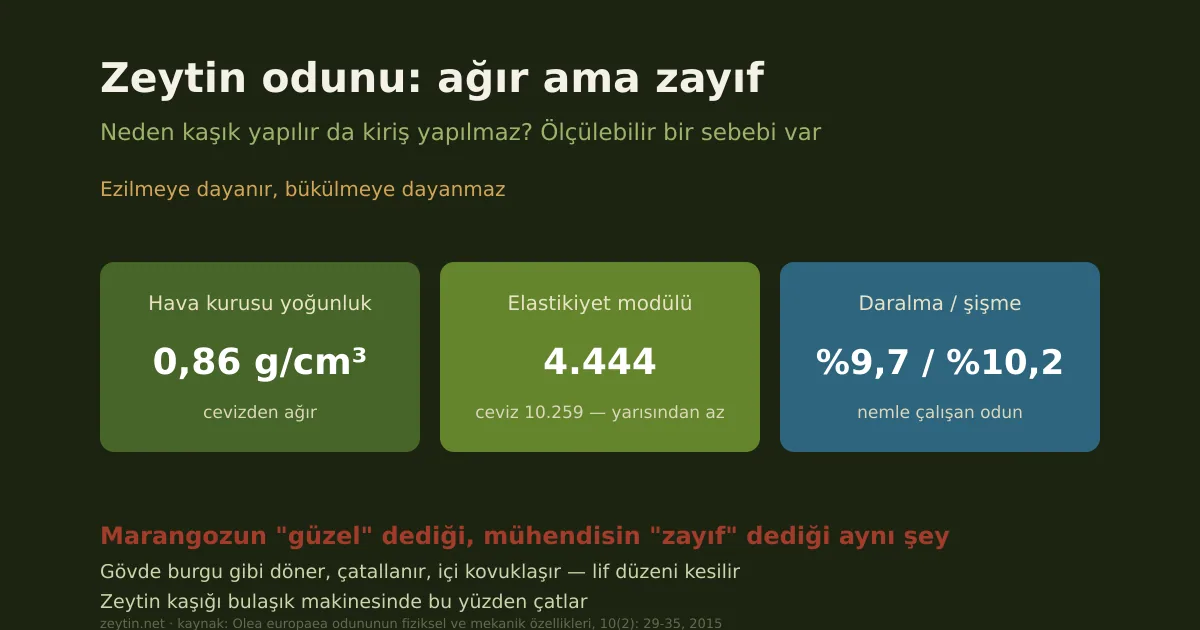
Olive wood: why spoons and not beams?
At 0.86 g/cm³ air-dried it is denser than walnut, yet its modulus of elasticity of 4,444 N/mm² is less than half walnut's. It resists crushing but not bending.
Article
Olive wood: why spoons and not beams?
At 0.86 g/cm³ air-dried it is denser than walnut, yet its modulus of elasticity of 4,444 N/mm² is less than half walnut's. It resists crushing but not bending.
 Article
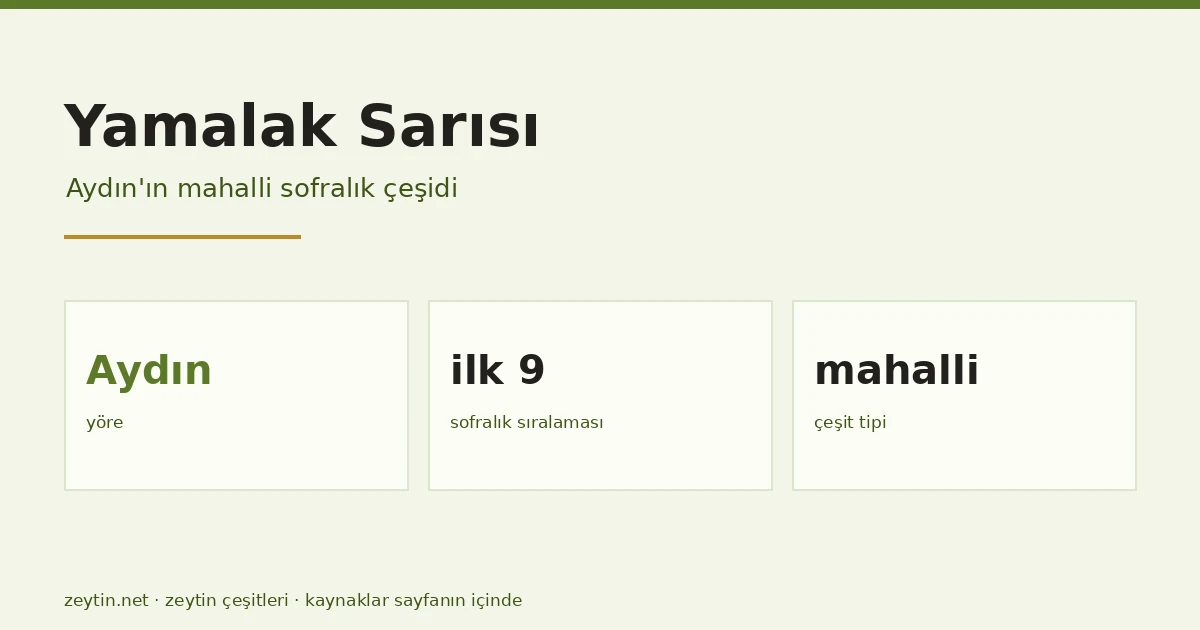
Yamalak Sarısı: the local table cultivar of Aydın
A local cultivar of Aydın counted among Turkey's most important table olives, and the subject of a phenotypic characterisation study.
Article
Yamalak Sarısı: the local table cultivar of Aydın
A local cultivar of Aydın counted among Turkey's most important table olives, and the subject of a phenotypic characterisation study.
 Article
The Erkence olive: the cultivar that sweetens on the tree
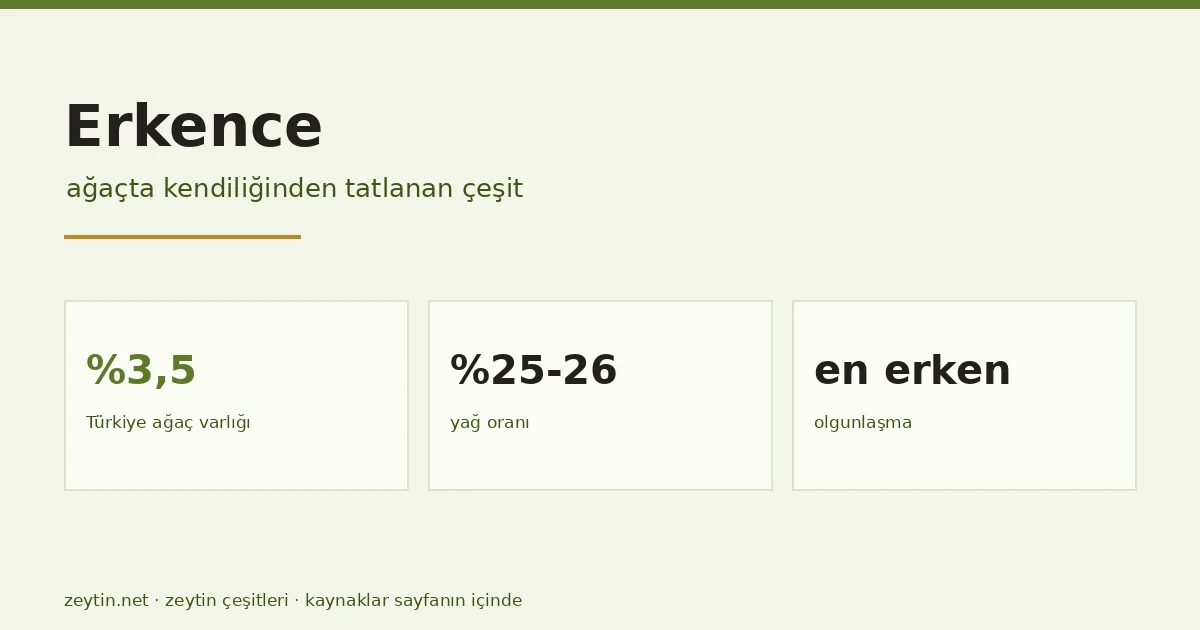
Erkence accounts for 3.5% of Turkey's olive trees. It is the Aegean's earliest-ripening cultivar and has a property with few equivalents anywhere: the fruit loses its bitterness on the tree, without brine.
Article
The Erkence olive: the cultivar that sweetens on the tree
Erkence accounts for 3.5% of Turkey's olive trees. It is the Aegean's earliest-ripening cultivar and has a property with few equivalents anywhere: the fruit loses its bitterness on the tree, without brine.
 Article
Hursuki olive
Hursuki is a recorded variety of south-eastern Anatolia. No measured pomological data published.
Article
Hursuki olive
Hursuki is a recorded variety of south-eastern Anatolia. No measured pomological data published.