Should you whitewash an olive tree trunk with lime? What it does and when to apply it
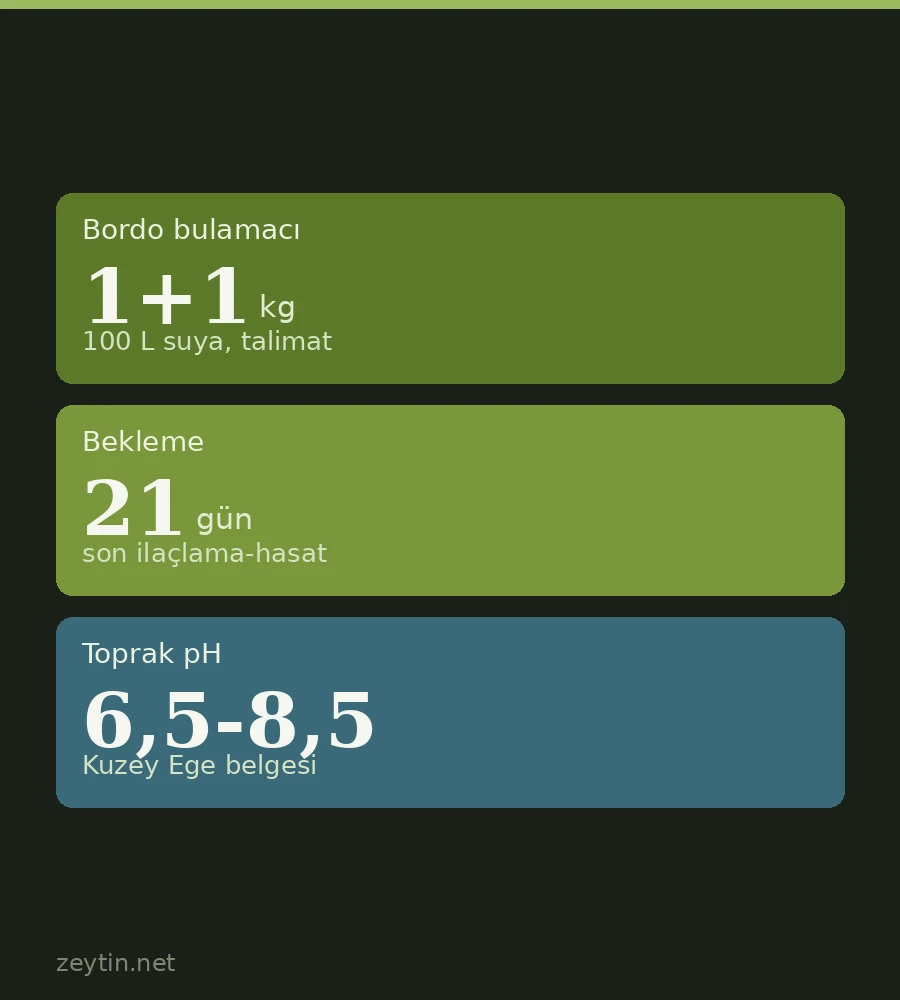
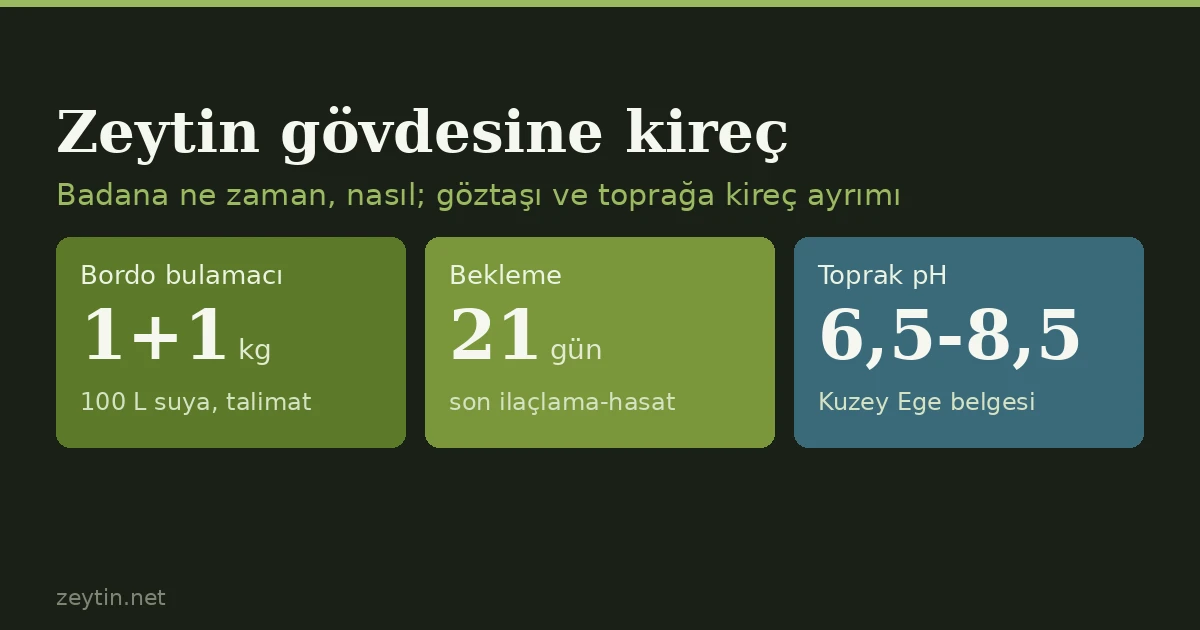
A slaked-lime whitewash protects olive bark exposed to the sun by head grafting, stumping or heavy pruning. Add copper sulphate and it becomes Bordeaux mixture: 1 kg + 1 kg per 100 litres in Turkey's instruction, 21 days before harvest. Never quicklime; lime the soil only after analysis.
Yes, but not on every tree and not every year. The real job of a trunk whitewash is to stop bark that has suddenly lost its shade from burning: trees that have been top-worked (head grafted), cut back hard for rejuvenation, or heavily pruned, and young saplings whose bark is still thin. Slaked lime is mixed with water and brushed onto the trunk and onto the main limbs the cuts have exposed.
On a healthy mature tree whose canopy already shades the trunk, there is no measured benefit from whitewashing every year. The claim that whitewash kills pests overwintering in the bark has not been shown in olive trials either.
What does whitewash protect against?
A 2015 review in the journal Zeytin Bilimi by Meltem Ayaz and Nurhan Varol of the Olive Research Institute in Bornova, İzmir, notes that olive trees with bare trunks burn and scorch under strong sun. The same review says that when frost-damaged trees are renewed by stumping and limb cuts, lime should be applied to the exposed surfaces.
The University of California's integrated pest management guidelines (UC IPM) explain the mechanism: a white surface reflects light and reduces bark heating. Sunburned bark discolours first, and if the injury is recent it may ooze sap. Later the bark peels away and the wood underneath is open to boring insects and decay fungi. These guidelines are written for fruit and landscape trees in general, not for olives specifically.
The International Olive Council's 2007 book Production Techniques in Olive Growing tackles the same concern through tree shape: the globe form is used in hot climates with intense sunlight to keep the bark out of direct sun. In other words, pruning is the first line of protection, and whitewash covers what pruning has left exposed.
Which trees, and when?
| Situation | Why it is at risk | When |
|---|---|---|
| Head grafting | Main limbs are cut and the trunk is suddenly exposed | Together with grafting (late winter, early spring) |
| Stumping, rejuvenation pruning | Large cut surfaces and bark left without shade | Right after the cuts |
| Renewal pruning after frost | Surfaces opened by the cuts | Together with the pruning |
| Young sapling | Thin bark | After planting, before the first summer heat |
The rule is simple: whitewash when the bark is exposed, not when summer arrives. We cover grafting methods in grafting olive trees and pruning timing in olive pruning.
What is it made of?
The material is slaked lime, which is calcium hydroxide. It is mixed with water until it can be brushed on. We could not find an official mixing ratio for olive trunks. The citrus calendar of the Mersin provincial directorate of Turkey's Ministry of Agriculture and Forestry recommends 1 kg of slaked lime in 100 litres of water for the outer surface of the tree. That is a thin sprayed film, though, and it is meant for citrus.
Paint can be used instead of lime. UC IPM recommends white interior (not exterior) latex paint diluted with an equal amount of water. According to the guidelines, interior water-based paints are safer for trees than oil-based or water-based exterior paints.
Adding copper sulphate: that is spraying, not whitewashing
Once copper sulphate is stirred into lime wash, the result is Bordeaux mixture, which is a plant protection treatment. The Turkish Ministry of Agriculture and Forestry's 2022 technical instruction for integrated olive pest management gives, for olive branch canker, 1000 g of copper sulphate with 1000 g of slaked lime per 100 litres of water for the spring application, and 2000 g with 2000 g for other applications. At least 21 days must pass between the last treatment and harvest. The instruction lists the mixture under "provisionally recommended" products. Bordeaux paste on frost cracks is covered in our frost damage article.
If the only goal is sun protection, copper sulphate is unnecessary. If the goal is disease control, the dose, timing and pre-harvest interval in the instruction apply. EU organic rules cap copper at a total of 28 kg per hectare over a period of seven years.
Does it kill pests in the bark?
Neither the Ministry's 2022 instruction nor the IOC book lists trunk whitewashing as a pest control method. The citrus calendar recommends lime wash with coarse salt against snails, but that has not been tested in olives.
The link is indirect. According to the IOC book, bark injuries of any kind make it easier for the olive bark midge, Resseliella oleisuga, to lay its eggs. UC IPM also notes that boring insects move into sunburned bark. If whitewash prevents sunburn, it narrows that door. It does so by stopping wounds from forming, not by killing insects.
Common mistakes
- Using quicklime. Calcium oxide (quicklime) reacts with water and gives off heat. The US National Institute for Occupational Safety and Health (NIOSH) warns about the eyes, skin and respiratory tract. In the Ministry instruction, quicklime is a disinfectant poured into the pit of a tree pulled out because of root rot. It is not brushed onto trunks.
- Working without protection. According to NIOSH, slaked lime can also cause eye and skin burns. Wear goggles and gloves. If it gets into your eyes, rinse at once with plenty of water and see a doctor.
- Whitening the canopy. Whitewash is for bark. Coating leaves and fruit with a white film is a different job, and the material developed for it is kaolin.
- Making the wound bigger with pruning. To prevent sunburn, UC IPM advises keeping some temporary lower branches for a while, avoiding summer pruning and not removing more than about 20% of the canopy in a single year.
How is it different from kaolin?
Kaolin is a white clay sprayed onto leaves and fruit against the olive fruit fly. In late summer it makes trees look whitewashed from a distance, but it is not lime. Details are in kaolin clay spraying in olives.
Lime in organic farming
Annex I of EU Implementing Regulation (EU) 2021/1165 lists the plant protection substances allowed in organic production. Calcium hydroxide appears there as basic substance 4C and is bound by the conditions of use in its review report. It was approved by Regulation (EU) 2015/762 following an application from the European group of the International Federation of Organic Agriculture Movements (IFOAM). The European Food Safety Authority (EFSA) report behind it examined use against fungal diseases on pome fruit. Kaolin (aluminium silicate) has its own entry in the same annex. A certified grower would do well to check with their control body before whitewashing. Converting to organic is covered in our organic decision guide.
Liming the soil is a separate job
Putting lime on the trunk should not be confused with putting lime on the soil. According to the IOC book, most olive orchards are established on calcareous soils. Calcium only falls to deficiency levels in leached acid soils, and in that case calcium carbonate or calcium oxide is applied on the basis of a soil analysis. The textbook Zeytin Yetiştiriciliği, edited by Bekir Erol Ak, Ebru Sakar and Mine Pakyürek, states that olives grow well between pH 5.6 and 8.5.
The Aegean mostly fits this picture. According to the geographical indication document for North Aegean olive oils, soil pH in the region ranges from 6.5 to 8.5. Of the soils, 55% are low in lime, 22% are calcareous and 12% are rich in lime. The registration documents for Milas describe its soil as highly calcareous. Being low in lime is not the same as being acidic. A 1997 study by Saime Seferoğlu found that soils around Edremit range from slightly acidic to slightly alkaline. That is why the decision to lime the soil comes from an analysis, and without one no lime is applied. See olive fertilisation and soil analysis.
Summary
- Whitewash protects bark from sunburn: after head grafting, stumping, heavy pruning and on young saplings.
- It goes on as soon as the bark is exposed. The material is slaked lime, or interior latex paint diluted half and half with water.
- A mixture with copper sulphate is Bordeaux mixture, which is a pesticide. The instruction's dose and 21-day pre-harvest interval apply.
- Quicklime is never brushed onto the trunk. Wear goggles and gloves.
- Pest killing has not been shown in olives. The benefit is preventing bark wounds.
- Lime goes on the soil only if an analysis shows acidity.
One rating per visitor; you can change yours at any time. Ratings are real reader votes — no seeded or default scores.
Related
 Article
Does an ungrafted olive tree bear fruit? Wild olives, seedlings and grafting
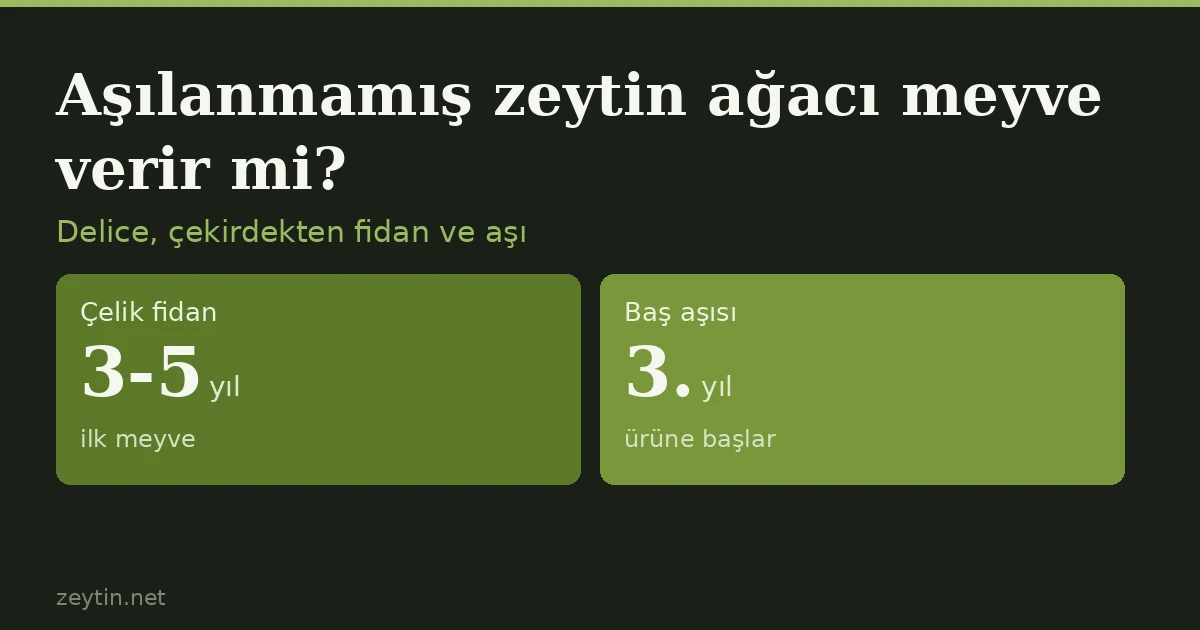
An ungrafted olive tree does bear fruit, but usually small, thin-fleshed and low in oil. Neither the wild trees known in Turkey as delice nor seedlings grown from a stone carry the variety of the parent tree. How to tell, what grafting gains, and why wild olives are still valuable.
 Article
Should harvested olives be carried in crates or in sacks?
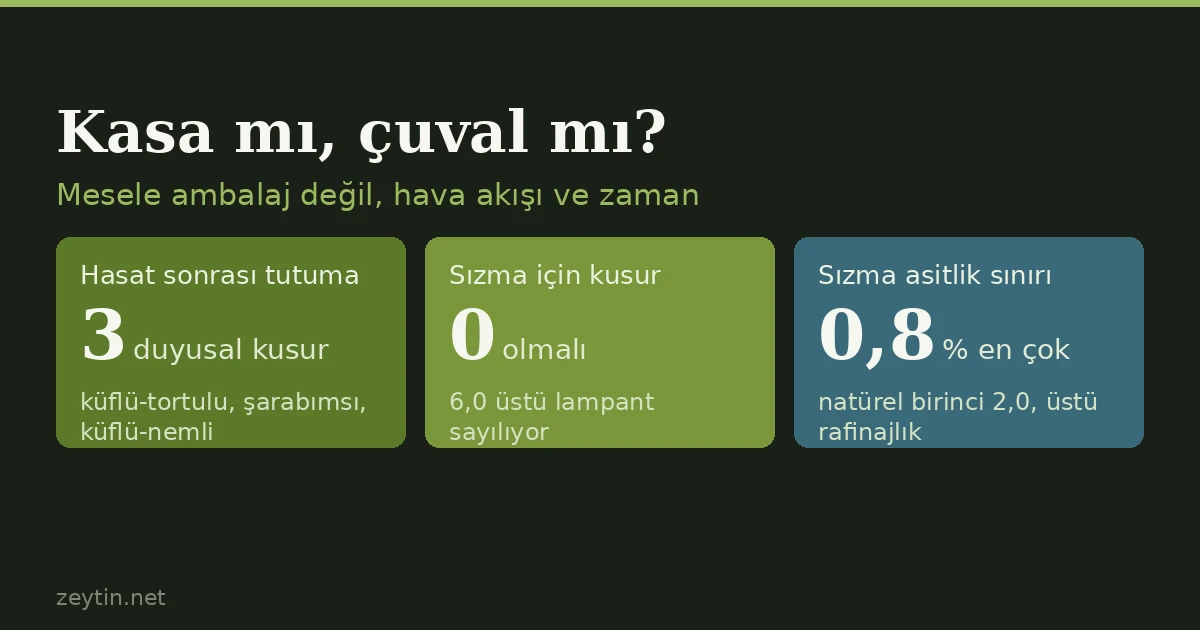
The cheapest decision of the harvest season is also one of the decisions that sets the grade of the oil. Three separate defects in the International Olive Council's vocabulary are defined directly by how the fruit was held after picking — and all three describe what a sack does.
 Article
Can olive prunings be burned? What the law says and what to do with diseased wood
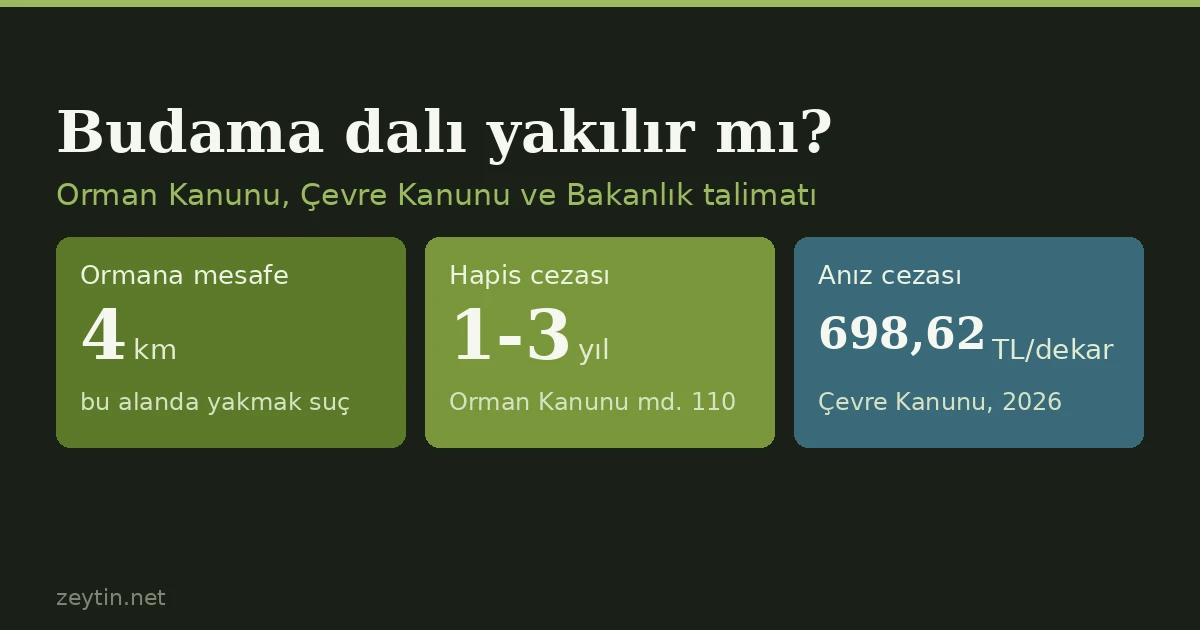
Burning prunings within four kilometres of a forest, or in a village with state forest inside its boundary, is an offence under Türkiye's Forest Law carrying one to three years in prison, and many governors' orders also ban burning to clear olive groves. The ministry's own technical guidance, however, recommends burning diseased residues. The way between: use healthy wood, remove diseased wood from the grove.
 Article
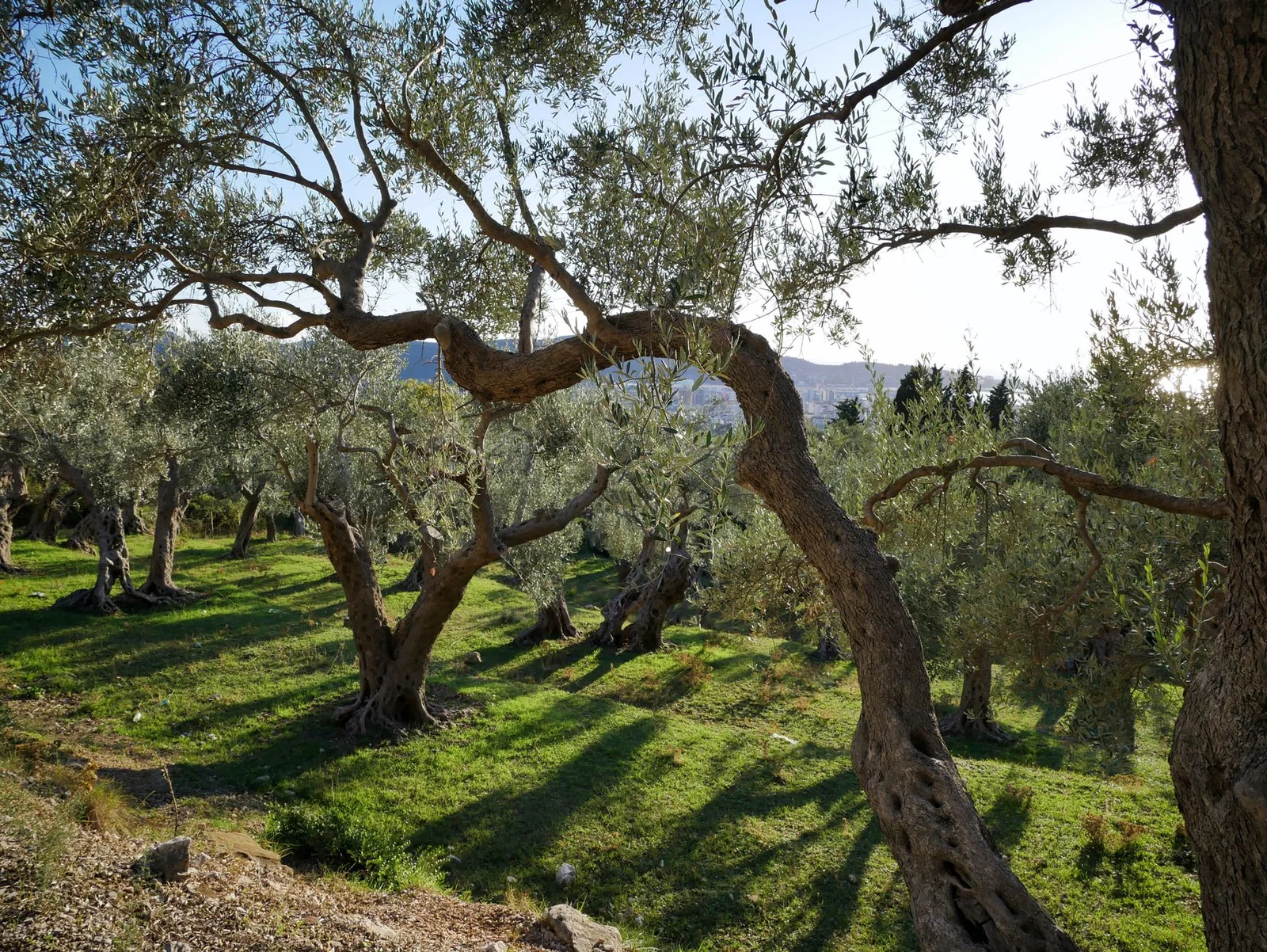
Olive Pruning: Why, When and How
Why olives are pruned, when to do it, formative and production pruning, rejuvenation and high-density systems.