Which olive oil is the best quality?
The three measures that decide olive oil quality: grade, acidity and harvest year, plus how to read a label.
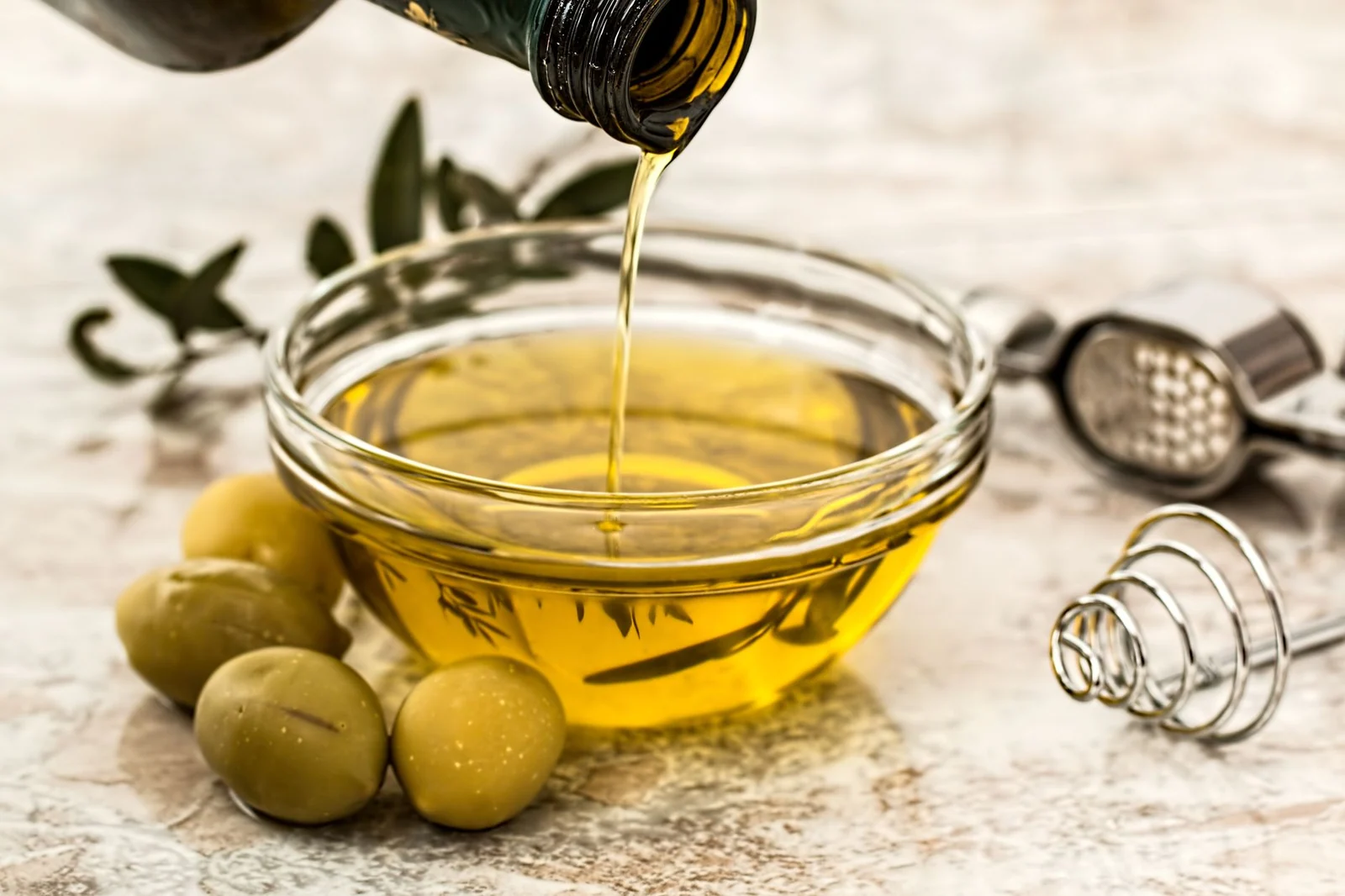
What decides quality in olive oil isn't the brand but three measurable things: the grade (is it extra virgin), the acidity, and how fresh it is. All three appear on the label and can be compared.
1. Grade: is it extra virgin?
Olive oil grades rest on chemical measurement, not marketing language:
| Grade | Free acidity | How it is obtained |
|---|---|---|
| Extra virgin | max 0.8% | mechanical only — no heat, no chemicals |
| Virgin | max 2.0% | also mechanical, more tolerance for defects |
| Refined blend ("riviera") | below 1% | refined oil plus some virgin oil |
Refined oil has low acidity, but that was achieved by refining — it is not a sign of natural quality. Detail: difference between olive oil grades.
2. Acidity: what it actually shows
"0.3% acidity" on a label does not mean the oil tastes sour; it describes its chemical state. When the fruit is bruised, left waiting or goes mouldy, the oil molecules break down and free fatty acids appear.
Low acidity means: the fruit was picked intact and pressed quickly.
Most good extra virgin oils sit between 0.2% and 0.5%. The main causes of higher acidity are fruit picked off the ground, bruising, and a long gap between harvest and pressing. Detail: what does acidity mean in olive oil.
3. Freshness: the harvest year
Olive oil does not improve with keeping — it loses value as it ages. So:
- Look for a harvest year on the label (a best-before date alone tells you little)
- Prefer new-season oil
- Finish an opened bottle within a few months
Label checklist
1. Does it say extra virgin?
2. What is the acidity? (above 0.8% is not extra virgin)
3. Is there a harvest year?
4. Packaging: dark glass or tin? Light damages oil.
5. Origin: which region's olives?
6. Cold pressed: indicates the process took no heat. How it is made.
How to judge it at home
You can't measure without a lab, but these give an indication:
- Smell: fresh grass, green fruit, sometimes tomato leaf. Musty, sour or "cheesy" notes are faults.
- Taste: mild bitterness and a peppery catch in the throat are wanted — they signal polyphenols. A flat, greasy feel usually points to refined oil.
- Cloudiness: unfiltered oil can be cloudy; that is not a fault.
⚠ The fridge freezing test is not reliable — freezing behaviour depends on fatty acid composition and is not a purity indicator. Detail: how to tell good olive oil.
Storage protects quality
Even the best oil spoils within months if stored badly. Three enemies: light, heat, air. Keep it in dark glass, away from the stove, tightly closed. Detail: how to store olive oil.
Frequently asked
Is expensive oil better quality?
Price reflects grade and harvesting cost, but on its own it isn't a guide. The grade, acidity and harvest year on the label tell you more than the price does.
Is 0.2% acidity better than 0.5%?
Usually yes, though both are below the extra virgin limit. Freshness and storage can matter more than that gap.
Do you recommend brands?
No. We don't publish brand lists; we give the criteria so you can compare for yourself. See the Editorial Desk.
One rating per visitor; you can change yours at any time. Ratings are real reader votes — no seeded or default scores.
Related
 Article
Ceyhan Olive Oil: harvest defined as “no green fruit left on the tree”
Registered in 2022. The certificate defines harvest not by calendar but by the state of the tree: when no green fruit remains and oil content peaks.
Article
Ceyhan Olive Oil: harvest defined as “no green fruit left on the tree”
Registered in 2022. The certificate defines harvest not by calendar but by the state of the tree: when no green fruit remains and oil content peaks.
 Article
What happens if fly-damaged olives go into the oil?
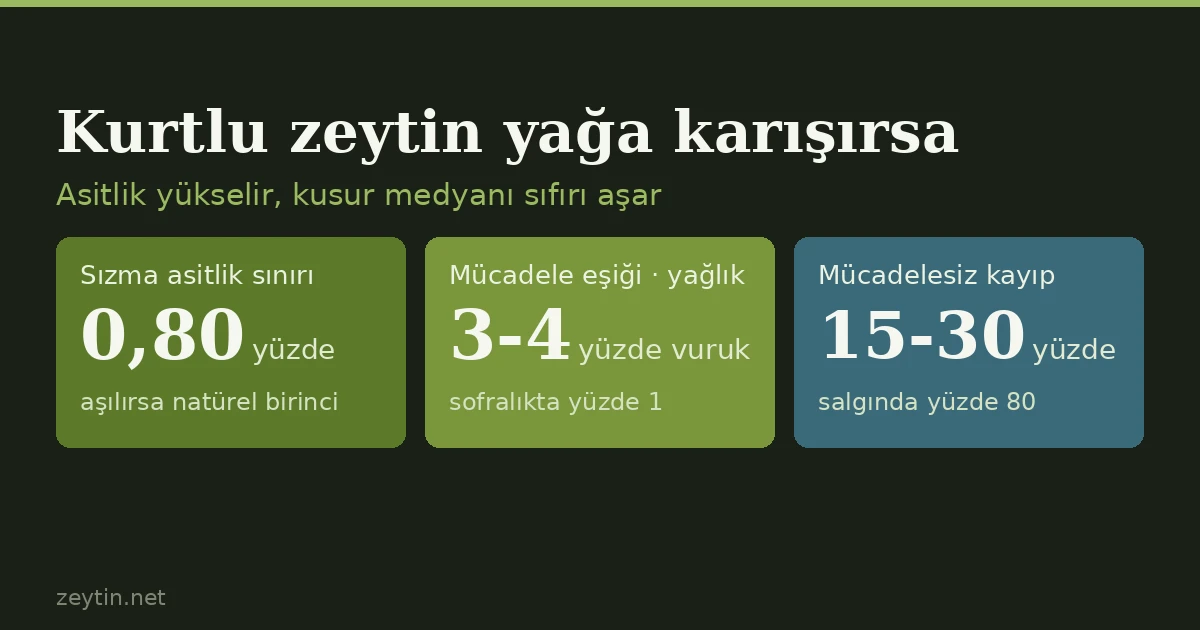
If fly-struck olives reach the mill, the oil drops a grade: free acidity and peroxide rise, phenolics fall, and sensory analysis turns up fermentative defects plus the "grubby" attribute. Turkey's official integrated pest management instruction sets the action threshold at 3-4 percent of 800-1,000 fruits for oil olives and 1 percent for brining olives. Infested fruit cannot be sorted out at the mill; the decision is made in the grove and in the timing. This article explains exactly what fly damage changes in the oil, what share is manageable, and why an infested batch should be milled separately.
Article
What happens if fly-damaged olives go into the oil?
If fly-struck olives reach the mill, the oil drops a grade: free acidity and peroxide rise, phenolics fall, and sensory analysis turns up fermentative defects plus the "grubby" attribute. Turkey's official integrated pest management instruction sets the action threshold at 3-4 percent of 800-1,000 fruits for oil olives and 1 percent for brining olives. Infested fruit cannot be sorted out at the mill; the decision is made in the grove and in the timing. This article explains exactly what fly damage changes in the oil, what share is manageable, and why an infested batch should be milled separately.
 Article
Geyikli Olive Oil: a registration that names its pollinators
Registered in 2020. From the Ayvalık cultivar; the certificate also records Gemlik and Hanım Parmağı as pollinators in the groves. Limits are set on 16 aroma compounds.
Article
Geyikli Olive Oil: a registration that names its pollinators
Registered in 2020. From the Ayvalık cultivar; the certificate also records Gemlik and Hanım Parmağı as pollinators in the groves. Limits are set on 16 aroma compounds.
 Article
Olive Oil Prices: Week 42 of 2026
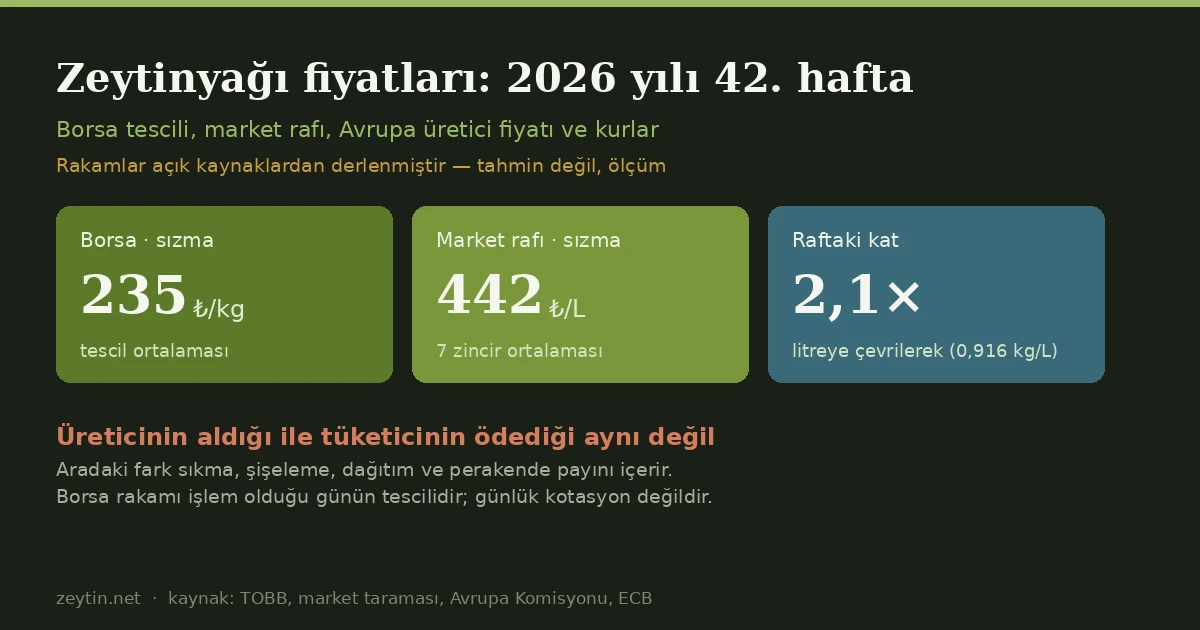
Week 42 of 2026: Turkish exchange prices, European producer prices and exchange rates side by side.
Article
Olive Oil Prices: Week 42 of 2026
Week 42 of 2026: Turkish exchange prices, European producer prices and exchange rates side by side.