Olive anthracnose: the disease of the mummified fruit left on the branch
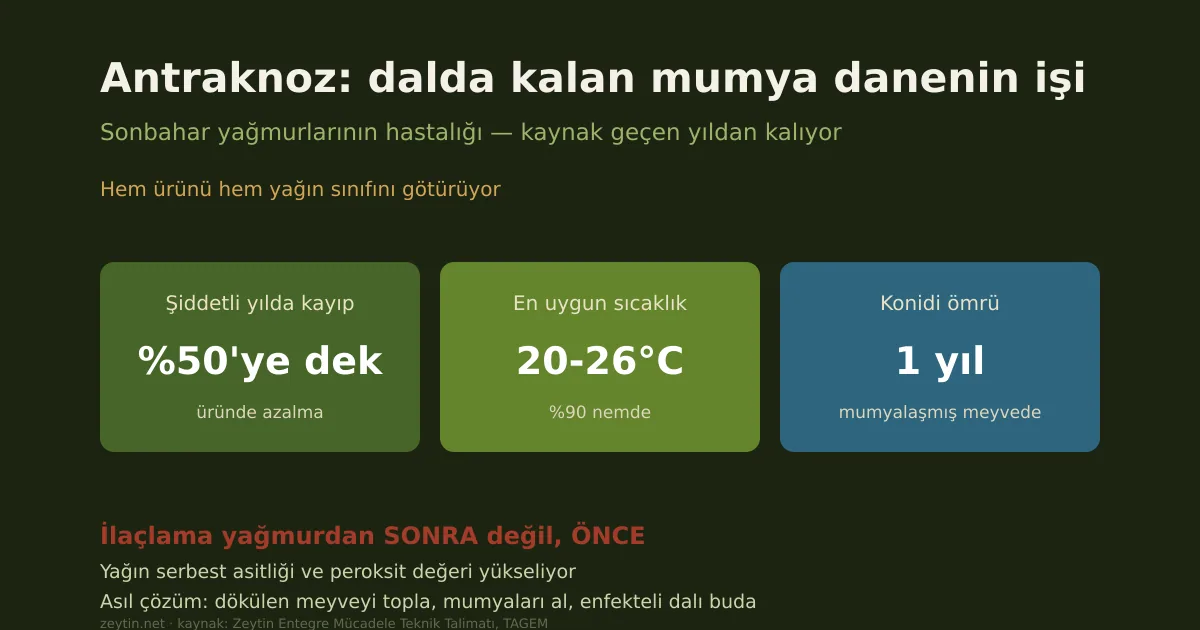
Up to 50% crop loss in bad years. The source is last year's mummified fruit still on the branch, and the spray goes on before the autumn rains, not after.
If you see shrivelled, leathery brown olives still hanging on the branch as harvest approaches, that is not the olive fruit fly — it is anthracnose. In bad years it costs up to 50% of the crop, and even the sound-looking fruit that goes to the mill with it raises the oil's acidity and peroxide value. It damages you in the grove and again in the mill.
The pathogen and its cycle
The causal agent is a fungus, Colletotrichum gloeosporioides (formerly Gloeosporium olivarum).
- It overwinters as mycelium and conidia in mummified fruit, leaves and thin shoots.
- Conidia can survive a full year in mummified fruit at low temperatures. Last year's rotten fruit still on the branch is this year's inoculum.
- Spread is by raindrops and wind. Autumn rains determine whether the disease breaks out.
- Infection occurs through wounds but also directly through the skin — no wound is needed.
| Optimum temperature | 20–26 °C |
| Range of development | 10–30 °C |
| Humidity | 90% |
| Symptoms appear | 5–6 days after infection |
Symptoms: what to look for
The main damage is on the fruit, though leaves, thin shoots and flowers are also affected.
1. As the fruit ripens, regular or irregular browning begins.
2. Lesions are usually sunken and depressed at the fruit tip.
3. As the fruit grows, lesions merge and can rot it completely.
4. The rotting fruit loses moisture and mummifies; the tissue hardens to a leathery texture and stays hanging on the branch.
That last point is the diagnostic key: a mummified fruit still on the branch is the signature of anthracnose. Fruit fly damage tends to make fruit drop, and the sting hole is visible.
Effect on the oil
Anthracnose-affected fruit hurts twice:
- Table value goes to zero. Blemished, shrivelled fruit cannot be sold as table olives.
- Oil quality falls. Oil from this fruit shows higher free acidity and peroxide value — risking loss of extra virgin classification.
Separating the harvest and the milling in an affected grove — collecting mummified fruit separately where possible — directly protects the oil's grade.
Cultural measures (this is where the work is)
- Collect and destroy fallen infected leaves and fruit. This is the single most effective measure; it removes the source.
- Prune out and destroy infected branches. Piling them at the field edge does nothing — the source stays.
- Prune for air and light. A dense, closed canopy holds 90% humidity inside it.
- Avoid close planting. Same reason.
- Control the olive fruit fly. Its wounds open the door to anthracnose; the two control programmes reinforce each other.
- Do not delay harvest. A late harvest gives secondary infections time.
- Control weeds — it lowers humidity under the canopy.
Spray timing
The technical instruction gives two points in time:
| # | Timing | Condition |
|---|---|---|
| 1 | Before the autumn rains | Every year |
| 2 | When fruit reaches chickpea size | Only if May–June are wet |
The timing of the first spray is critical: before the rain, not after. The first autumn rain disperses spores from mummified fruit; protection must already be in place.
⚠ The Integrated Pest Management technical instruction notes that no licensed plant protection product suitable for the programme exists for olive anthracnose. Consult your Provincial/District Directorate of Agriculture and Forestry for products and rates, and check the current licensed product list.
Host range
The pathogen is not confined to olives; almond, strawberry, apple, avocado, lemon, orange, mango, coffee, cucurbits, tomato and aubergine are all hosts. A neighbouring orchard can be the source.
In short
Anthracnose is the disease of autumn rain, and its source is last year's mummified fruit still on the branch. Clearing that source — collecting fallen fruit, removing mummies, pruning out infected wood — matters more than spraying. In bad years it takes half the crop; in clean years it can still cost you the oil's grade.
One rating per visitor; you can change yours at any time. Ratings are real reader votes — no seeded or default scores.
Related
 Article
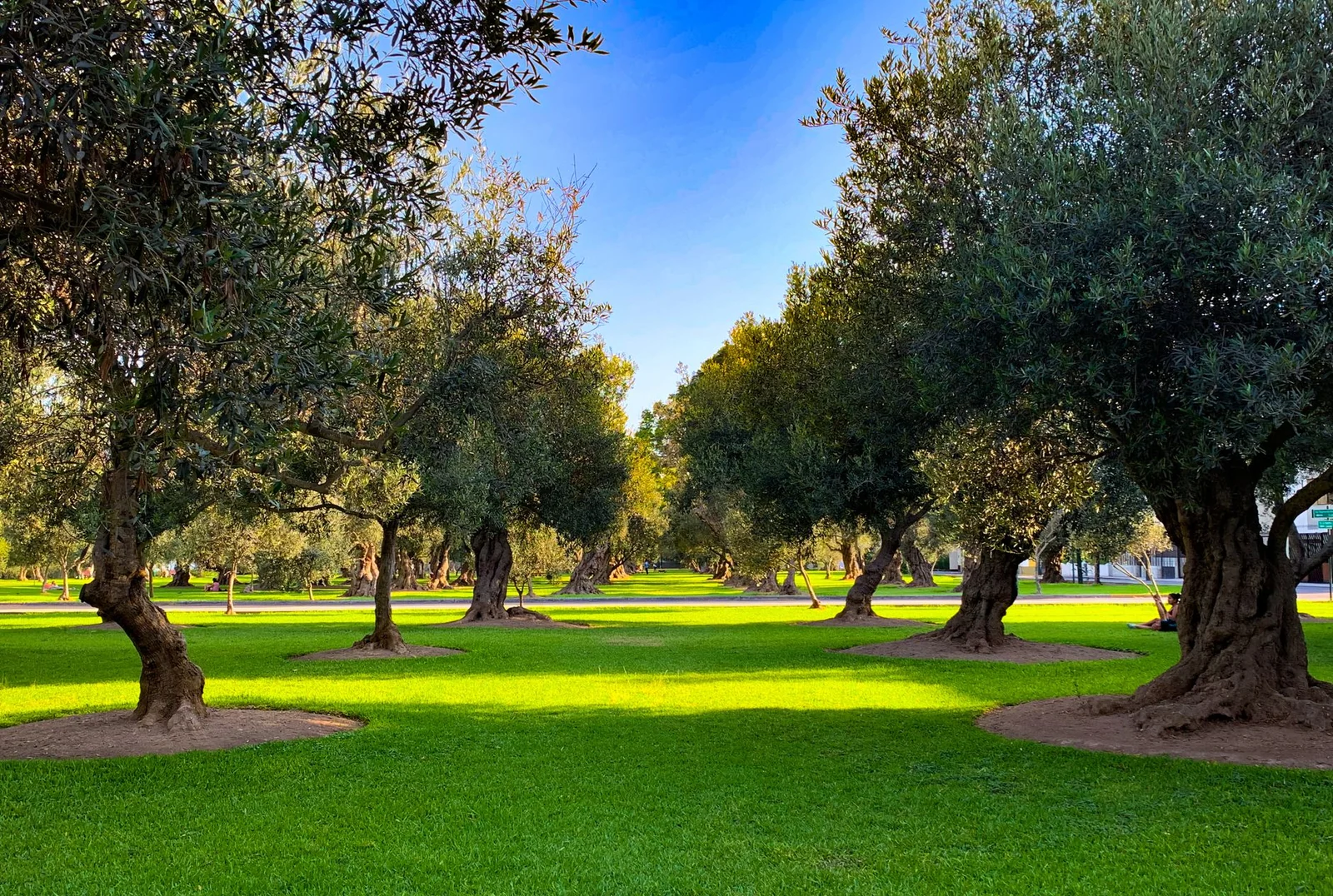
Herbicide-free weed management in olive groves: from cover crops to autonomous robots
Managing weeds rather than eliminating them: cover crops, mulch, grazing, flame weeding and AI-assisted precision farming — five tools and a practical order for combining them.
Article
Herbicide-free weed management in olive groves: from cover crops to autonomous robots
Managing weeds rather than eliminating them: cover crops, mulch, grazing, flame weeding and AI-assisted precision farming — five tools and a practical order for combining them.
 Article
Olive black scale and sooty mould: the H on its back
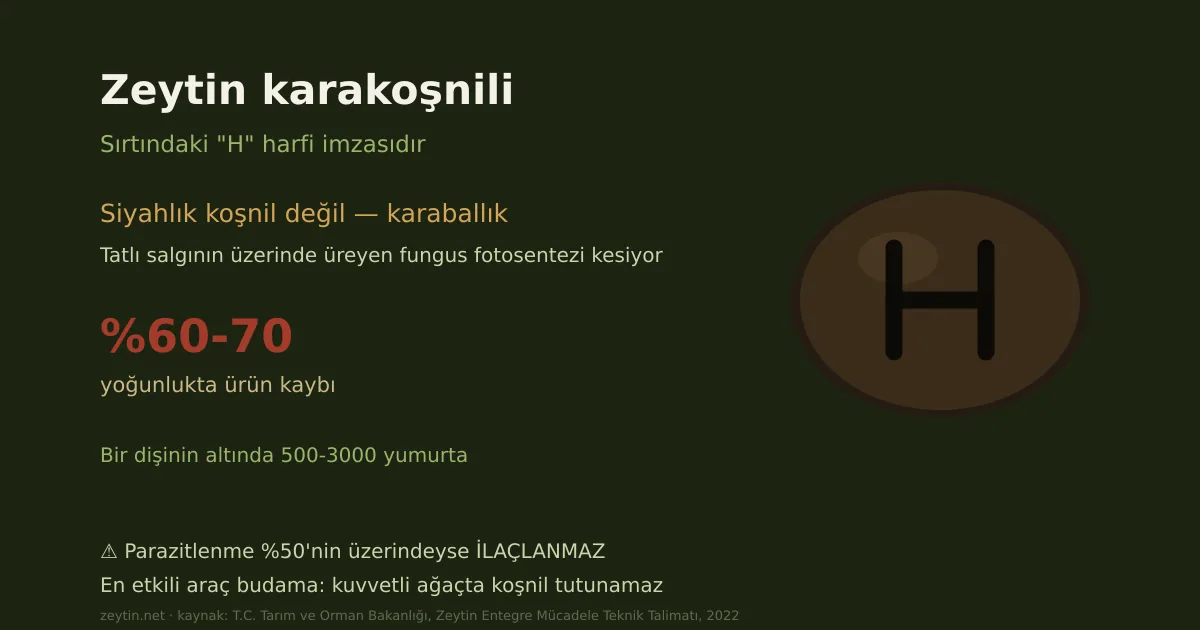
The olive pest behind sooty mould: a scale with an H on its back. Losses of 60-70%; if parasitism tops 50%, do not spray.
Article
Olive black scale and sooty mould: the H on its back
The olive pest behind sooty mould: a scale with an H on its back. Losses of 60-70%; if parasitism tops 50%, do not spray.
 Article
The olive fruit fly: sting thresholds, traps and a control calendar
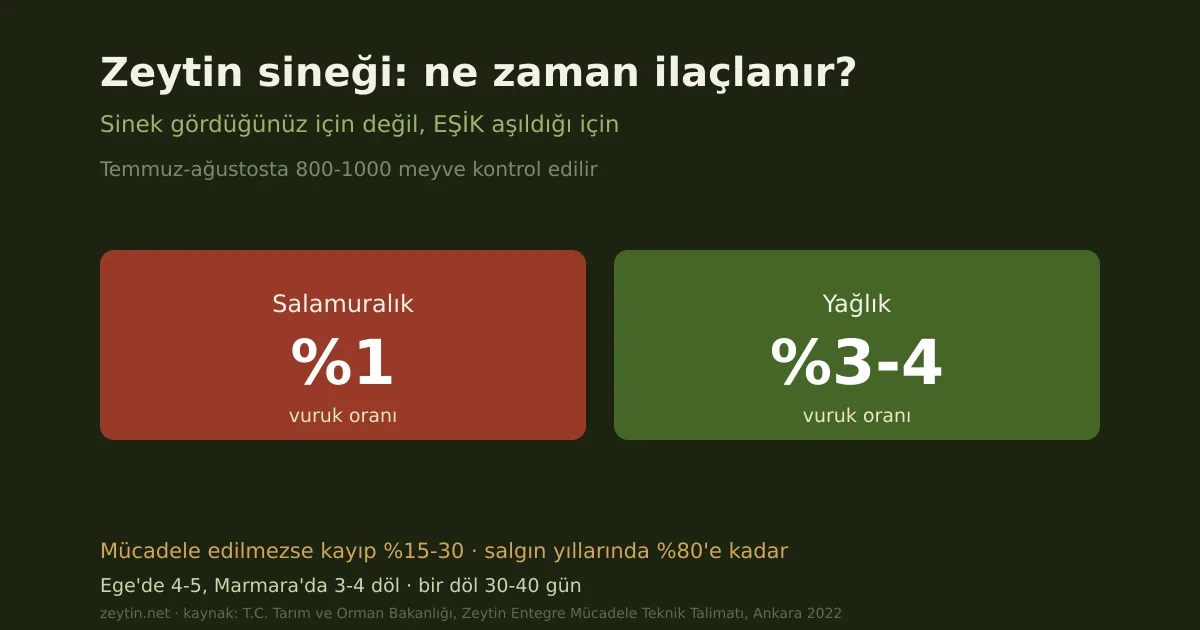
The olive pest that costs most: losses of 15-30% if left alone. Sting threshold 1% for table varieties, 3-4% for oil.
Article
The olive fruit fly: sting thresholds, traps and a control calendar
The olive pest that costs most: losses of 15-30% if left alone. Sting threshold 1% for table varieties, 3-4% for oil.
 Article
The olive moth: three generations, three kinds of damage
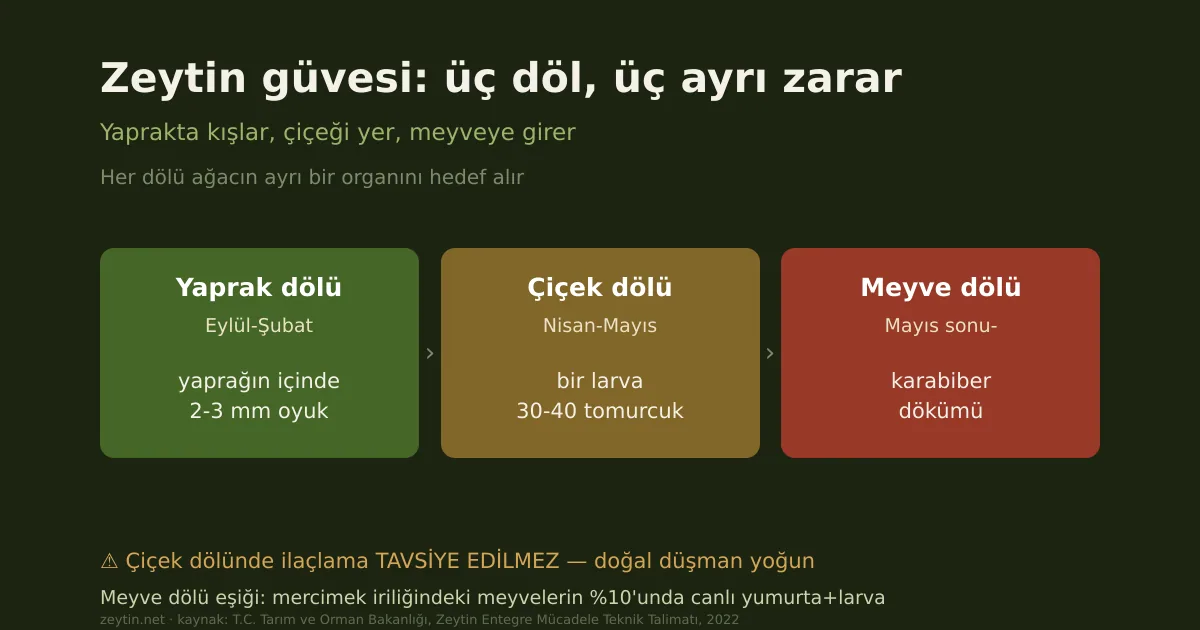
The olive pest with three generations: it winters in the leaf, eats the flowers, enters the fruit. One larva can take 30-40 buds.
Article
The olive moth: three generations, three kinds of damage
The olive pest with three generations: it winters in the leaf, eats the flowers, enters the fruit. One larva can take 30-40 buds.