17th Advanced Course in Olive Growing opens in Córdoba as the IOC and IFAPA move towards genetic resources cooperation
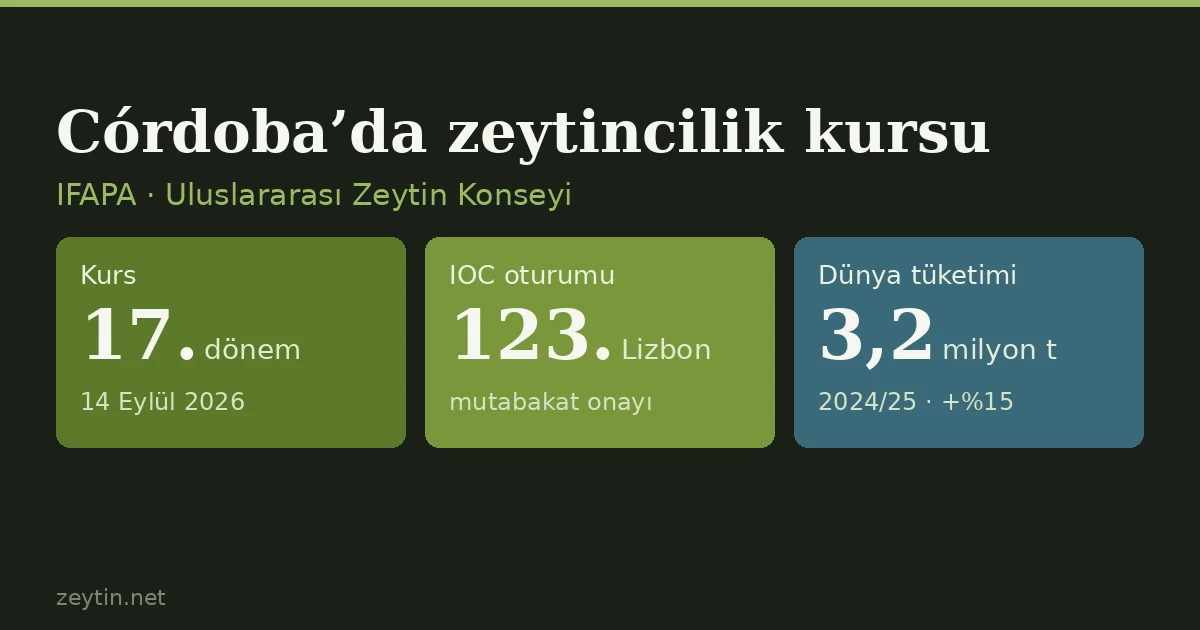
Andalusia's Institute of Agricultural and Fisheries Research and Training (IFAPA) opened its 17th Advanced Specialisation Course in Olive Growing in Córdoba on 14 September, with the International Olive Council giving the opening lecture. The Council has approved signing a memorandum of understanding with IFAPA, which hosts one of the world's key olive germplasm collections.
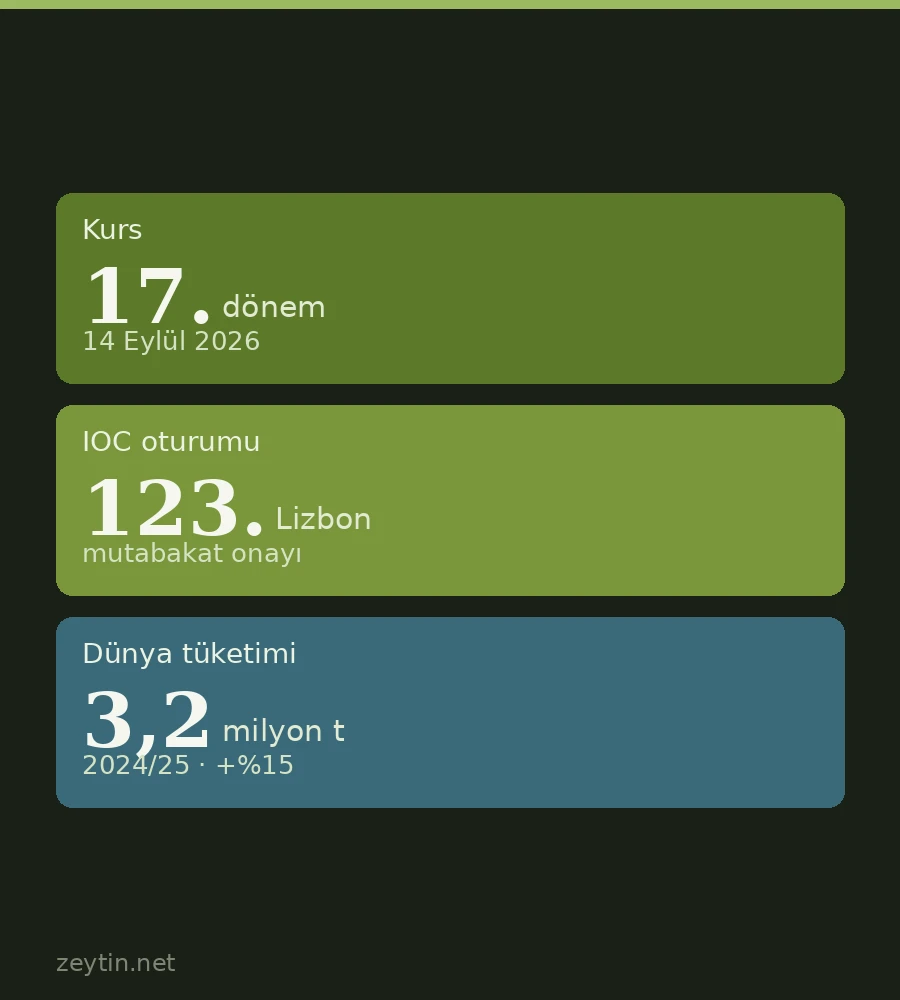
In olive growing, knowledge is an input as important as young trees. This week a training programme bringing together the sector's international institutions began in Córdoba, often called Spain's olive capital. The 17th Advanced Specialisation Course in Olive Growing, organised by Andalusia's Institute of Agricultural and Fisheries Research and Training (IFAPA), was formally opened on 14 September. The International Olive Council (IOC) took part in the opening and gave the programme's first lecture.
Who attended the opening?
The ceremony brought together the heads of Andalusia's leading olive research institutions:
- Marta Bosquet — President of IFAPA
- María del Carmen del Campillo — Director of the Higher Technical School of Agricultural and Forestry Engineering, University of Córdoba
- Leire Molinero — Director of the Institute for Sustainable Agriculture in Córdoba
- Abderraouf Laajimi — Deputy Executive Director for Operational Affairs, International Olive Council
It is no coincidence that these names shared a platform. With its university, research institutes and a world-class olive collection, Córdoba is one of the scientific centres of olive growing.
The opening lecture: "Olive Growing in the World"
Speaking for the Council, Laajimi gave the opening lecture, "Olive Growing in the World", presenting an overview of the international olive sector. The main themes were:
- Emerging markets: regions where olive and olive oil consumption is growing beyond the traditional Mediterranean countries.
- Consumption patterns: how consumer preferences and demand are changing.
- Quality and sustainability: the message that staying in the market depends on both.
- Capacity building: the need for well-trained specialists ready for the sector's challenges and opportunities.
There are figures behind these themes. According to the Council, world olive oil consumption rose by 15% to about 3,215,000 tonnes in 2024/25, and world imports also grew by 15% to 1,198,000 tonnes. The recovery of demand that had fallen with high prices in the drought years is raising the need for trained specialists not only in producing countries but also in new consumer markets, from planting groves to quality control, tasting panels and marketing.
The Council's focus on new markets has had concrete expressions in recent months. We reported on Iraq, Brazil and South Africa moving closer to the Council, and in countries newly turning to olives, such as Pakistan, the main gap is trained people to manage production.
An agreement on genetic resources
The most significant news of the opening, however, concerned the relationship between the two institutions rather than the course itself. At its 123rd session, held in Lisbon on 30 June 2026, the International Olive Council approved the signing of a memorandum of understanding with IFAPA. The areas of cooperation will be:
1. Plant genetic resources
2. Scientific collaboration
3. Capacity building
4. Knowledge exchange
The first point matters most, because IFAPA hosts the World Olive Germplasm Bank collection recognised by the Council. The collection grows olive varieties gathered from different countries side by side under the same conditions, making comparison possible.
Why does a germplasm bank matter?
An olive germplasm bank works like a living library where varieties are preserved. Its importance shows up in three places:
Against diseases and pests. The most promising route against Xylella fastidiosa, which has killed olive groves across thousands of hectares in Europe, is to find and spread varieties more tolerant of the bacterium. Such varieties can only be found by screening a large collection. We recently reported on the disease jumping to Italy's Calabria region.
Against climate change. Problems such as flowering shifting in mild winters and heatwaves reducing fruit set make it essential to know varieties with different chilling needs and heat tolerance. We cover this in climate change and olives.
Against variety confusion. The same variety can go by different names in different countries, and different varieties can share a name. Germplasm banks use molecular analysis to untangle this and help ensure the right variety is sold in the plant trade. We explain what to look for when buying young trees in our guide to choosing certified olive saplings.
Córdoba and variety breeding
The contribution of Córdoba's institutions to olives goes beyond preserving a collection. Joint breeding work by the University of Córdoba and IFAPA has also influenced new models of olive growing worldwide. The best-known example is Sikitita, a variety developed for high-density hedgerow groves. With its compact canopy and early bearing, it suits continuous mechanical harvesting and shows that breeding can change not only oil yield but how a grove is designed.
The spread of hedgerow, super-high-density groves is one of the most discussed topics in olive growing today. Thousands of trees are planted per hectare and harvesting is fully mechanised, but not every variety suits the system. Which variety fits which planting system can only be learnt in large collections and trials lasting many years. Passing that knowledge on to technical specialists from different countries is one of the main purposes of the course IFAPA organises.
We covered basic grove design issues such as pollination and variety compatibility in our article on pollination and pollinator varieties in olive.
What it means for Türkiye
Türkiye also has national collections preserving its own olive varieties and variety measurement trials; a large part of the variety comparisons on our site is based on data from official trials of this kind. Cooperation with international collections is an opportunity to gain worldwide recognition for native varieties and to compare how our olive varieties behave in the face of disease and climate.
We will keep following the course in Córdoba and the progress of the IOC-IFAPA agreement, including opportunities to take part in training programmes.
One rating per visitor; you can change yours at any time. Ratings are real reader votes — no seeded or default scores.
Related
 Article
Adulterated olive oil costs more than the real thing: price is no longer a sign of authenticity
Diker, president of the Edremit Chamber of Agriculture, says adulterated oils sold online now exceed the wholesale price of genuine oil: wholesale starts at 240 lira, the fake sells above 300. Our exchange data complicates the picture — genuine extra virgin in Aydın is already 307.60 lira.
Article
Adulterated olive oil costs more than the real thing: price is no longer a sign of authenticity
Diker, president of the Edremit Chamber of Agriculture, says adulterated oils sold online now exceed the wholesale price of genuine oil: wholesale starts at 240 lira, the fake sells above 300. Our exchange data complicates the picture — genuine extra virgin in Aydın is already 307.60 lira.
 Article
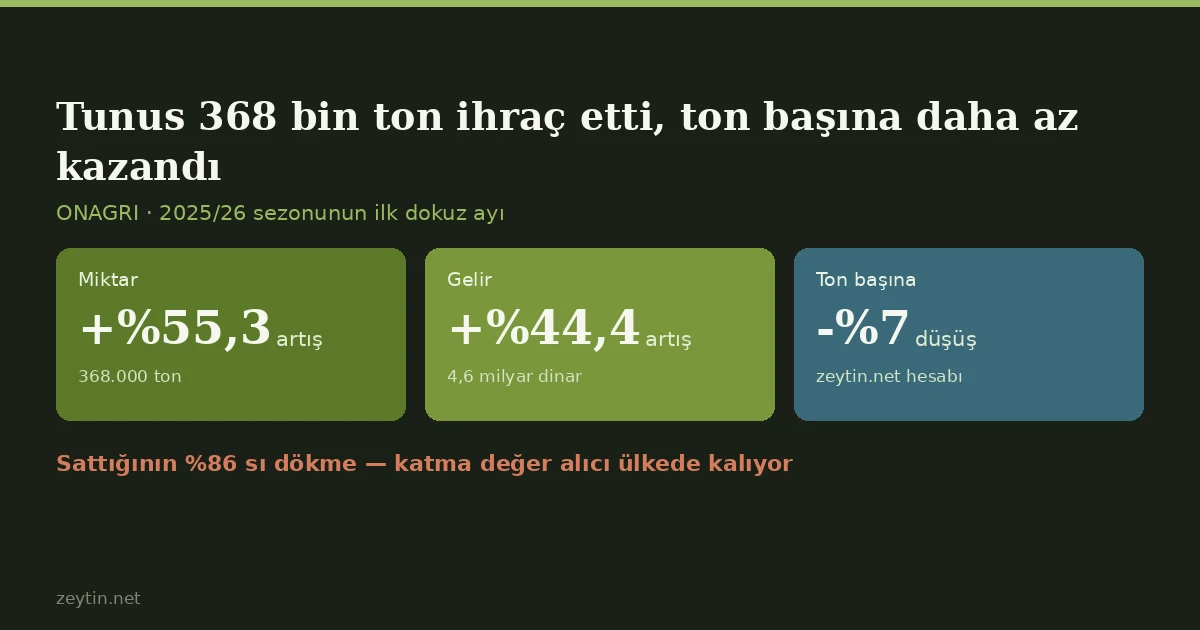
Tunisia exported 368,000 tonnes of olive oil — but earned less per tonne
Tunisia's agriculture observatory ONAGRI reports olive oil exports up 55.3% by volume and 44.4% by value in the first nine months of 2025/26. The gap between the two means about 7% less earned per tonne.
Article
Tunisia exported 368,000 tonnes of olive oil — but earned less per tonne
Tunisia's agriculture observatory ONAGRI reports olive oil exports up 55.3% by volume and 44.4% by value in the first nine months of 2025/26. The gap between the two means about 7% less earned per tonne.
 Article
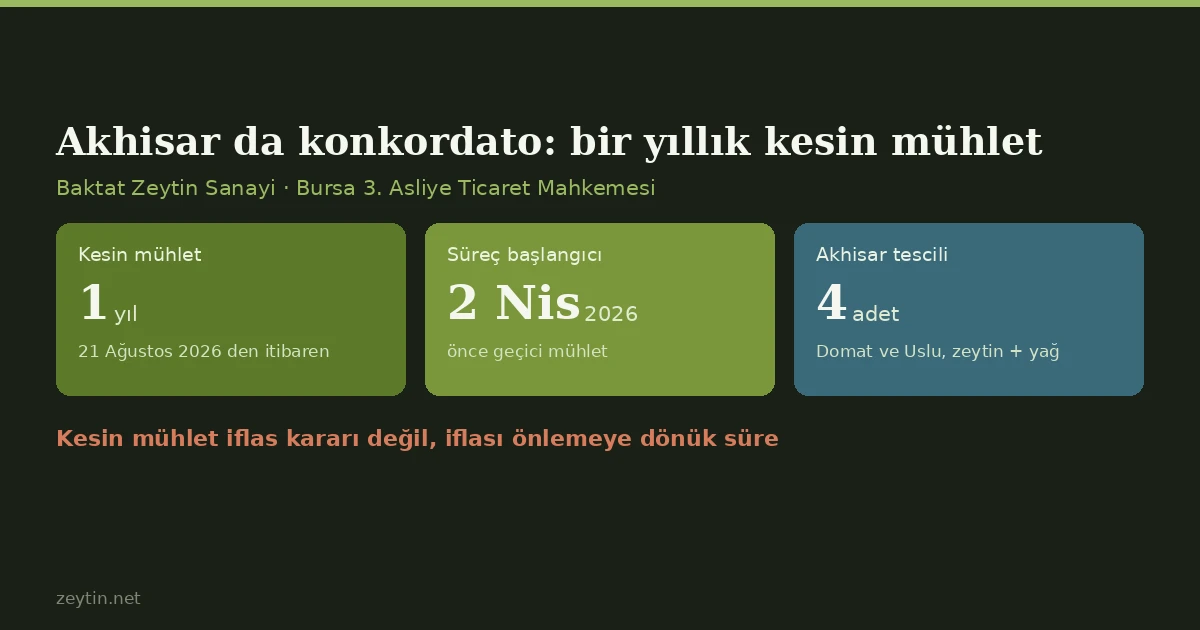
Concordat in Akhisar: a one-year moratorium for Baktat Zeytin
A Turkish commercial court has granted a one-year definitive moratorium to Baktat Zeytin, a table-olive processor in Akhisar. We set out what the ruling means and why it matters for the sector.
Article
Concordat in Akhisar: a one-year moratorium for Baktat Zeytin
A Turkish commercial court has granted a one-year definitive moratorium to Baktat Zeytin, a table-olive processor in Akhisar. We set out what the ruling means and why it matters for the sector.
 Article
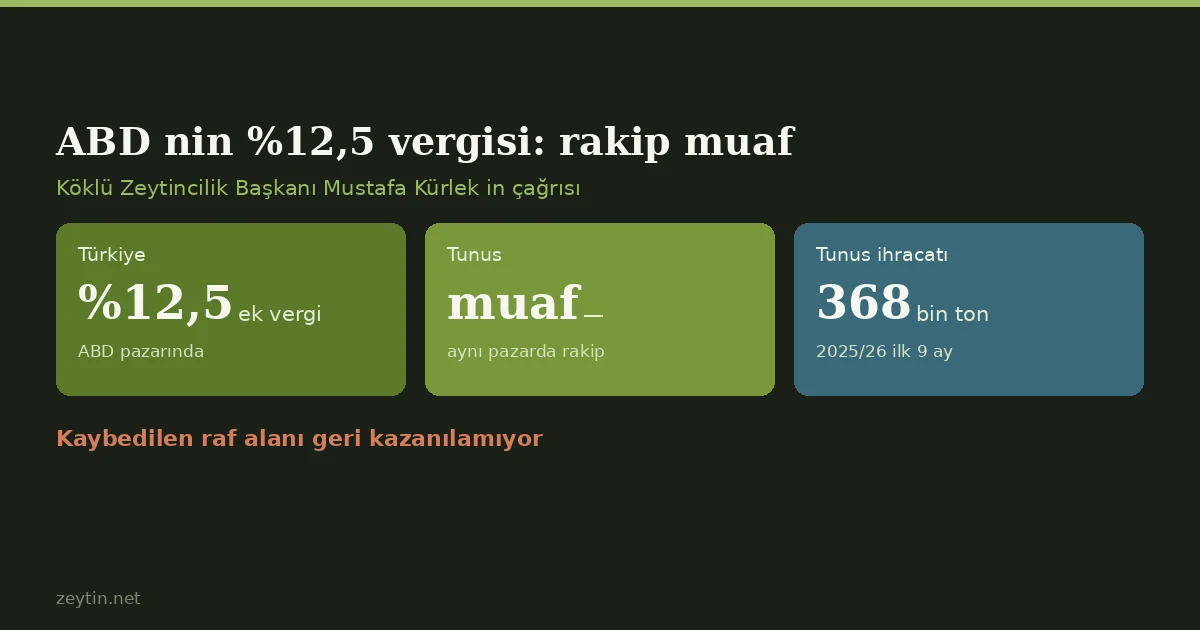
The 12.5% US tariff: the competitor is exempt, the Turkish exporter is not
Mustafa Kürlek notes the 12.5% additional US tariff on Turkish olive products is not applied to competitors such as Tunisia, and calls for DFİF and Eximbank measures.
Article
The 12.5% US tariff: the competitor is exempt, the Turkish exporter is not
Mustafa Kürlek notes the 12.5% additional US tariff on Turkish olive products is not applied to competitors such as Tunisia, and calls for DFİF and Eximbank measures.