Gölvala olive
Gölvala is a recorded variety of the Black Sea. No measured pomological data published.
Gölvala is one of the recorded olive varieties of the Black Sea.
Characteristics
Oil content is high. The stone is large; a big, striking olive.

Where it grows
Gölvala is recorded in the Black Sea. The provinces growing olives in this region: Artvin, Trabzon, Sinop, Samsun, Ordu, Kastamonu, Tokat, Bartın, Rize and Zonguldak — output is concentrated in Artvin (740 t); elsewhere the scale is very small.
Regional conditions, varietal spread and output: olive growing in the Black Sea
Record status
⚠ No measured pomological data has been published for this variety. The source carries only a brief description; there are no published figures for fruit weight, flesh-to-stone ratio, oil content, chilling requirement or self-fertility.
That does not make the variety unimportant — it makes it unmeasured. As the nameless genotypes of south-eastern Anatolia show, local varieties can beat the standards once someone measures them.
Other varieties of the region
Locally
Gölvala is one of the recorded varieties of the Black Sea. Olives in this region grow in Artvin, Trabzon, Sinop, Samsun, Ordu, Kastamonu, Zonguldak and Bartın, in narrow coastal strips and valleys sheltered from northerly winds.
The source notes a high oil content, but no measured pomological data has been published. This is the common situation of Black Sea varieties — left outside commercial cultivation, they have not been measured.
More: olive growing in the Black Sea
Source
- Efe, R., Soykan, A., Cürebal, İ. & Sönmez, S. (2016) — Characteristics and Geographical Distribution of Olive Varieties Grown in Turkey, Zeytin Kitabı, pp. 37-80
- Olive map of Turkey
One rating per visitor; you can change yours at any time. Ratings are real reader votes — no seeded or default scores.
Related
 Article
How long does an olive tree live?
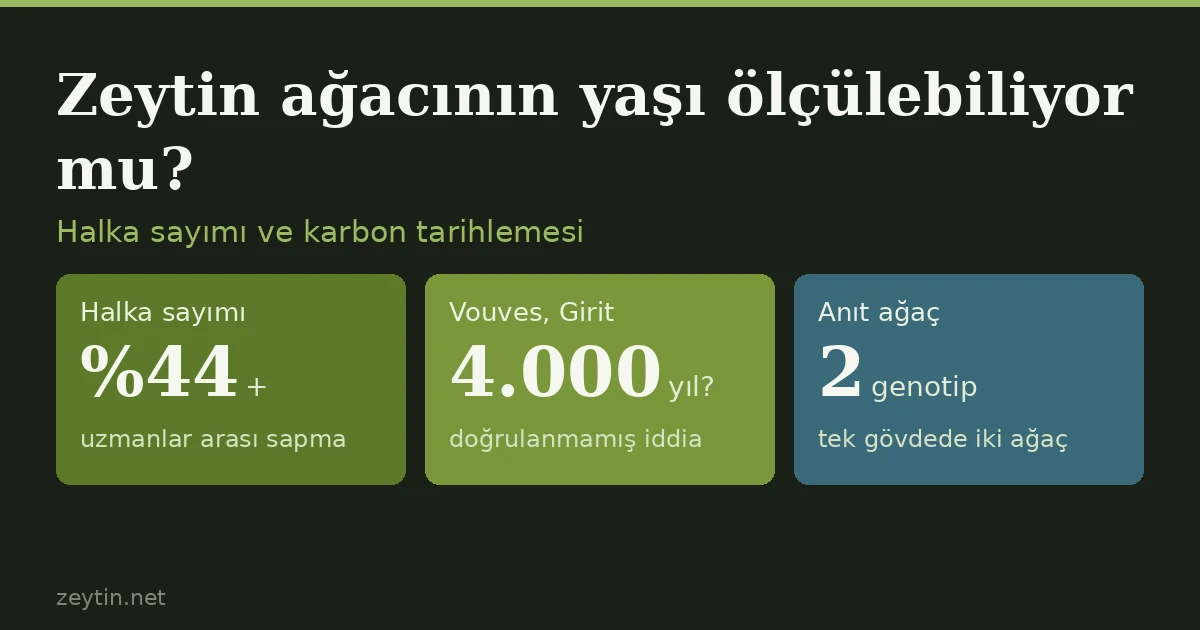
There are plenty of "thousand-year-old olive" signs and almost no measurements. Counting annual rings does not work on olive: when ten experts in five laboratories were given the same samples, their ring counts differed by more than 44%. Radiocarbon dating carries its own trap. So does the tree have a real age limit — and what does it mean that Crete's famous monumental olive turns out to consist of two different genotypes?
Article
How long does an olive tree live?
There are plenty of "thousand-year-old olive" signs and almost no measurements. Counting annual rings does not work on olive: when ten experts in five laboratories were given the same samples, their ring counts differed by more than 44%. Radiocarbon dating carries its own trap. So does the tree have a real age limit — and what does it mean that Crete's famous monumental olive turns out to consist of two different genotypes?
 Article
İzmir Sofralık olive
İzmir Sofralık is a recorded variety of the Aegean. Described in the source.
Article
İzmir Sofralık olive
İzmir Sofralık is a recorded variety of the Aegean. Described in the source.
 Article
Tarsus Sarıulak Olive: the same cultivar behaving differently in one place
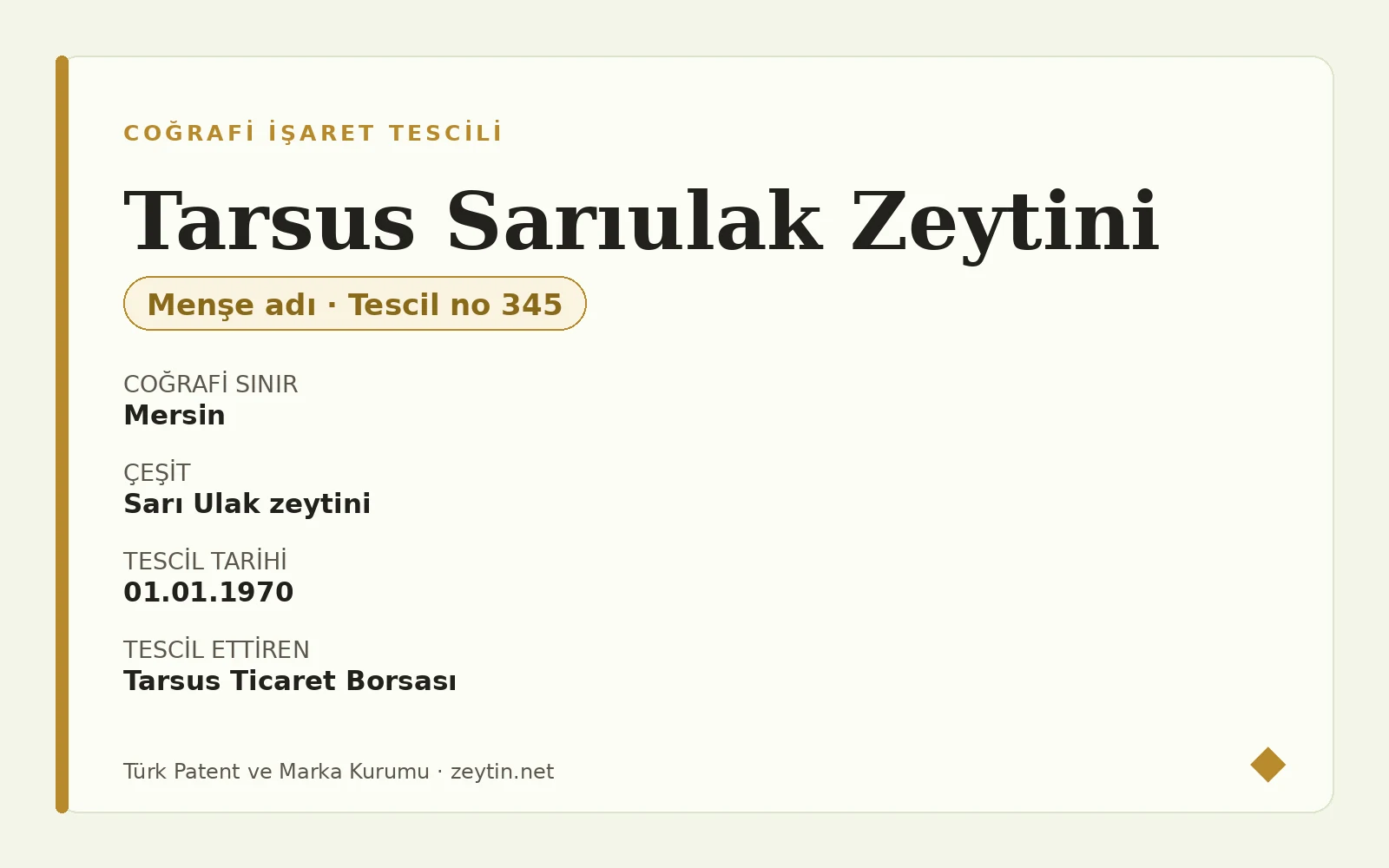
The certificate measures Sarıulak in Tarsus and generally, side by side: it flowers a month earlier, ripens a month later, and has larger fruit and more flesh.
Article
Tarsus Sarıulak Olive: the same cultivar behaving differently in one place
The certificate measures Sarıulak in Tarsus and generally, side by side: it flowers a month earlier, ripens a month later, and has larger fruit and more flesh.
 Article
Saurani olive: characteristics, oil content and growing areas
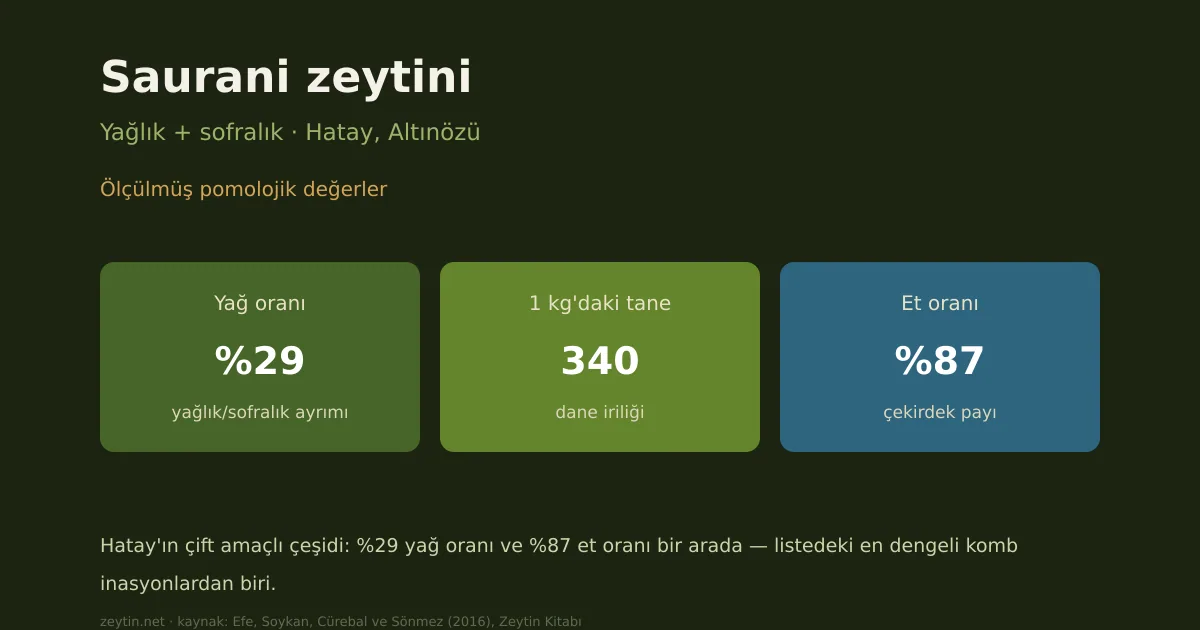
Hatay's dual-purpose variety: 29% oil with 87% flesh — one of the most balanced combinations on the list.
Article
Saurani olive: characteristics, oil content and growing areas
Hatay's dual-purpose variety: 29% oil with 87% flesh — one of the most balanced combinations on the list.