Fertilising Olives: From Soil Analysis to an Annual Programme
How to read a soil test, which nutrients olives need and when, fertigation and organic matter management.
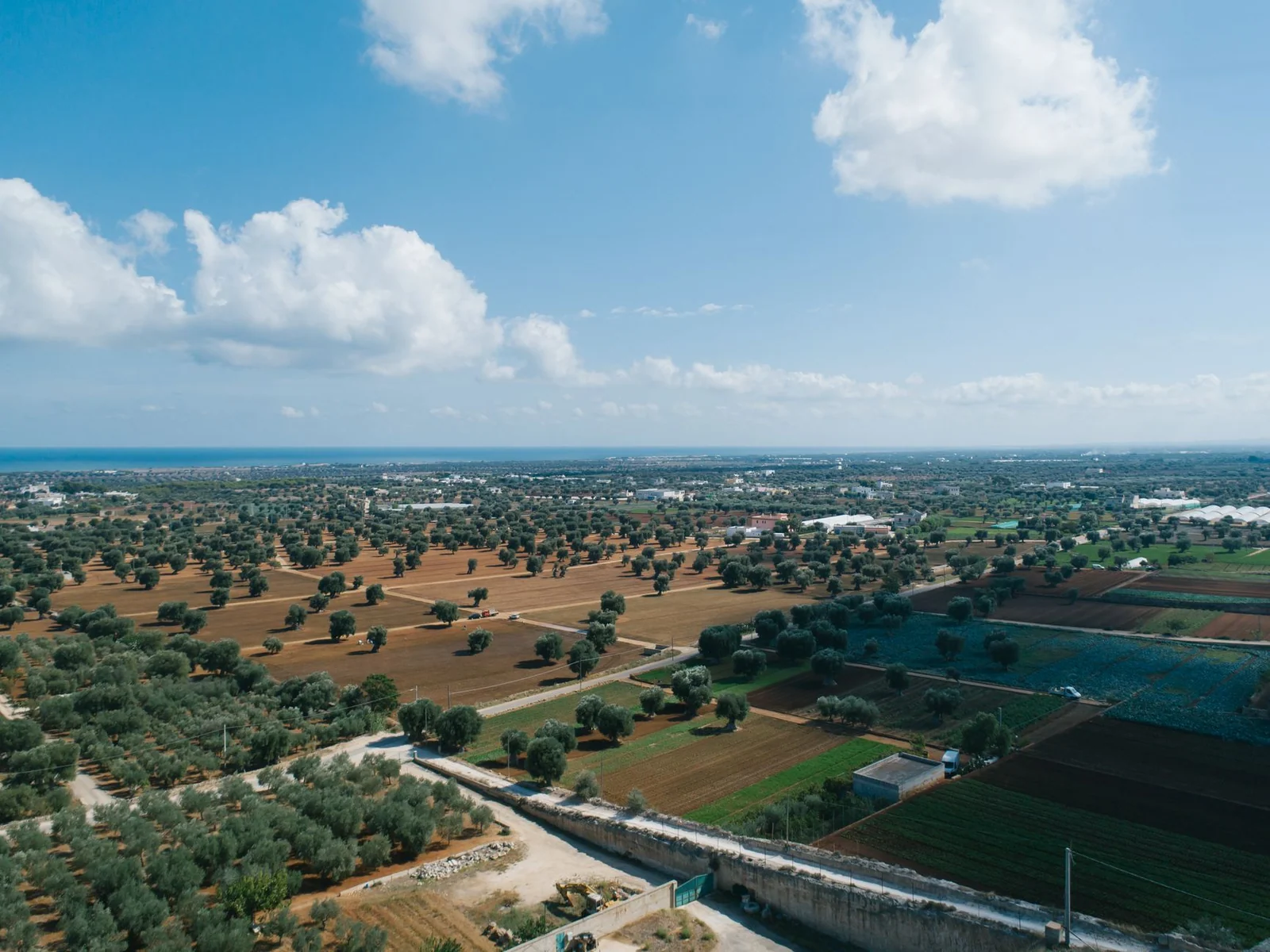
Fertiliser is the input olive growers spend the most money on and measure the least. In most groves the programme is built one of two ways: copy the neighbour, or take the pre-mixed bag the dealer recommends. But fertilisation is a calculation based on the state of a particular soil and a particular season. Copied, it either wastes money or leaves the tree short.
Measure first: soil analysis
A fertiliser programme starts with a soil test. The analysis tells you three things, and all three change the decision:
- pH. Olives are comfortable between 6 and 8. At high pH — the calcareous soils common across the Mediterranean — iron, zinc and phosphorus become unavailable to the plant. Fertiliser applied to that soil sits there but cannot be taken up. The answer is not more fertiliser but a different form (chelated iron, foliar application).
- Organic matter. In a large share of Turkish olive soils it is below 1%. Where organic matter is low the soil cannot hold water or nutrients, and part of what you apply leaches away.
- Lime and salinity. High active lime makes iron deficiency inevitable. Where salinity is high, raising the fertiliser rate makes the problem worse, not better.
How to sample. Do not treat the grove as one block: sections that differ in soil, slope or tree age are sampled separately. Take cores from eight to ten points per section, at 0–30 cm and 30–60 cm, and mix them. Never sample at the base of a trunk or along a fertilised strip — the result describes that spot, not the grove.
A soil test every three or four years is enough. The tree's condition in a given season is read from leaf analysis instead; the two answer different questions and do not substitute for each other. How leaf samples are taken and what each value means was covered in the article on nutrient deficiencies.
What does the olive want, and when?
Nitrogen (N). Drives shoot and leaf growth. The critical window is spring: from bud break to flowering. Nitrogen applied in autumn delays the tree's preparation for winter and increases frost damage.
⚠ With nitrogen, too much is worse than too little: excess produces heavy shoot growth and shade, reduces flower bud formation and lowers fruit set. It is also known to reduce the polyphenol content and keeping quality of the oil.
Phosphorus (P). Olive demand is comparatively low, and uptake is difficult on calcareous soils. In most groves applying phosphorus every year is unnecessary; if the analysis does not call for it, it is not applied.
Potassium (K). The nutrient olives remove in the greatest quantity — fruit and oil formation depend directly on it. In a heavy crop year the tree draws a substantial amount of potassium from the soil; if it is not replaced that season, the following year's capacity falls. Under dry conditions potassium also regulates water use within the plant.
Calcium and magnesium. Generally sufficient in Turkish soils, though excessive potassium application can block magnesium uptake. This competition between elements is precisely why "apply whatever is missing" is the wrong logic.
Boron. The olive's particular problem. Boron is required for pollen viability and fruit set, and a deficiency translates directly into lost yield. But boron has the narrowest margin of any element between sufficient and toxic, so boron is never applied without an analysis.
Building the annual programme
A sound approach has three steps:
1. Estimate what the crop removed. Every tonne of harvested fruit takes a defined quantity of nitrogen, phosphorus and — above all — potassium out of the soil. The heavier the crop, the greater the removal, which is why the programme must depend on that season's crop rather than being fixed.
2. Subtract what the soil can supply. The available fraction is worked out from the analysis, allowing for organic matter and pH.
3. Apply the difference, at the right time and in the right form. The same quantity of fertiliser applied at the wrong moment does nothing.
Rough calendar:
- Late winter / early spring: most of the nitrogen, part of the potassium.
- Before flowering: boron and zinc (foliar), supplementary nitrogen if needed.
- After fruit set / summer: the main potassium application, split through fertigation.
- Autumn: organic matter, farmyard manure, compost. No nitrogen.
Fertigation: feeding through the water
Where drip irrigation exists, fertiliser goes in with the water. The advantage is substantial: nutrients arrive directly in the active root zone, in small doses, exactly when they are needed. Broadcast fertiliser loses heavily to leaching and volatilisation; fertigation loses little. The system layout and irrigation calendar were covered in the article on irrigating olives.
Practical rules:
- Inject fertiliser in the middle of the irrigation run, not at the start; flush the line with clean water at the end or emitters block.
- Never mix calcium-containing fertiliser with phosphate or sulphate fertilisers in the same tank; they precipitate and clog the system.
- Small and frequent always beats large and occasional.
Organic matter: the slowest, most durable investment
In most olive groves the real problem is not a single missing element but the soil itself. Where organic matter has fallen below 1%, no fertiliser programme works well: water is not held, nutrients leach, roots do not develop.
There are three sources, and all three work slowly:
- Chipped prunings returned to the soil. Material that leaves the tree staying in the grove. When prunings should go back into the soil and when they must leave the orchard was set out in the pruning article: diseased material does not go back.
- Cover crops. A legume mix covering the soil through winter leaves both organic matter and nitrogen behind.
- Farmyard manure or compost. Applied in autumn, spread on the surface and lightly incorporated.
None of this shows in a single season; it starts to read in the soil analysis after three or four years. The most expensive mistake in fertilisation is skipping this investment and trying to cover the gap with more mineral fertiliser every year.
Fertilising an organic grove
Certified organic production has no synthetic fertiliser; the programme is built from manure, compost, green manure and permitted mineral sources. Because nutrient release is slow, planning runs a year ahead: organic material applied in autumn becomes available the following spring. For the system as a whole and a yield comparison, see organic olive growing.
Common mistakes
1. Fertilising without an analysis. The most common and most expensive error. Whether the fertiliser did anything is never known.
2. Running the same programme every year. An "on" year and an "off" year do not remove the same nutrients; the reasons behind that swing were covered in the article on alternate bearing.
3. Applying at the base of the trunk. Feeder roots concentrate under the canopy edge; the trunk base is dead ground.
4. Applying to dry soil. Undissolved fertiliser cannot be taken up; without rain or irrigation it sits on the surface and part of it is lost.
5. Nitrogen in autumn. The tree cannot harden off and frost damage increases.
Summary
Fertilising olives is less a question of "what shall we apply" than of "what does the soil say." Unmeasured programmes usually end in too much nitrogen and too little potassium — a loss of both money and yield. The cost of an analysis is small beside a single season's fertiliser bill.
One rating per visitor; you can change yours at any time. Ratings are real reader votes — no seeded or default scores.
Related
 Article
Does a harvesting machine damage the olive tree?
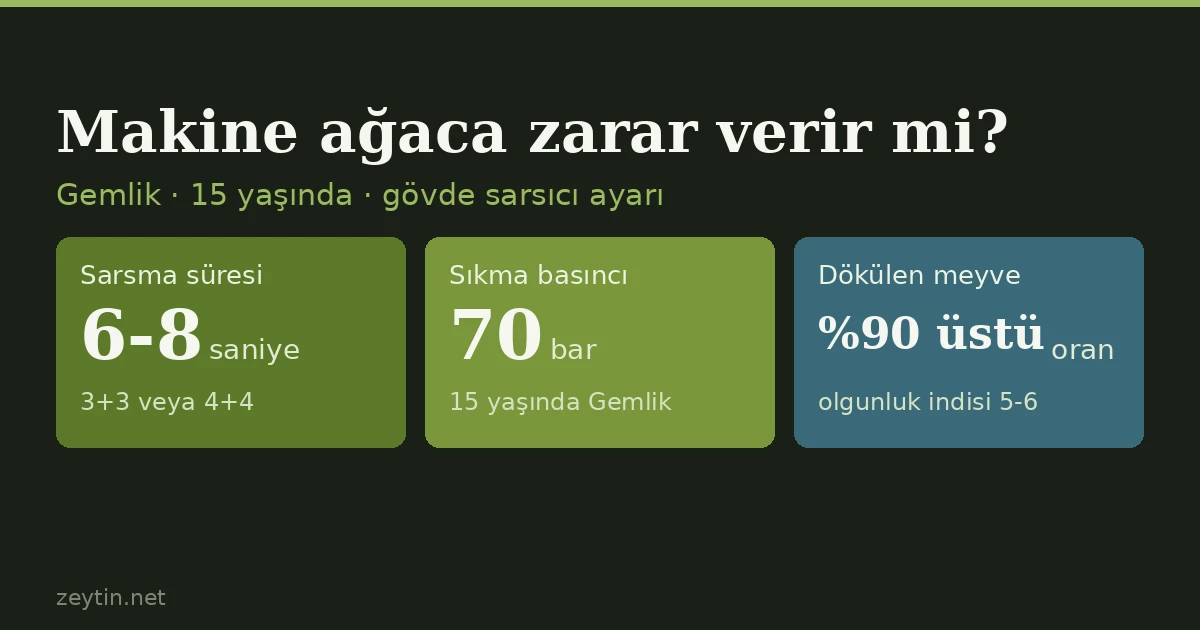
Trunk shakers, branch shakers and hand picking: the damage comes not from the machine itself but from its settings and duration. The figures the Turkish agriculture ministry's research institute gives for the Gemlik variety — 70 bar clamping pressure, 20 Hz, a 6-8 second shake — and what falls off the tree once that window is exceeded. Why grove spacing, slope limits and operator training are technical requirements.
Article
Does a harvesting machine damage the olive tree?
Trunk shakers, branch shakers and hand picking: the damage comes not from the machine itself but from its settings and duration. The figures the Turkish agriculture ministry's research institute gives for the Gemlik variety — 70 bar clamping pressure, 20 Hz, a 6-8 second shake — and what falls off the tree once that window is exceeded. Why grove spacing, slope limits and operator training are technical requirements.
 Article
When to harvest olives: deciding with the maturity index
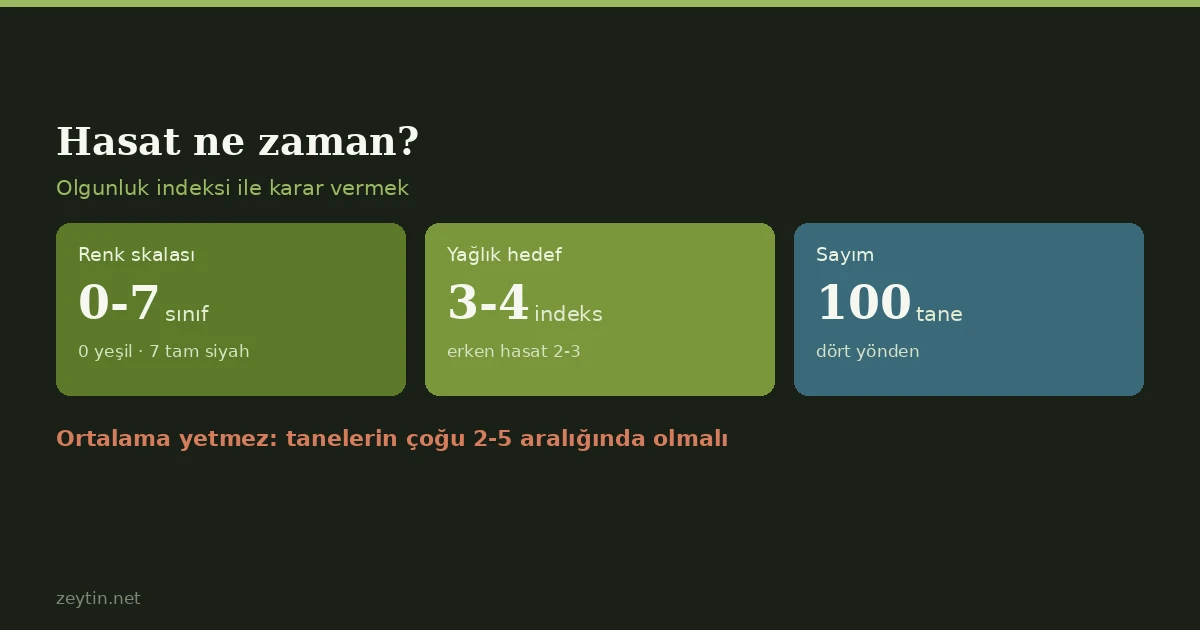
Harvest timing is set by the maturity index, not the calendar. The 0-7 colour scale, how to calculate it from 100 fruits, early versus late harvest compared, and ripening times by variety.
Article
When to harvest olives: deciding with the maturity index
Harvest timing is set by the maturity index, not the calendar. The 0-7 colour scale, how to calculate it from 100 fruits, early versus late harvest compared, and ripening times by variety.
 Article
How to plant an olive sapling
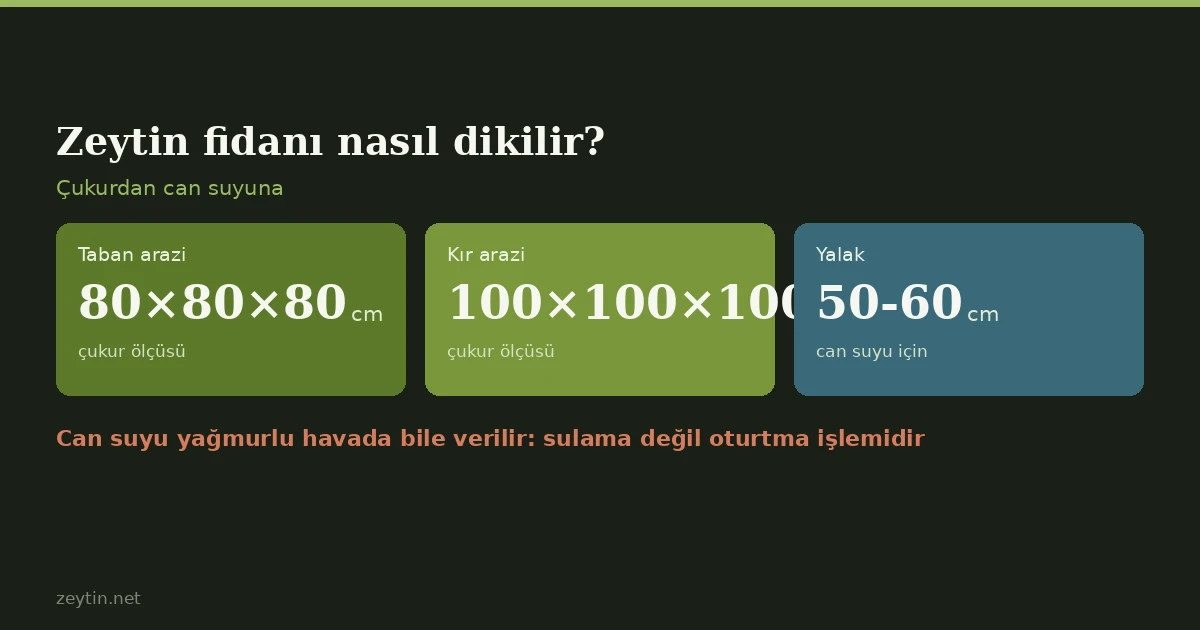
Planting season, hole dimensions, removing a potted sapling, planting depth and the graft union, the basin and settling water — why settling water is given even in rain, first-year care and five common mistakes.
Article
How to plant an olive sapling
Planting season, hole dimensions, removing a potted sapling, planting depth and the graft union, the basin and settling water — why settling water is given even in rain, first-year care and five common mistakes.
 Article
What happens if it rains during the olive harvest? Wait, or pick?
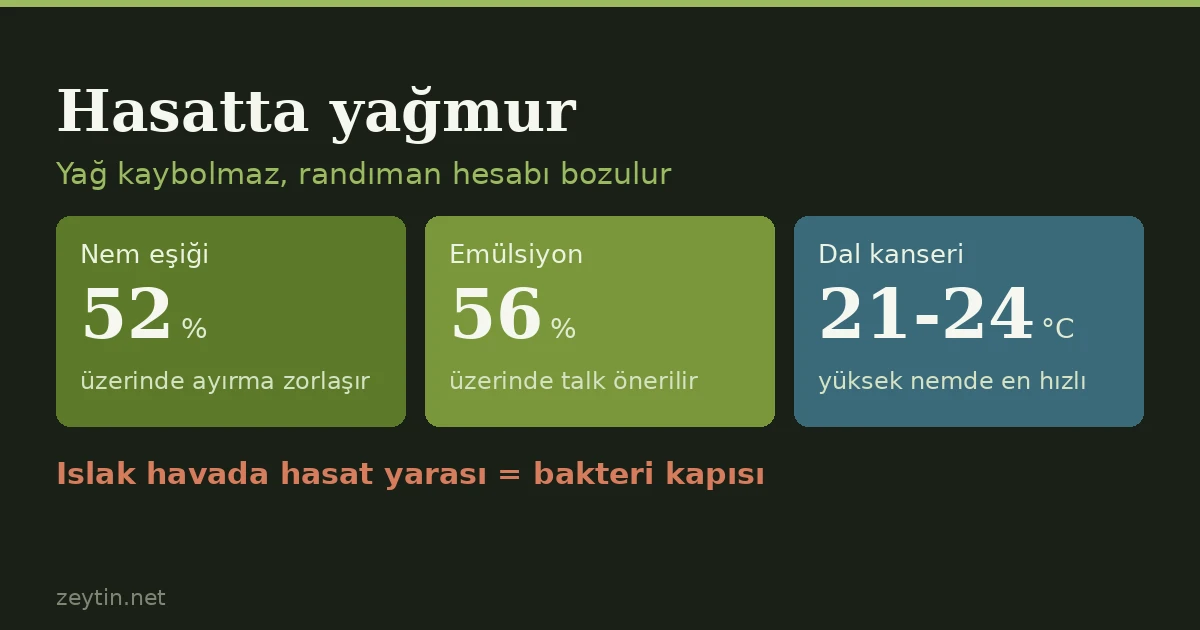
Rain does not destroy the oil; it distorts the yield figure, because fruit oil content is measured on a fresh-weight basis. The real damage shows up as emulsion at the mill, as the "musty-humid-earthy" sensory defect, and as olive knot bacteria entering harvest wounds in wet weather.
Article
What happens if it rains during the olive harvest? Wait, or pick?
Rain does not destroy the oil; it distorts the yield figure, because fruit oil content is measured on a fresh-weight basis. The real damage shows up as emulsion at the mill, as the "musty-humid-earthy" sensory defect, and as olive knot bacteria entering harvest wounds in wet weather.