Şevketibostan (Gundelia) in Olive Oil
The most laborious and most loved winter green of the Aegean: the thorns are trimmed away, the stems held in lemon water, then cooked slowly in olive oil.
- Time
- 60 minutes
- Serves
- Serves 4
- Level
- Hard
- Cuisine
- Turkish
⚠ If you are foraging — identification comes first. Edible wild plants have poisonous look-alikes, some of them lethal. Do not pick anything you are not certain of, and go with someone who knows if it is your first time. Roadsides, the edges of sprayed fields and industrial areas are not gathering grounds.
Şevketibostan (Gundelia tournefortii) is the winter green of the Aegean and inner western Anatolia. It is a thistle-like plant, thorny from top to bottom — which is exactly why getting it into the kitchen is such work. What is eaten is not the leaf but the stems and hearts, stripped of their thorns and tough outer skin.
In markets it is usually sold ready-cleaned, and the price reflects that labour. If you clean it yourself, gloves are essential.
The plant's second characteristic is how fast it darkens: the cut surface oxidises the moment it meets air. The same problem as the artichoke, with the same solution — lemon water, as in artichokes in olive oil. That is why there are two lemons in the recipe: one for the holding water, one for the dish.
Directions
- Scrape away the thorny outer leaves and tough skin with a knife, leaving only the stems and hearts. Wear gloves.
- Drop each cleaned piece straight into lemon water — the plant begins to darken the moment it meets the air.
- Heat the olive oil in a pan and soften the onion until translucent.
- Add the carrots and turn them for four to five minutes.
- Drain the gundelia and add it to the pan with the sugar and salt.
- Pour in the hot water, cover, and cook over low heat for thirty to thirty-five minutes, until the stems are tender.
- If using flour, slake it with a little water and stir it in for the last five minutes.
- Take off the heat, pour over the lemon juice and leave to cool in the pan.
- Scatter with dill and serve at room temperature.
Tips & storage
Wear gloves — no argument. The thorns are fine and brittle, and hard to remove once in the skin.
Have the lemon water ready. Prepare the bowl before you start cleaning. Even holding a cleaned piece in your hand is long enough for it to darken.
Peel the skin thickly. The outer layer of the stem never softens and stays stringy in the mouth. This is the most common mistake in the recipe.
The sugar rounds off sharpness, not bitterness. Gundelia is not bitter but earthy and sharp, and a teaspoon of sugar balances that.
The flour is optional but makes a difference. It lightly binds the sauce and stops the dish weeping as it cools. Leave it out if you dislike a thickened finish.
This is the olive-oil version, not the meat one. A stew of gundelia with lamb is equally classic; this is the cold, olive-oil dish. The two are not interchangeable.
Storage. Three days in the fridge; better on the second day.
One rating per visitor; you can change yours at any time. Ratings are real reader votes — no seeded or default scores.
Related
 Recipe
Mallow in Olive Oil
The softest of the garden-edge greens: its characteristic velvety texture balanced with bulgur and finished with garlic yoghurt.
Recipe
Mallow in Olive Oil
The softest of the garden-edge greens: its characteristic velvety texture balanced with bulgur and finished with garlic yoghurt.
 Recipe
Cracked Green Olives, Cured at Home
The first job of the harvest season: the classic home method that cracks green olives and draws out their bitterness with water in ten to fifteen days.
Recipe
Cracked Green Olives, Cured at Home
The first job of the harvest season: the classic home method that cracks green olives and draws out their bitterness with water in ten to fifteen days.
 Recipe
Bloody Mary with Olives
Tomato juice, spices and vodka, garnished with olives, celery and lemon.
Recipe
Bloody Mary with Olives
Tomato juice, spices and vodka, garnished with olives, celery and lemon.
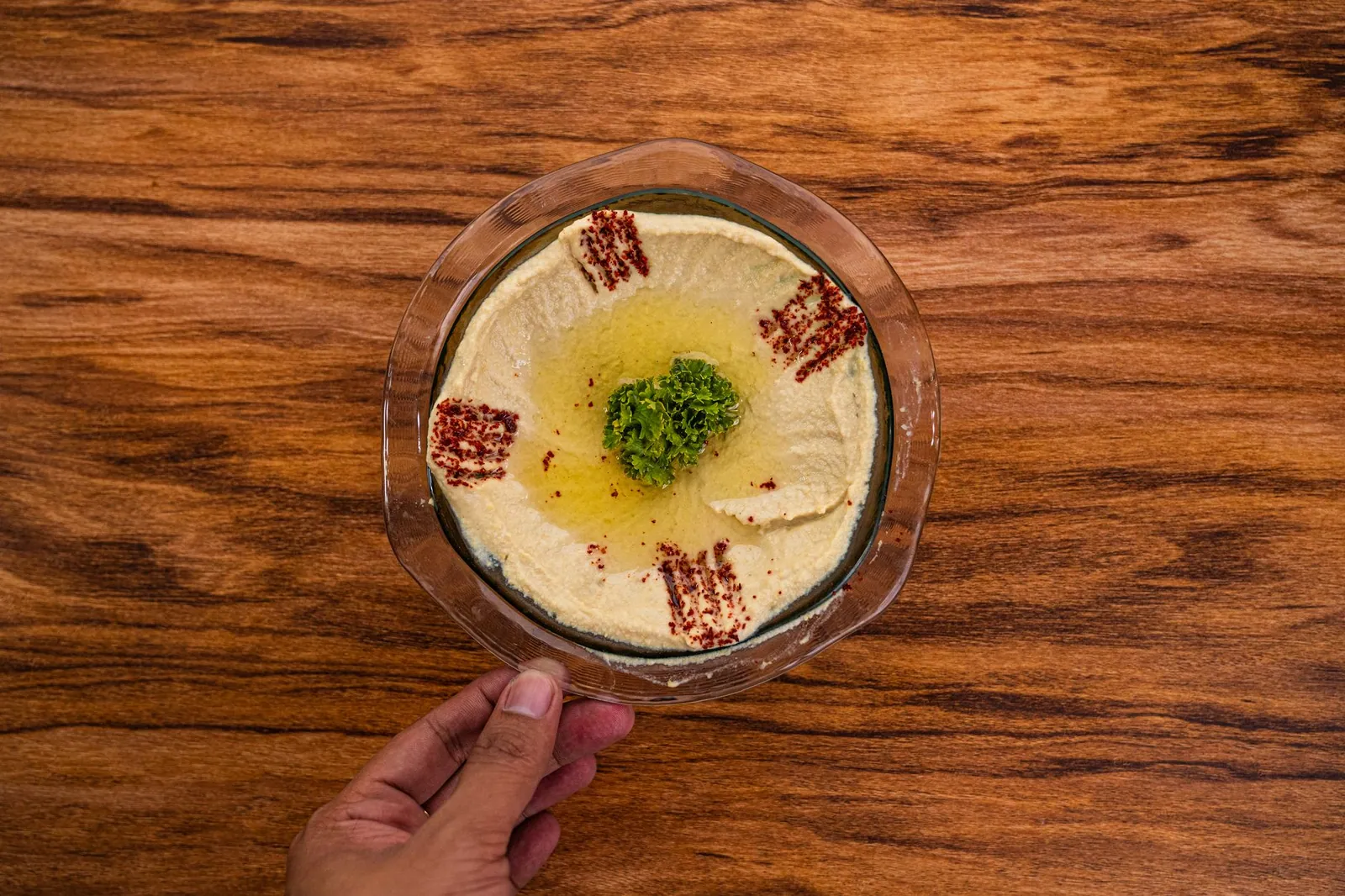 Recipe
Hummus with Olives
Chickpea purée topped with olive oil and chopped olives; with bread or vegetables.
Recipe
Hummus with Olives
Chickpea purée topped with olive oil and chopped olives; with bread or vegetables.