Grafting Olives: Changing Cultivar and Improving Wild Trees
When grafting is needed, taking scion wood, bud and cleft methods, topworking and aftercare.
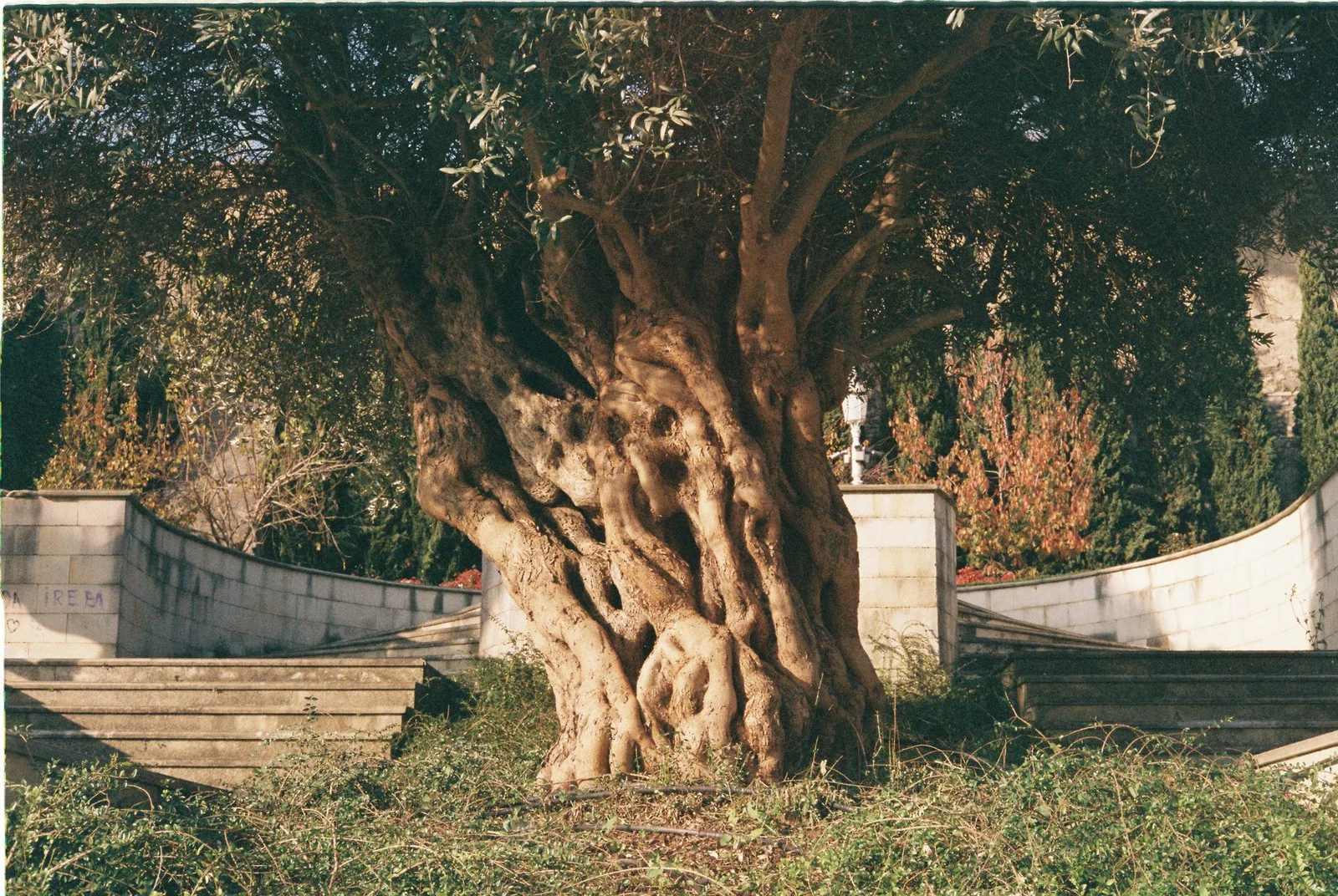
Grafting in an olive grove is usually the answer to a problem: the orchard was planted with the wrong cultivar, the market has moved, or unproductive wild olives have been standing there for years. Pulling the trees out and replanting costs a decade. Grafting keeps the existing root system and brings a new cultivar into bearing in three or four years. That is the real value of grafting in olives: it buys time.
When is grafting needed?
Four typical situations:
- Changing cultivar (topworking). The cultivar in the grove does not suit the region or the market — converting an oil orchard to table olives, or the reverse.
- Improving wild olives. Naturally grown wild olive (oleaster) has a strong root system but small, unproductive fruit. Grafting converts it to a cultivated variety. The rootstock side of working with wild olives was covered in the cutting-propagation trial.
- Missing pollinisers. Where a grove is planted to a single cultivar, fruit set falls. Rather than removing trees, a few branches on scattered trees are grafted to a polliniser variety — the cheapest solution to the problem set out in the article on pollination.
- Rebuilding damaged trees. After frost, fire or mechanical damage, shoots rising from the trunk are grafted and the tree is reshaped.
Rootstock and scion
The rootstock is the existing tree that provides the roots and trunk. The scion is the bud or shoot section grafted onto it, carrying the new cultivar.
Rootstock choice works differently in olives than in most fruit trees. In apple or cherry the rootstock controls tree size; in olives there is no comparable series of standardised dwarfing rootstocks. Here the rootstock's role is mainly compatibility and hardiness — wild olive rootstock tolerates drought and calcareous soils, which is why it is preferred in difficult conditions.
⚠ Scion wood must come from a tree that has borne fruit and whose cultivar has been verified. Cultivar confusion is a widespread problem in olives; wood taken on the strength of the name attached to a tree in someone's grove shows up as the wrong variety ten years later. Why identification is difficult was covered in the article on olive varieties.
Taking and storing scion wood
Scion wood is cut while the tree is dormant — late winter, before bud break. The ideal scion is last season's shoot: about the thickness of a pencil, carrying at least three or four healthy buds.
Storage is simple but unforgiving: wrap the wood in a damp cloth, bag it, and hold it in a refrigerator at +2 to +4 °C. Dried wood will not take; mouldy wood will not take and infects the rootstock as well.
Grafting methods
Bud grafting (T-budding / patch budding). The rootstock bark is lifted and a single bud inserted. Common on young, thin rootstocks and in nurseries. It uses the least material: dozens of buds come from one stick of wood. Because the bark must lift, it is done while the sap is running (late spring / summer).
Scion grafting (cleft / bark grafting). Used on thick rootstocks, particularly for topworking. The stock is cut off and one or more scions set into the cut face. This is the standard method for changing the cultivar of old, thick-trunked trees. Done in late winter or early spring.
Whip-and-tongue grafting. Where stock and scion are the same thickness, matching sloping cuts are made, tongued and interlocked. It gives the largest contact area and the highest take rate; used in nursery production.
The deciding factor is rootstock thickness: bud or whip grafts on thin wood, cleft grafts on thick wood.
Topworking: changing a whole tree
Changing the cultivar of a mature tree is a major intervention with two rules:
1. Do not cut all the scaffolds in one year. Removing the entire leaf area at once starves the roots and weakens the tree. Scaffolds are grafted across two seasons.
2. Put more than one scion on each scaffold. Take rates are never 100%; of two or three scions at least one succeeds, and the strongest is then kept.
A topworked tree generally begins bearing in the third year. Reaching the same point by planting nursery trees takes six or seven. That gap is the economic case for grafting.
Four things that decide whether a graft takes
- Cambium contact. A graft unites where the thin living layer between bark and wood — the cambium — makes contact. If the scion is centred but the cambium layers are not aligned, it fails. What matters is not centring the scion but aligning the edges.
- Moisture. The union is sealed with grafting compound or tape; a cut face that dries cannot knit.
- Temperature. Union needs warmth, but not heat. A graft made too early sits in the cold and moulds.
- Hygiene. A sharp, clean blade. Olive knot also enters through graft wounds; in an infected grove the knife is wiped between trees.
Aftercare
The year after grafting matters as much as the graft itself:
- Removing water sprouts. The rootstock would rather grow its own shoots than feed the graft. Shoots from the trunk and from below the union are rubbed off regularly; neglected, the graft stays weak and dries out.
- Loosening ties. A graft tie strangles a thickening branch. Once the union has knitted, the tie is loosened or cut.
- Support. New graft growth is fast and brittle and can snap at the union in wind. Tying it to a cane for the first season is standard practice.
- Sunburn. Because topworking removes the scaffolds, the trunk is suddenly exposed. Whitewashing the trunk is common and effective protection.
Common mistakes
1. Using unverified scion wood. The error surfaces three years later, with the first crop.
2. Cutting scion wood too late. Wood that has already broken bud will not take.
3. Leaving the union unsealed. The cut face dries and never knits.
4. Neglecting water sprouts. This is the most common cause of a failed graft: it does not die of rejection, it starves.
5. Topworking a whole tree in one season. The tree weakens and take rates fall.
Summary
Grafting is how an olive grower keeps the root system and renews everything above it: an orchard planted to the wrong cultivar can be converted in three or four years instead of being pulled out and replanted. Success rests largely on two simple things — aligning the cambium, and clearing water sprouts afterwards. Most grafts are lost not because they failed to take, but because nobody tended them once they had.
One rating per visitor; you can change yours at any time. Ratings are real reader votes — no seeded or default scores.
Related
 Article
When does the olive harvest begin?
The harvest starts in late September and runs into February. Erkence is earliest, Memecik hangs into mid-December, and Mission's table and oil harvests are two months apart.
Article
When does the olive harvest begin?
The harvest starts in late September and runs into February. Erkence is earliest, Memecik hangs into mid-December, and Mission's table and oil harvests are two months apart.
 Article
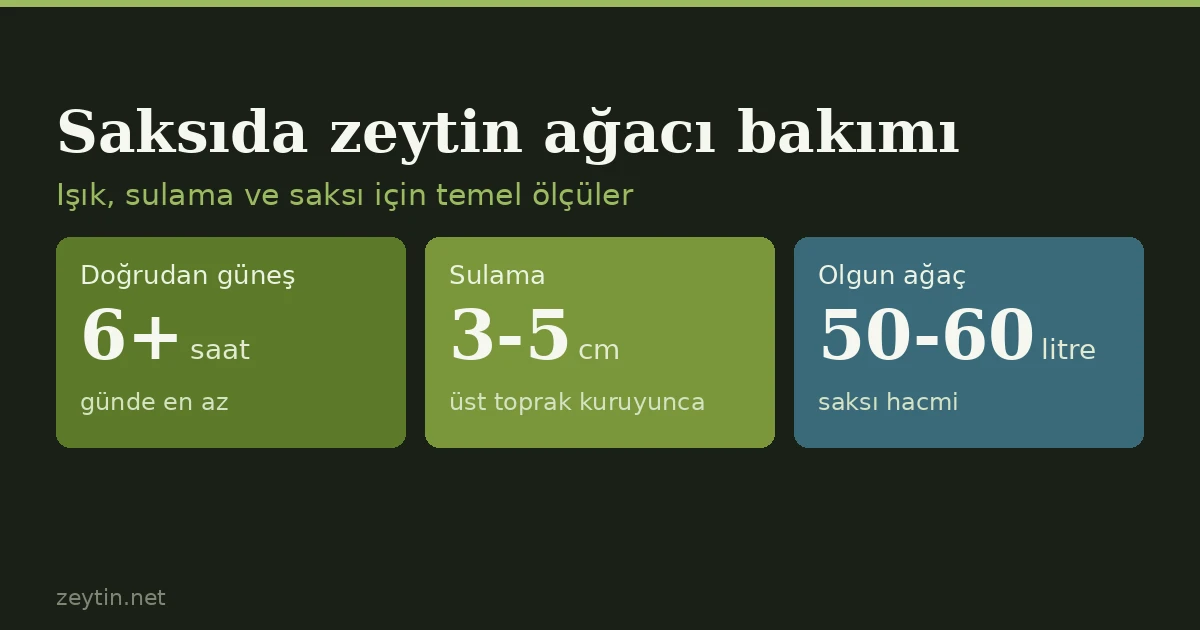
Caring for an olive tree in a pot: container, soil, watering, light and winter
Olive trees can live in pots, but they do not forgive two things: too much water and too little light. A wide pot with drainage holes, a free-draining mix, watering once the top layer dries and at least six hours of direct sun are the basic rules. Expecting fruit indoors is usually pointless without a cool winter.
Article
Caring for an olive tree in a pot: container, soil, watering, light and winter
Olive trees can live in pots, but they do not forgive two things: too much water and too little light. A wide pot with drainage holes, a free-draining mix, watering once the top layer dries and at least six hours of direct sun are the basic rules. Expecting fruit indoors is usually pointless without a cool winter.
 Article
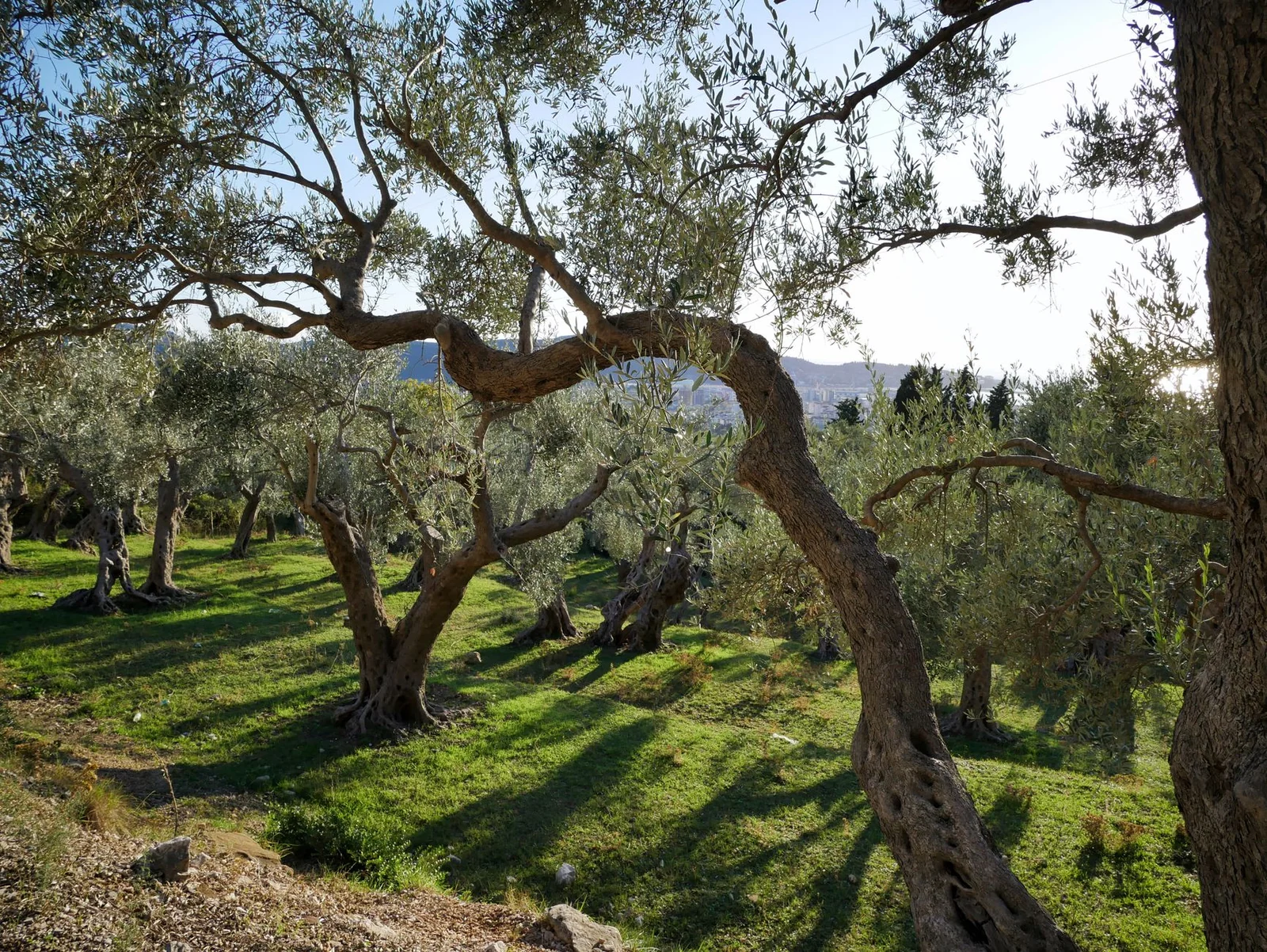
Olive Pruning: Why, When and How
Why olives are pruned, when to do it, formative and production pruning, rejuvenation and high-density systems.
Article
Olive Pruning: Why, When and How
Why olives are pruned, when to do it, formative and production pruning, rejuvenation and high-density systems.
 Article
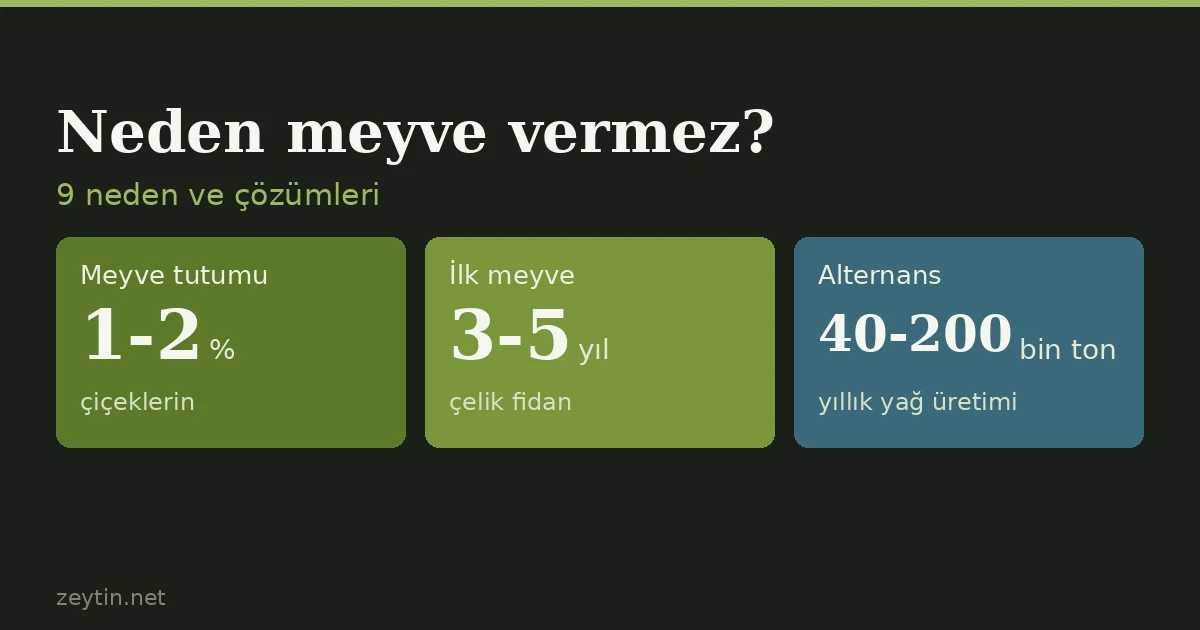
Why is my olive tree not bearing fruit? 9 causes and what to do
Behind an olive tree that flowers but sets no fruit, fills one year and stays empty the next, or has never cropped at all, there is usually more than one cause. From the tree's age and lack of grafting to missing pollinators, insufficient chilling, drought and the wrong fertiliser or pruning, here is how to diagnose by symptom and what to do.
Article
Why is my olive tree not bearing fruit? 9 causes and what to do
Behind an olive tree that flowers but sets no fruit, fills one year and stays empty the next, or has never cropped at all, there is usually more than one cause. From the tree's age and lack of grafting to missing pollinators, insufficient chilling, drought and the wrong fertiliser or pruning, here is how to diagnose by symptom and what to do.