Fraud in table olives: lye, artificial blackening, copper sulphate — how and why
Natural debittering takes 6-12 months. Which of the methods that cut it to days are lawful, and which are fraud? Lye, artificial blackening, copper sulphate — and six ways to spot fake olives.
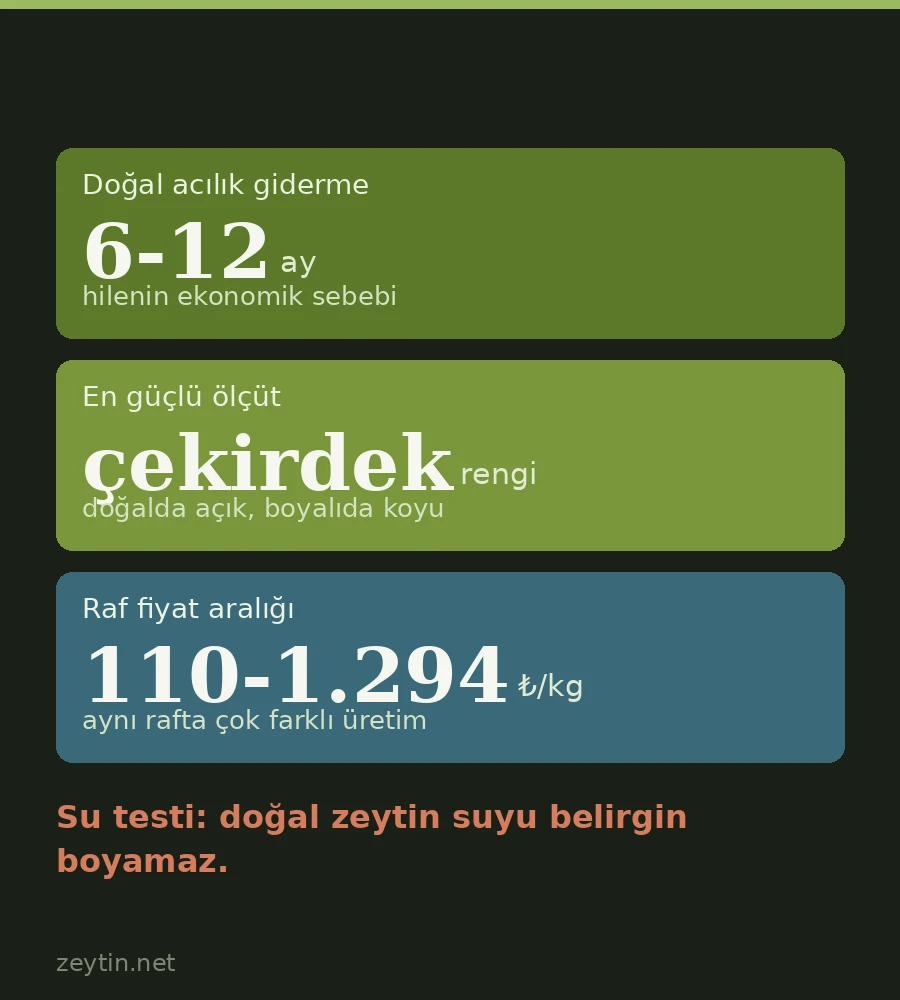
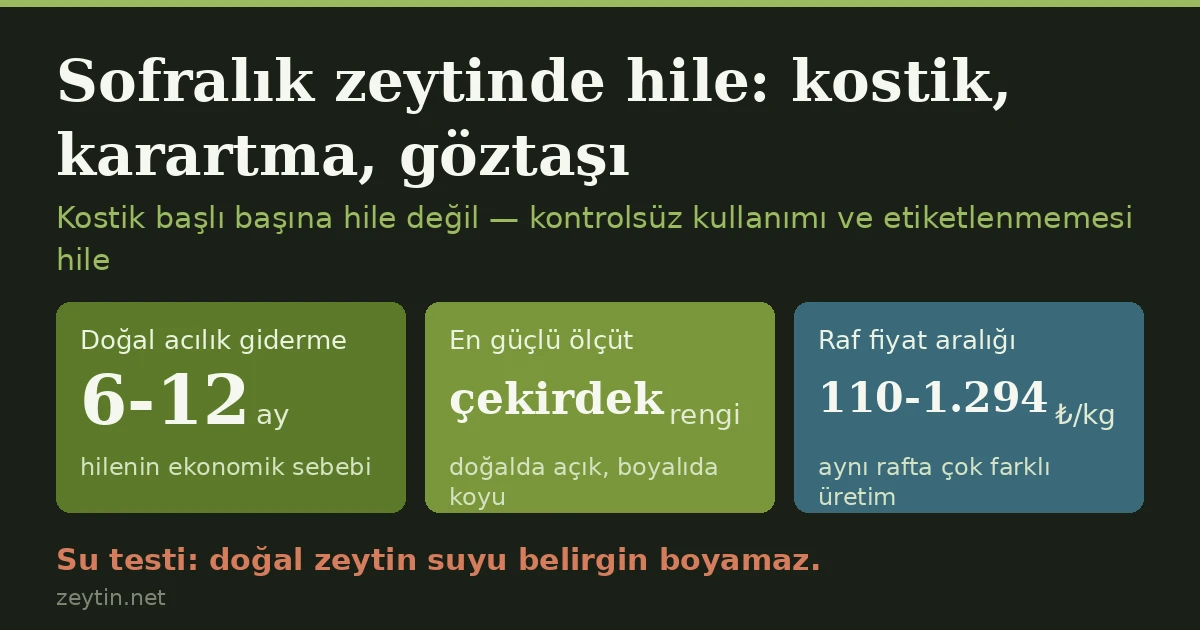
Removing the bitterness from table olives by natural means takes six months to a year. That is capital sitting in a tank for that long. Methods exist that cut it to a few days — some legal, some not. Knowing the difference is the heart of the matter for buyer and producer alike.
First, a distinction: lye is not fraud in itself
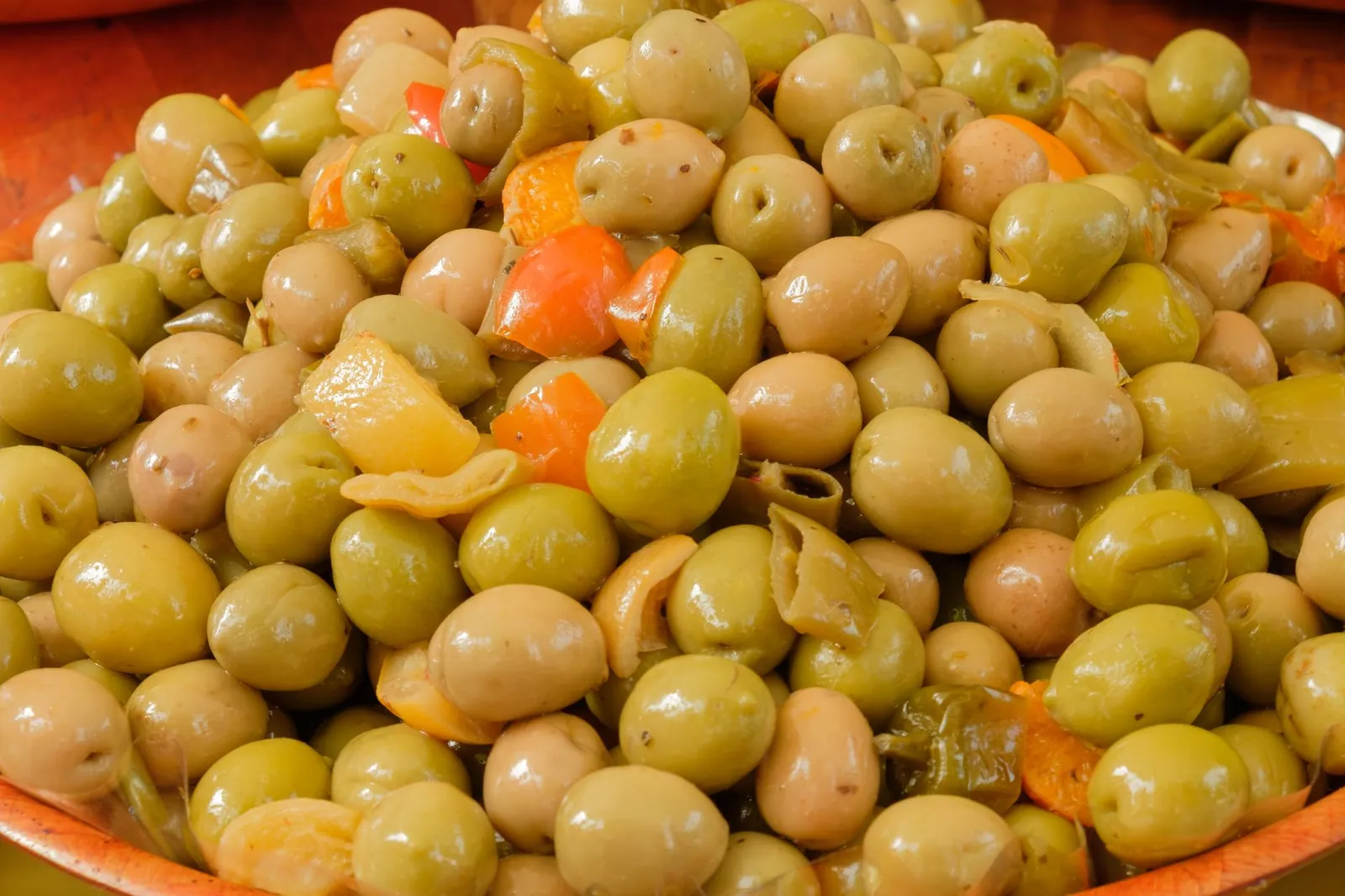
Debittering with sodium hydroxide (lye) is a standard industrial method worldwide. Spanish-style green olives and California-style black ripe olives are both made this way. Oleuropein, the bitter compound in the fruit, breaks down quickly in a dilute alkaline solution; what takes months in natural brine finishes in days.
In lawful production the process is controlled: concentration and time are measured, the fruit is then washed repeatedly to remove residue, and pH is brought back to a safe range. The fraud begins here — uncontrolled concentration, incomplete washing, and not declaring it on the label.
Artificial blackening: passing green olives off as black
Black olives are ripened on the tree and cost more than green. That price gap is the reason methods exist to make unripe green fruit look black.
Blackening by oxidation is a lawful production style — but the product must be labelled as blackened. After alkali treatment the fruit is exposed to air to darken, and the colour is fixed with iron salts (ferrous gluconate or ferrous lactate). These are permitted additives and must be declared on the pack.
The fraud is achieving the same look by unpermitted means:
- Textile dye or unapproved colourants applied directly to the fruit.
- Rusty iron and metal tanks. Scrap iron is thrown into the tank or wire is used to speed the darkening reaction — uncontrolled iron transfer, unlike a measured additive.
- Copper sulphate. Applied so the fruit stays firm and glossy and resists mould. Copper is a heavy metal with legal limits in food.
- Essence and cheap oil. Olive oil essence is sprayed on stale fruit to fake freshness; cheap vegetable oil or pomace oil is rubbed on for gloss.
How to tell: six practical checks
| Check | Natural | Suspect |
|---|---|---|
| Pit colour | Brown or light | Pit also deep black or purple — dye has penetrated |
| Colour spread | Mottled; tones differ fruit to fruit | Whole pack identical, flawless black |
| Texture | Fleshy and elastic, skin does not peel | Too soft, crushes in the hand, skin slips off |
| Taste | Fruity, slightly sour, natural bitterness | Chemical burn at the back of the throat, metallic smell |
| Water test | Does not noticeably colour the water | Water quickly turns blue-purple or deep black |
| Label | Producer, batch number, approval complete | Loose, unknown source, unusually cheap |
The pit is the strongest check: colour reaching the pit cannot be explained by natural ripening. In fruit that blackened on the tree, the pit stays pale.
Why is it so common?
The economics are plain. Natural brining ties up capital for months, carries loss risk and needs storage. Meanwhile our retail survey puts black table olives at 339 lira per kilogram on average and green at 368 — but the spread within each group is wide: green runs from 112 to 1,294 lira, black from 110 to 905.
That width shows very different production methods sitting side by side on the same shelf. At the bottom of the range, "how is it this cheap" is the same question as "how was the process shortened".
The producer's side: speeding up lawfully
A producer who wants a shorter cycle does not have to break the law. Controlled alkali treatment, adequate washing and permitted additives can be both fast and compliant. Three things matter: measuring concentration and time, completing the wash, and stating on the label what the product is. "Blackened olives" is not a defect; it is the name of a production style.
What to do
Choose packaged product with a legible producer name and batch number, subject to ministry inspection. Avoid loose olives of unknown origin priced strikingly below their peers.
We covered adulteration on the oil side in a separate article; the mechanisms differ from those used on table olives.
One rating per visitor; you can change yours at any time. Ratings are real reader votes — no seeded or default scores.
Related
 Article
Koroneiki olive: Greece's oil variety
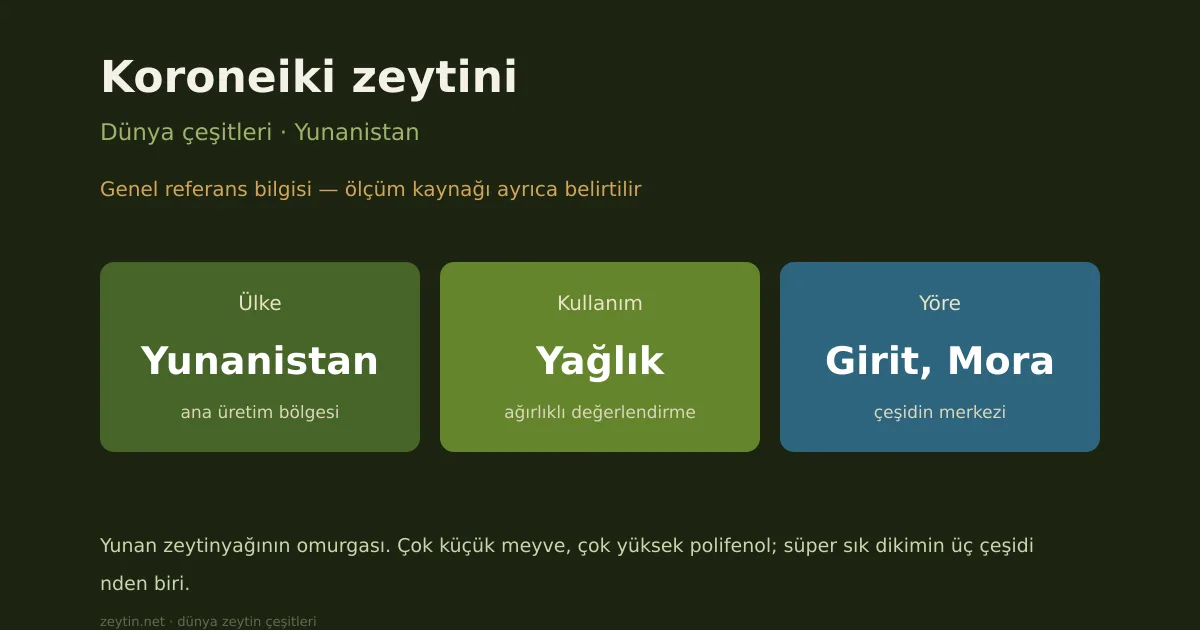
The backbone of Greek olive oil. Very small fruit, very high polyphenol content, and one of the three super-high-density varieties.
Article
Koroneiki olive: Greece's oil variety
The backbone of Greek olive oil. Very small fruit, very high polyphenol content, and one of the three super-high-density varieties.
 Article
The Olive Sector in Turkey: Structure, Exports and Challenges
Production, exports, business structure and price: the Turkish olive sector in figures, and where the chain breaks.
Article
The Olive Sector in Turkey: Structure, Exports and Challenges
Production, exports, business structure and price: the Turkish olive sector in figures, and where the chain breaks.
 Article
Geographical Indication Olives and Olive Oils of Turkey
Türkiye's registered olive and olive oil geographical indications: which product, which locality, under what conditions — and what registration means.
Article
Geographical Indication Olives and Olive Oils of Turkey
Türkiye's registered olive and olive oil geographical indications: which product, which locality, under what conditions — and what registration means.
 Article
The Çekişte olive: the Aegean's lesser-known oil cultivar
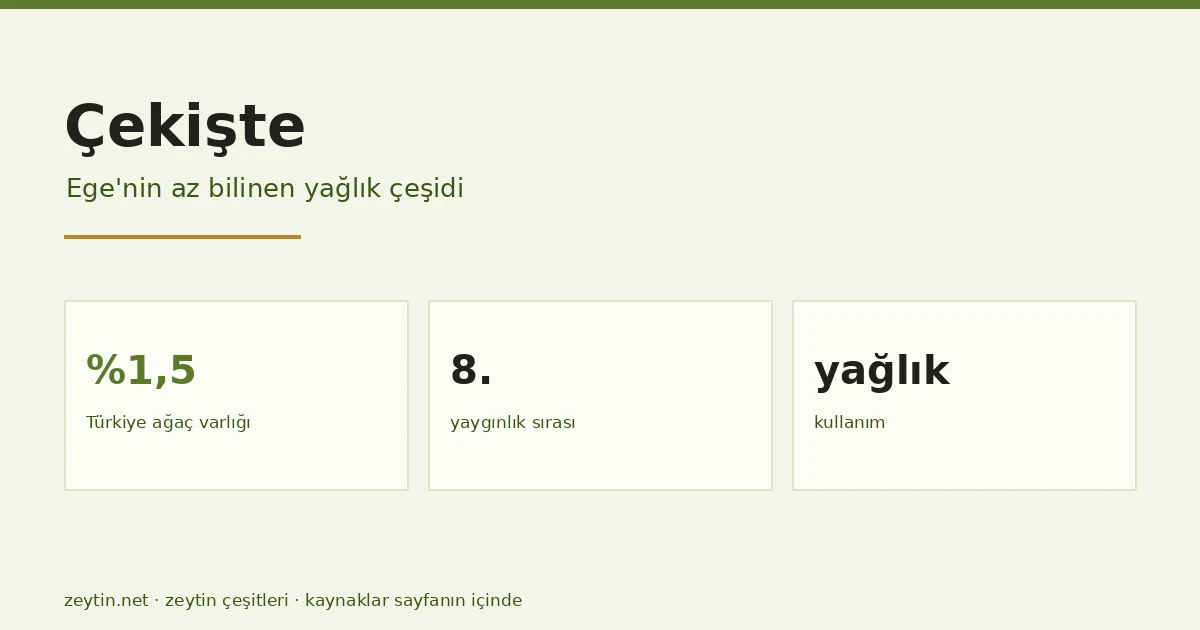
Çekişte accounts for 1.5% of Turkey's olive trees — more widespread than Domat or Uslu, yet a cultivar whose name is almost never heard.
Article
The Çekişte olive: the Aegean's lesser-known oil cultivar
Çekişte accounts for 1.5% of Turkey's olive trees — more widespread than Domat or Uslu, yet a cultivar whose name is almost never heard.