Cretan Meze (Girit Ezmesi)
The Aegean meze of white cheese, walnuts and herbs, loosened with olive oil and lemon.
- Time
- 15 minutes
- Serves
- 6
- Level
- Easy
- Cuisine
- Turkish
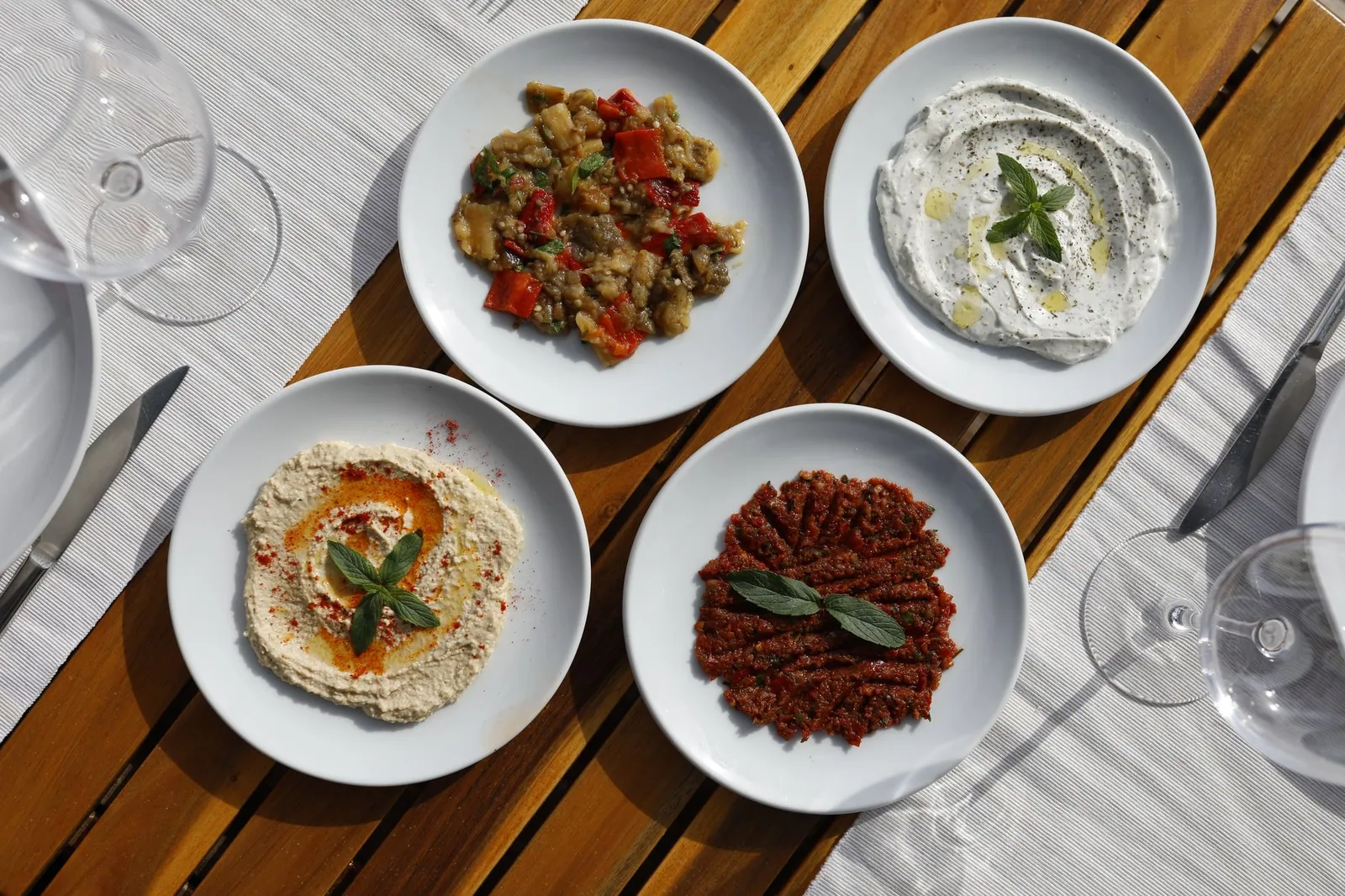
Girit ezmesi — Cretan meze — arrived in Türkiye with a migration. In the 1923 population exchange, families resettled from Crete brought it to Ayvalık, Cunda, Urla and Mudanya: precisely the coastal strip that is the heart of Turkish olive growing. That is no coincidence. The Cretans came with a cuisine built on generous use of olive oil, and the region they settled in was olive country.
The identity of the spread rests on three things: the salt of the cheese, the fat of the walnuts and the sharpness of the herbs. The olive oil is the binder here — what holds the ingredients together and lets them break apart in the mouth. Made without the herbs, it becomes a different meze altogether.
Directions
- Mash the cheese well with a fork; it need not be smooth — leave some texture.
- Stir in the yoghurt until the mixture is spreadable.
- Fold in the walnuts, dill and parsley.
- Add the garlic, lemon juice and olive oil and mix through.
- Taste before adding salt; white cheese is already salty.
- Spread on a plate, drizzle with olive oil and scatter with chilli flakes.
- Rest in the fridge for 30 minutes and serve with bread.
Tips & storage
Don't make it smooth. This is a rough spread, not a purée. The texture of fork-crushed cheese should remain; put through a processor it turns to paste and the crunch of the walnut is lost.
Salt last, by tasting. White cheese is already salty and varies enormously between producers. Always taste before adding any — in this recipe salt is usually not needed at all.
Chop the walnuts coarsely. Ground to flour, walnuts make the spread bitter and darken its colour. A knife and a coarse chop is right.
The half hour's rest is essential. The herbs and garlic need time to move into the cheese. Served straight away, the spread tastes scattered.
Adjust consistency with yoghurt. If it is too stiff, add yoghurt rather than oil — too much oil weighs it down and sets hard in the fridge.
Storage. Three days in the fridge. A thin film of olive oil over the surface stops it drying out.
One rating per visitor; you can change yours at any time. Ratings are real reader votes — no seeded or default scores.
Related
 Recipe
Borlotti Beans in Olive Oil (Pilaki)
Borlotti beans cooked with carrot, potato and tomato; the texture settles as it cools, served with lemon.
Recipe
Borlotti Beans in Olive Oil (Pilaki)
Borlotti beans cooked with carrot, potato and tomato; the texture settles as it cools, served with lemon.
 Recipe
Iced Olive Leaf Tea
A summer drink from leaves left over after pruning: cold-brewed, with lemon and mint.
Recipe
Iced Olive Leaf Tea
A summer drink from leaves left over after pruning: cold-brewed, with lemon and mint.
 Recipe
Stuffed Peppers in Olive Oil
Peppers filled with rice, currants and pine nuts — a classic eaten cold.
Recipe
Stuffed Peppers in Olive Oil
Peppers filled with rice, currants and pine nuts — a classic eaten cold.
 Recipe
Spaghetti alla Puttanesca
Naples' bold pasta: black olives, capers, anchovy and tomato — all in twenty minutes.
Recipe
Spaghetti alla Puttanesca
Naples' bold pasta: black olives, capers, anchovy and tomato — all in twenty minutes.