Alternate bearing: one year yes, one year no
Olive oil output can swing from 40,000 to 200,000 tonnes. Why alternate bearing happens, how it breaks prices and exports, and how its amplitude can be reduced.
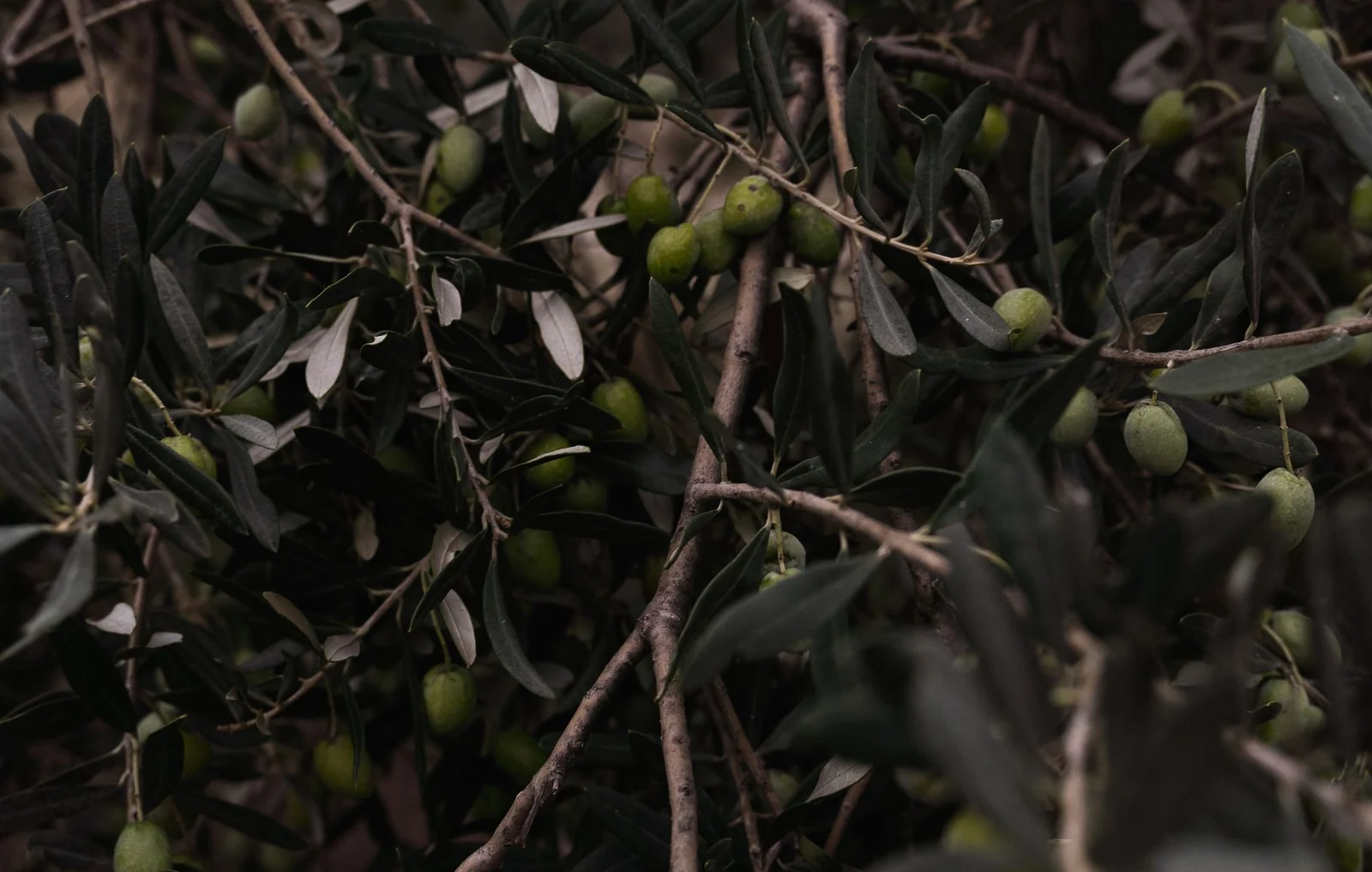
Olive production is never the same two years running. One year the tree is loaded; the next it stands almost empty. This is called alternate bearing — an "on year" and an "off year" — and it is inherent to the olive.
In Turkey the scale of the swing is striking: olive oil output can fall to 40,000 tonnes one year and reach 200,000 tonnes the next. A fivefold difference.
Why it happens
When a tree carries a heavy crop, most of its energy goes into the fruit. The development of the stone inside suppresses the formation of next year's flower buds. The result: a tree that yields heavily cannot prepare for the following season.
What makes it worse:
- Late harvest. The longer fruit stays on the tree, the more next year's buds are suppressed.
- Lack of care. A tree that is not pruned, fed or watered swings harder.
- Old trees. Alternation is milder in young, well-kept trees.
Why it isn't only the grower's problem
Alternate bearing is a biological event on its own; the real problem is how it breaks the economic chain.
Price instability. In an on year supply floods and prices fall. In an off year supply tightens and prices spike. The grower can lose in both: selling cheap one year, having nothing to sell the next.
Exports can't be planned. The swing carries into foreign trade: large ups and downs between on and off years make a stable export policy impossible. Buyers, meanwhile, want regular supply — an intermittent supplier struggles to hold a place in contracted markets.
No storage. Turkey has not built a stock system able to carry oil from an on year into an off year. As a result exports are largely made in bulk: the product leaves in its lowest value-added form, at the moment the price has fallen.
That is where the real cost of alternation sits: a surplus makes the product cheap rather than valuable.
What can be done
Alternation cannot be removed, but its amplitude can be reduced:
1. Harvest on time. Not leaving fruit on the tree eases the following year's bud set.
2. Regular pruning. Balances the tree's load and lets light in.
3. Fertilising and irrigation. Replacing the energy the tree spent in the on year.
4. Crop thinning. Removing part of the fruit in an overloaded year.
5. Stock and storage infrastructure. This one is the sector's homework rather than the grower's: if the surplus of an on year can be stored, the shortfall of an off year is covered and price volatility falls.
Not every variety swings the same
Alternate bearing is general to the olive, but its severity differs by variety. Some crop fairly evenly; others rise and fall sharply.
That makes it a choice in grove planning: a grove planted with a single variety takes on that variety's rhythm entirely. A grove holding varieties with different rhythms can run more evenly overall.
The same logic applies at national scale. Turkey's production is squeezed into three varieties — Memecik 45%, Ayvalık 19%, Gemlik 11%. If those varieties share an on year or an off year, national output swings to the same beat.
Does an on year actually pay?
Intuition says more fruit, more money. In practice it is often the reverse.
In an on year:
- Supply arrives all at once and buyers sit back
- Prices fall
- Costs rise, because demand for harvest labour and transport goes up
- With no storage the crop cannot be held, so selling becomes compulsory
In an off year the price is high but there is little to sell. So the grower fails to gain fully in either year. The cost side in detail: what does a kilo of olives cost to produce.
Why storage matters so much
The most direct way to soften alternation is to move the crop through time: store the surplus of an on year and release it in an off year.
Olive oil suits this — kept cool, dark and sealed it can carry a season. But that requires:
- Tank capacity
- Finance: while the oil sits in storage the grower's money is tied up
- Quality control: badly stored oil loses value as it waits
Without those three the crop leaves at the post-harvest price, usually in bulk. Where the value is lost: from olive to oil, the price gap.
How the rest of the world copes
Alternate bearing is not Turkey's problem alone; it runs across the Mediterranean. What differs is how the swing is managed:
- Stock mechanisms — pulling surplus off the market and carrying it to the next season
- Contract growing — the buyer fixing a price in advance, sheltering the grower from the swing
- Cooperative structures — small growers jointly doing the storage none could do alone
Turkey has examples of all three, but not at sufficient scale.
In figures
Turkey's average olive oil output is 150,000 tonnes, some 5% of world production. But that average belongs to a series swinging between 40,000 and 200,000. A sector has to plan not around its average but around its worst year.
Related: the price gap between olives and oil · structural problems of Turkish olive growing.
Sources
- Zeytin Dostu Association — olive growing in Turkey
- EGİAD Yarın — Turkey's olive sector: problems and proposed solutions
One rating per visitor; you can change yours at any time. Ratings are real reader votes — no seeded or default scores.
Related
 Article
How did olive oil prices open the 2026/27 season?
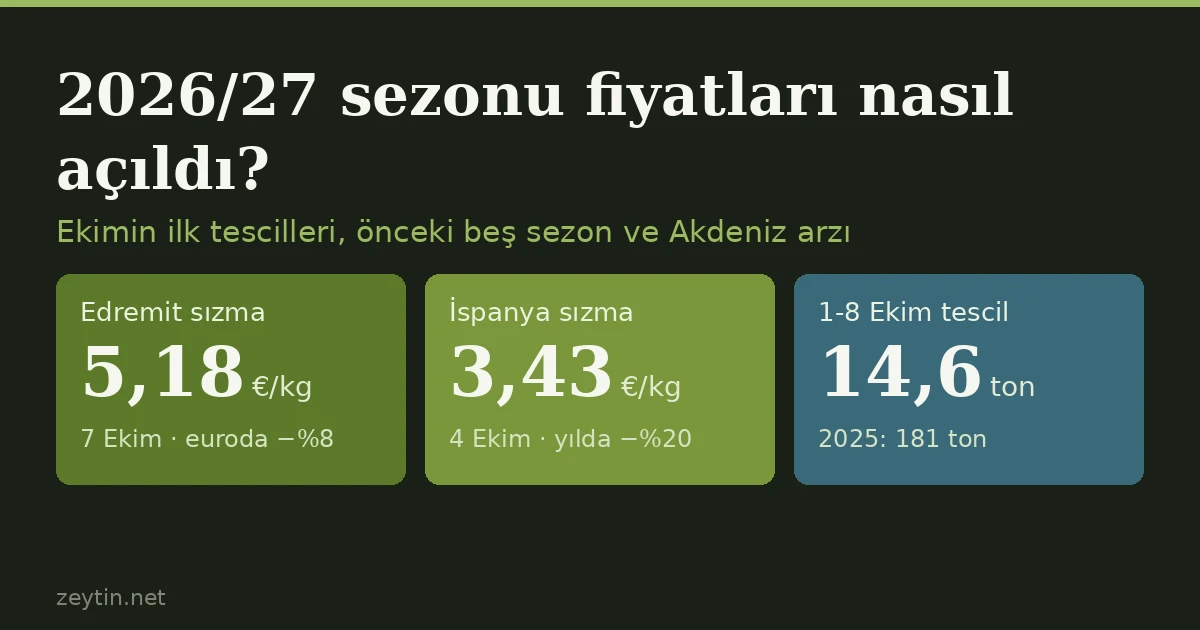
The first exchange registrations of October 2026 compared with the same weeks of the previous five seasons, in lira and euros: Edremit extra virgin is up 4% in lira and down 8% in euros; Spanish producer prices fell 20% in a year. The opening is thin, and Spain is the only major producer with an official supply figure.
Article
How did olive oil prices open the 2026/27 season?
The first exchange registrations of October 2026 compared with the same weeks of the previous five seasons, in lira and euros: Edremit extra virgin is up 4% in lira and down 8% in euros; Spanish producer prices fell 20% in a year. The opening is thin, and Spain is the only major producer with an official supply figure.
 Article
From olive to oil: the price gap, 2019-2026
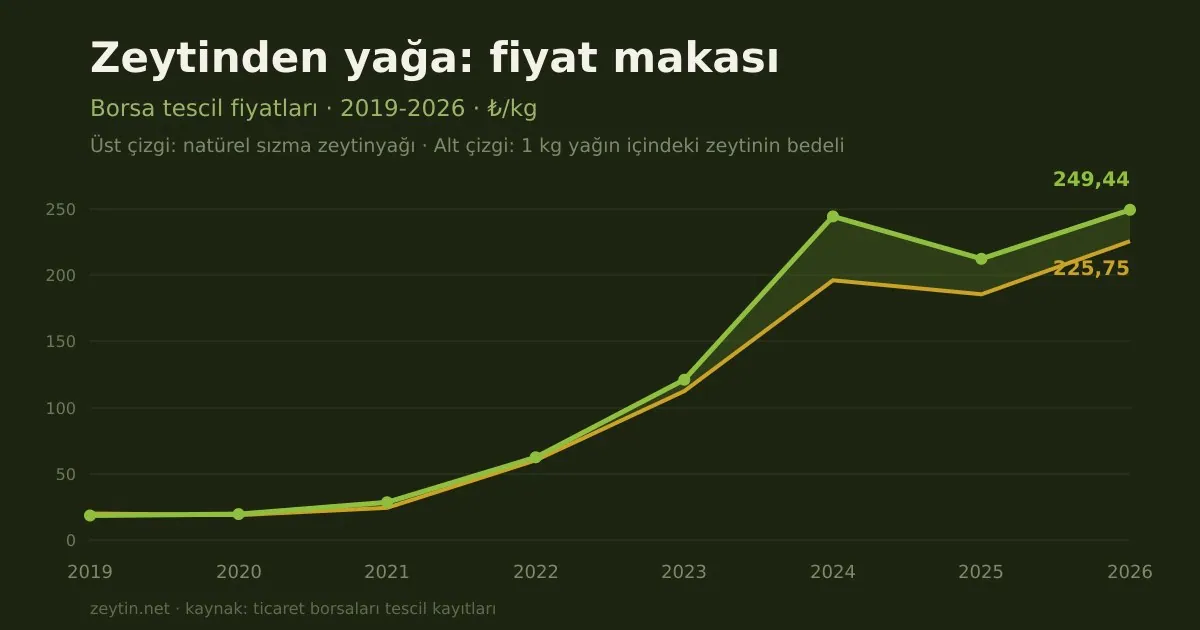
The gap between a kilo of olives and a kilo of oil, measured from exchange registrations. Why it widens, and who gains.
Article
From olive to oil: the price gap, 2019-2026
The gap between a kilo of olives and a kilo of oil, measured from exchange registrations. Why it widens, and who gains.
 Article
Structural problems of Turkish olive growing
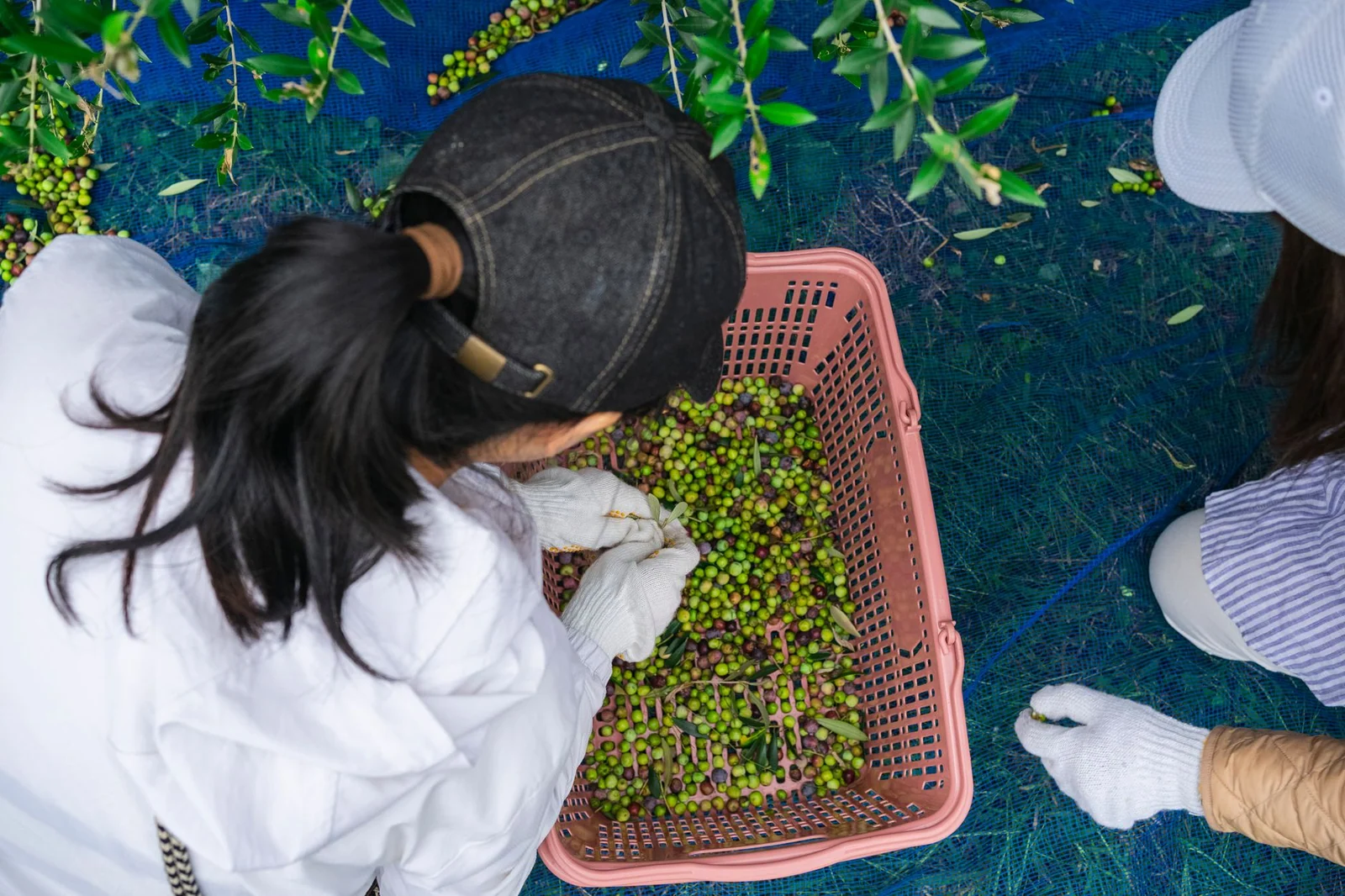
157 million trees but 5% of world output: low yield, old trees, harvest mechanisation, missing data, the support gap and informality.
Article
Structural problems of Turkish olive growing
157 million trees but 5% of world output: low yield, old trees, harvest mechanisation, missing data, the support gap and informality.
 Article
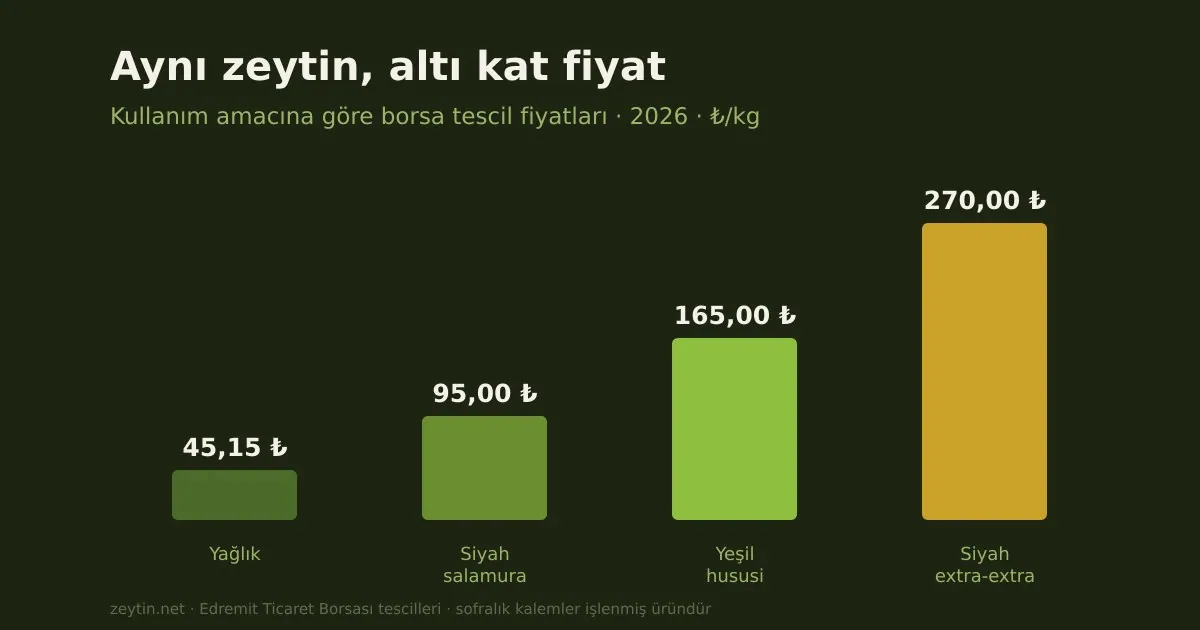
The same olive, six times the price: the quiet advantage of table olives
How much more does the same fruit fetch as a table olive than for oil? Measured over seven years of exchange data: 1.43 to 3.46 times.
Article
The same olive, six times the price: the quiet advantage of table olives
How much more does the same fruit fetch as a table olive than for oil? Measured over seven years of exchange data: 1.43 to 3.46 times.