How much water does one litre of olive oil take? The water footprint of the olive
The global average water footprint of one litre of extra virgin olive oil is about 13,200 litres — but 82% of it is rainfall and only some 2,200 litres is irrigation. The green, blue and grey components for olives and olive oil, a comparison with other vegetable oils, and an order-of-magnitude estimate at Türkiye's scale.
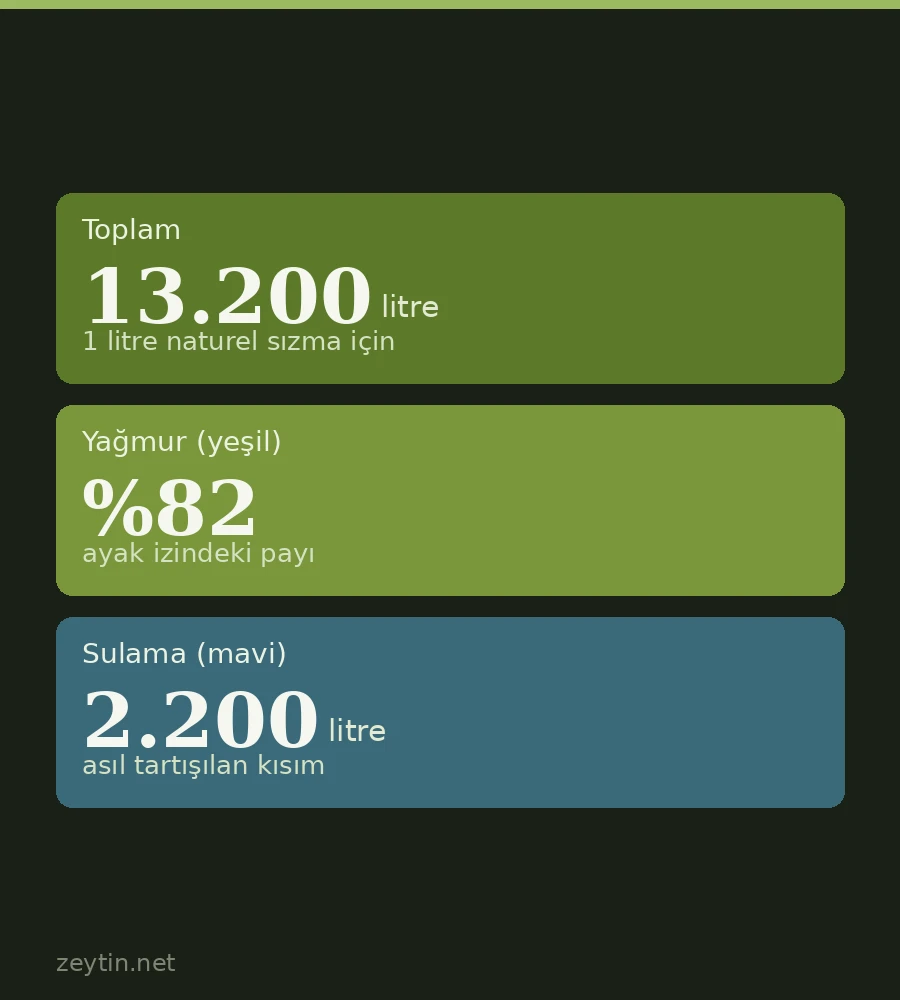
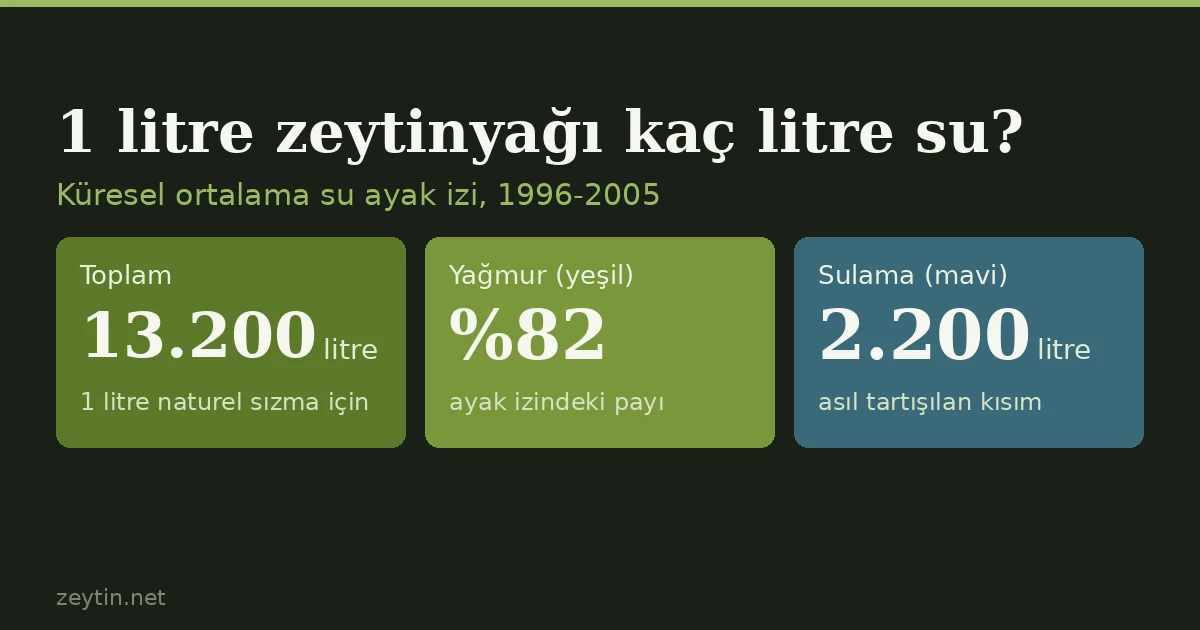
The short answer: roughly 13,200 litres of water sit behind one litre of extra virgin olive oil. But thinking of that number as water from a tap is wrong; 82% of it is rainfall. The part worth arguing about is the remaining fifth.
The figure comes from the foundational study in the water footprint literature: Mekonnen and Hoekstra's global crop assessment, published in Hydrology and Earth System Sciences in 2011 and covering the period 1996-2005. The study lists olive oil at 14,431 m³ per tonne. Since the density of olive oil at 20 °C is about 0.916 kg/L, that works out to roughly 13,200 litres per litre.
First, three colours
A water footprint is not one number but the sum of three components. Without the distinction the figure cannot be read at all.
- Green water: rainfall held in the soil, taken up by the plant and transpired. It is used whether or not anyone irrigates, because it has already fallen.
- Blue water: water drawn from surface and groundwater sources for irrigation. This is the water cities, industry and other farming also want; it is what scarcity debates are about.
- Grey water: the theoretical volume needed to dilute pollution. Fertiliser and pesticide residue, written into the account.
Olives and olive oil: the measured values
| Product | Green | Blue | Grey | Total |
|---|---|---|---|---|
| Olives (fruit) | 2,470 | 499 | 45 | 3,015 |
| Virgin olive oil | 11,826 | 2,388 | 217 | 14,431 |
| Refined olive oil | 12,067 | 2,437 | 221 | 14,726 |
The fruit itself carries 3,015 m³ per tonne. The oil carries 14,431. The ratio between the two is 4.8: roughly five tonnes of fruit behind one tonne of oil. That is another way of stating a yield we already know — oil content in oil olives hovers around the 18% threshold. The large number attached to olive oil comes not from the oil itself but from the quantity of fruit needed to obtain it.
There is a further subtlety in the method. Pressing yields more than oil; pomace and mill wastewater come from the same fruit. The study distributes the fruit's footprint across derived products using product fraction and value fraction: how much of each product a tonne yields, and that product's share of total value. Because the oil carries almost all of the value, it also takes on almost all of the footprint. Pomace is left with a small share, however large its tonnage.
For the same reason table olives are a separate calculation. Fruit that goes into brine is never converted into oil, so it stays close to the 3,015 m³ per tonne of the fruit itself — meaning a kilogram of table olives carries roughly a fifth of the footprint of a kilogram of olive oil.
The oils side by side
| Oil | Total |
|---|---|
| Maize oil | 2,575 |
| Cottonseed oil | 3,957 |
| Soybean oil | 4,190 |
| Rapeseed oil | 4,301 |
| Palm oil | 4,971 |
| Sunflower oil | 6,792 |
| Groundnut oil | 7,529 |
| Linseed oil | 9,415 |
| Virgin olive oil | 14,431 |
| Castor oil | 24,740 |
Olive oil sits near the top. Three things stack up to put it there: low yield per tree, a tree that stays in leaf and transpires through most of the year, and fruit that reduces to a fifth of itself on the way to oil. Maize and soy are high-yielding crops sown and harvested once a year; the olive is a tree crop whose output swings from year to year.
The cost of being evergreen shows up here too. A wheat field stops transpiring once it is cut; an olive tree is still in leaf in December, and transpiration continues through winter. And while yield doubles and halves between an on-year and an off-year, the tree's water use does not swing by anything like as much. In an off-year the same water is divided among less fruit, and the footprint per kilogram grows on its own.
But this table does not translate into "olive oil is the heavier environmental burden". The footprints of these oils are built from very different mixtures. Of cottonseed oil's 3,957 m³, some 1,283 m³ is blue water — more than a third comes from irrigation. In olive oil, blue water accounts for just 16.5%.
82% of the number is rain
The 14,431 m³ attached to olive oil breaks down as 81.9% green, 16.5% blue and 1.5% grey. That ratio is no accident: most groves in the Mediterranean basin are still rainfed.
Green water means something different. It is water that has already fallen on that land and will be transpired by whatever vegetation stands there. Pull out the grove, plant something else or leave the ground bare, and much of that rainfall still evaporates. Green water therefore does not compete for the same pool as drinking or industrial supply.
Blue water does. Converted to litres: of the roughly 13,200 litres behind a litre of extra virgin olive oil, about 2,200 litres is irrigation water drawn from a source. That is the number worth debating; the "13,000 litres" headline misleads when it is used to condemn a product outright.
What it comes to at Türkiye's scale
According to our own data, the National Official Assessment Committee's report puts Türkiye's 2025-26 olive oil output at 310,000 tonnes. Multiplied by the global average coefficients:
| Component | Volume |
|---|---|
| Total | ≈ 4.47 billion m³ |
| Of which blue (irrigation) | ≈ 740 million m³ |
This is not a measurement but an order-of-magnitude estimate using global averages; Türkiye's own coefficients may differ. Even so it sets the scale: the irrigation side of olive oil production is comparable to the annual volume of a mid-sized reservoir.
An irrigated grove is not a rainfed one
This is where the average hides the real difference. In a traditional rainfed grove the blue component is close to zero and the whole footprint is green. In the dense and super-high-density groves run on drip irrigation, the blue component rises markedly — but when the calculation is made per kilogram of product rather than per tree, the gain in yield gives part of that difference back.
So "irrigating increases the footprint" is not true on its own. What decides the outcome is how many kilograms each cubic metre drawn turns into. We looked at that balance in detail in olive irrigation and drip systems, and planting density belongs to the same calculation.
What the number does not measure
A water footprint is not an environmental report card on its own.
- It does not show local scarcity. The same cubic metre means one thing in a well-watered basin and another on a dry plain. The footprint measures volume, not pressure.
- The period is dated. The figures are a 1996-2005 average. Irrigated area and yields have both moved since.
- It excludes the waste side. Mill wastewater and pomace are a separate problem; the grey component accounts for fertiliser and pesticide residue in the grove, not what leaves the mill.
- It says nothing about carbon, soil or biodiversity. Old groves do better than most annual crops on those counts, and this table does not show it.
The effect of climate change on the olive will shift this picture over time: as rainfall declines, the share green water cannot cover passes to blue water — meaning rainfed groves are gradually forced towards irrigation.
In short
- The global average water footprint of one litre of extra virgin olive oil is about 13,200 litres.
- Roughly 10,800 litres of that is rain (green), 2,200 is irrigation (blue), and the remainder is the pollution-dilution share (grey).
- A tonne of oil carries about 4.8 times the footprint of a tonne of fruit; the gap comes from yield.
- Olive oil sits high among vegetable oils, yet its blue water share is among the lowest.
- The question to ask of the number is not "how many litres" but "how many litres of which water".
One rating per visitor; you can change yours at any time. Ratings are real reader votes — no seeded or default scores.
Related
 Article
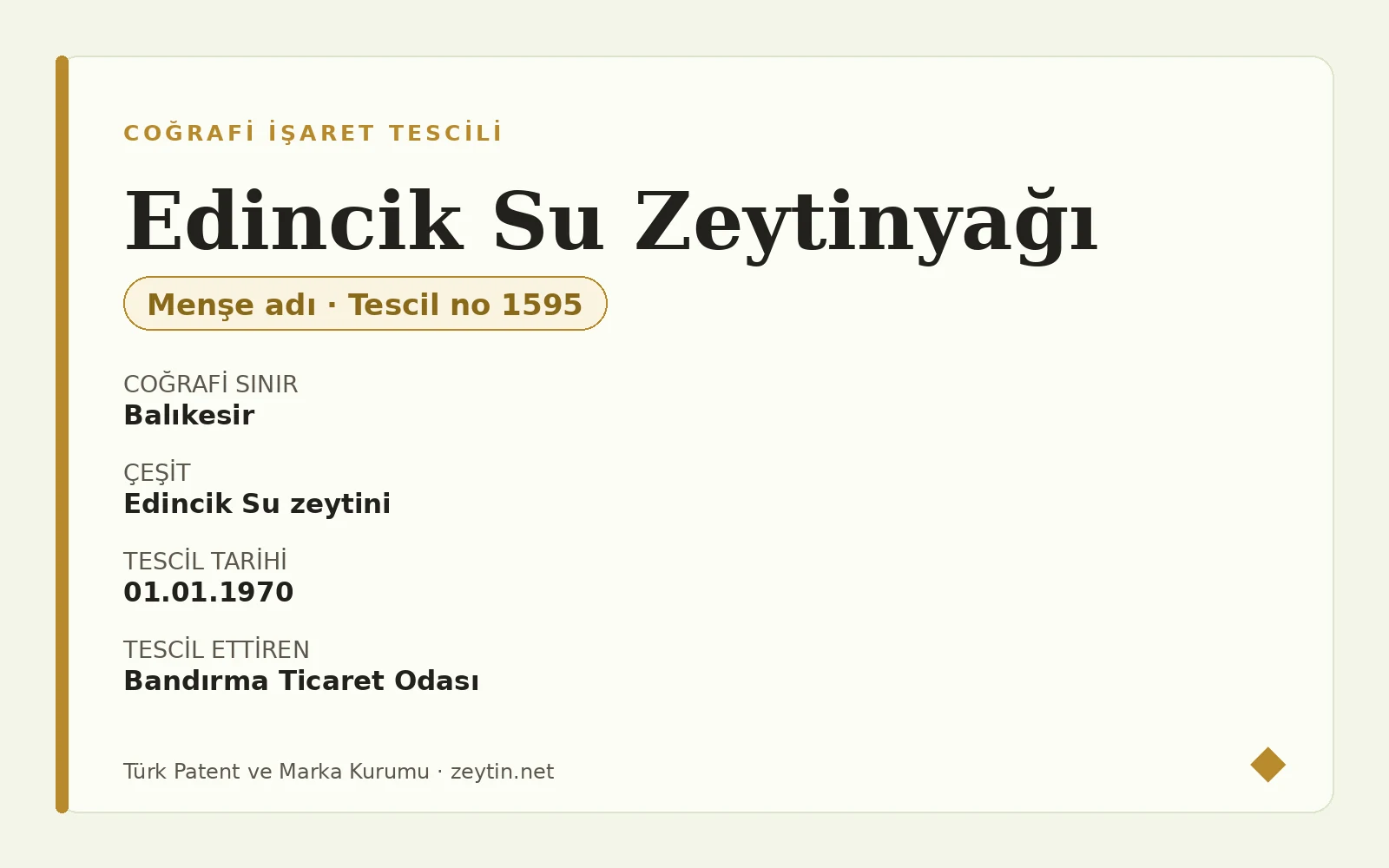
Edincik Su Olive Oil: ripening slowed by the sea
Registered in 2024. The certificate attributes aroma intensity to one cause: near the Erdek gulf the olives develop slowly and ripen late.
 Article
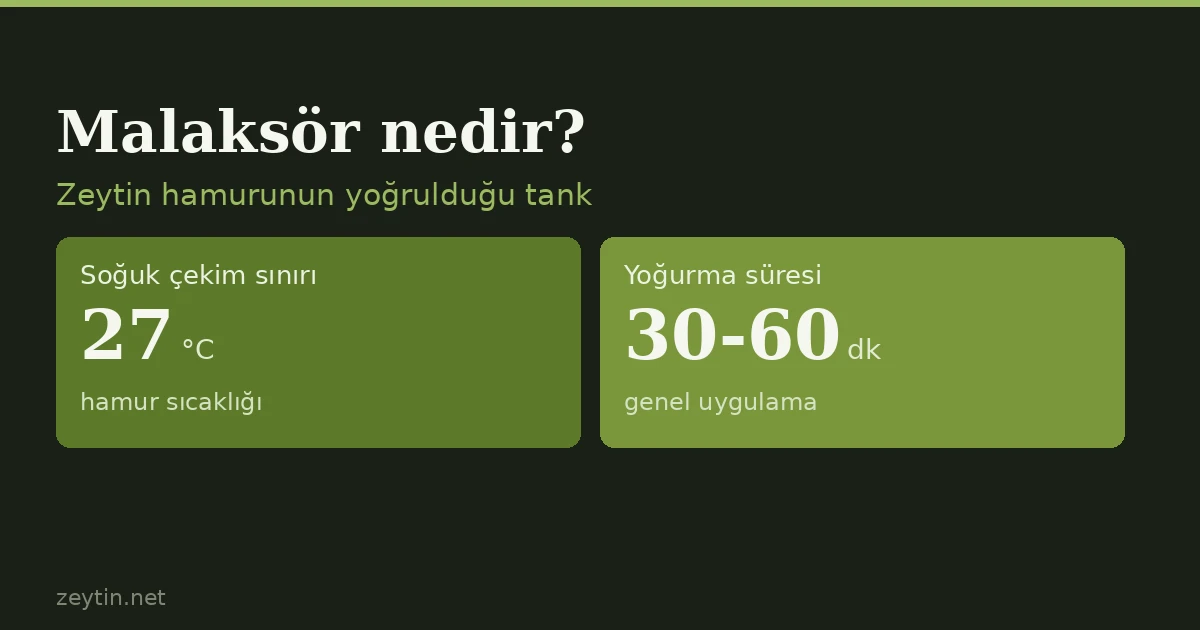
What is a malaxer? The tank where olive paste is kneaded, and the 27 °C limit
A malaxer is the stainless steel kneading tank where crushed olive paste is slowly mixed so that oil droplets can merge. Time and temperature decide both yield and aroma, and this is also where the limit for "cold extraction" is drawn.
 Article
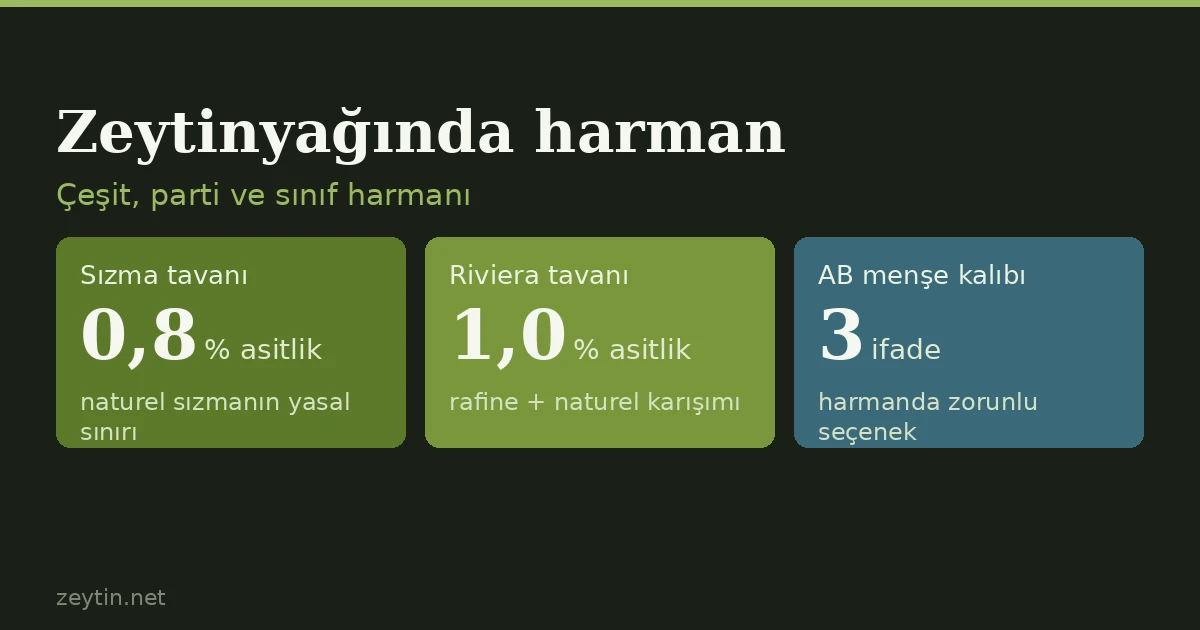
What is a blend in olive oil, and how does it differ from a single-variety oil?
A blend is the combination of several olive oils of the same grade: by variety, grove, lot or year. It is legal and on its own says nothing about quality. Mixing olive oil with other vegetable oils is not blending but adulteration; the Turkish Food Codex prohibits it outright, while the EU permits it if the label says so. Why blends are made, what a single variety gives you, and what the label does and does not tell you.
 Article
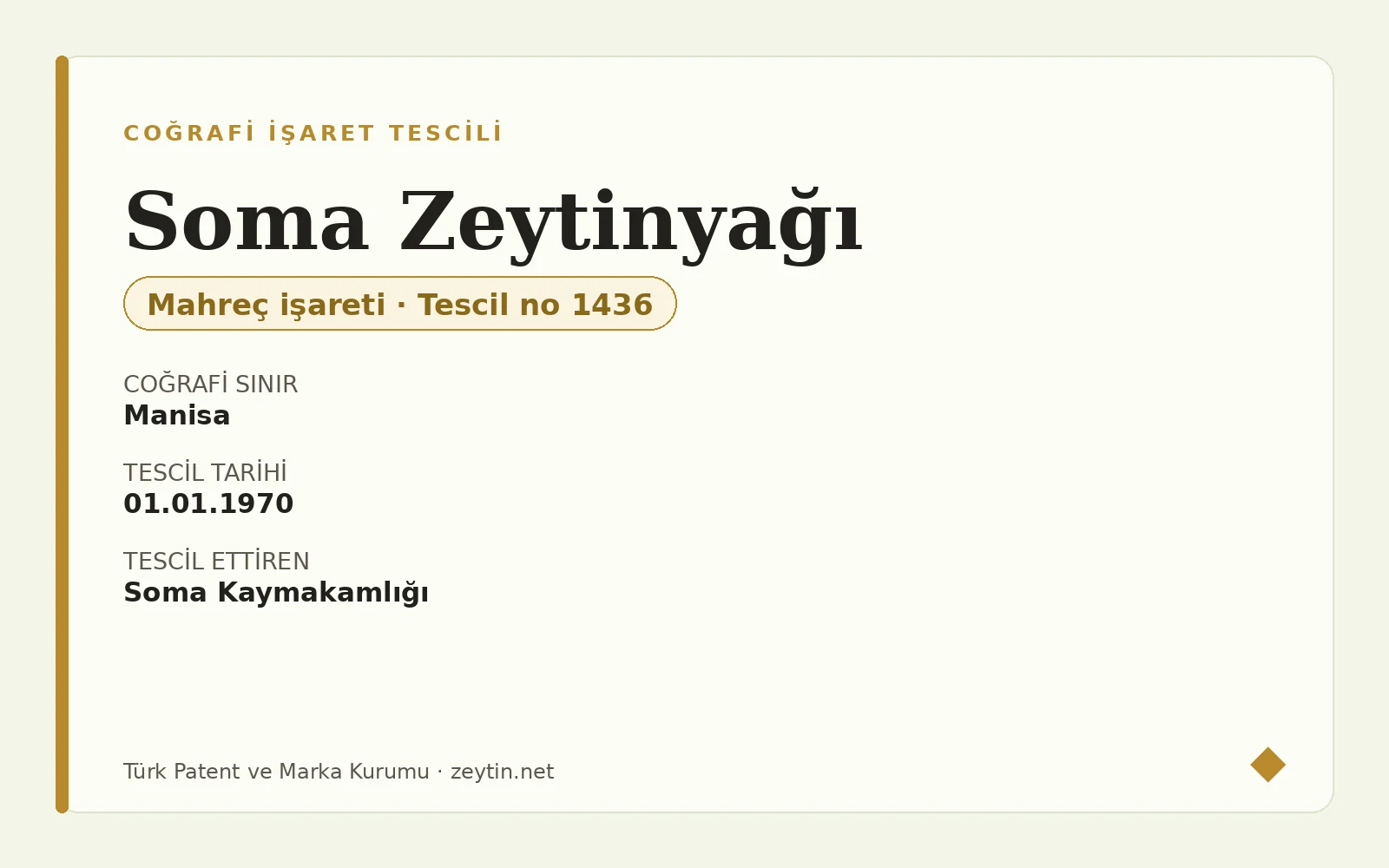
Soma Olive Oil: how a cooler climate lifts yield in a lignite basin
Registered in 2023. Mean temperature 15.3 °C; the certificate ties that relative coolness to yields reaching 796 kg/da. Free acidity 0.18-0.55.